Taking Notes (Death Note, 2017)

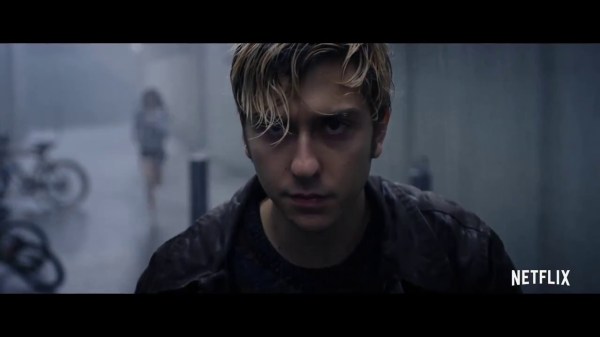
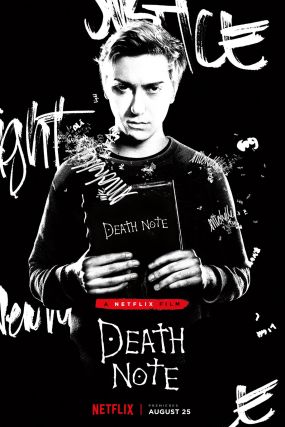
Death_Note_PosterMeet Light Turner.  He is in high school and frustrated by bullies.  He is also angry that the drunk driver who killed his mother walked.  One day, a notebook falls from the sky.  It is full of rules, and comes with great power.  Oh…and a demon or a death god or some such thing.  This tall creature with a love for apples is named Ryuk.

Ryuk explains that all Light must do is write the name of a person (while picturing their face) and a method of death…and it will happen.  Light initially believes himself to be dreaming, but when he realizes that a local bully indeed died as he wrote in the book, he starts to get an idea.  With his girlfriend Mia, he begins a campaign against crime causing the death of hundreds of terrorists, murderers and other terrible people.  He attributes it to “Kira”.  But Kira attracts the attention of the authorities, including his own father, Detective James Turner.  Joining Light’s father is Watari and the mysterious L.

The film follows Lights attempts to not get caught, while trying to figure out how to avoid killing good people.  L knows Light is behind Kira…but is not sure how he is doing it.

Death Note is a pretty interesting concept.  However, it is based on an anime series as well as a manga series.  And here they have forced the entire series into under two hours.  Which results in a major rush to tell the story.  So interesting concepts (Light cannot simply write L’s name in the book, because they do not know his real name and almost nobody knows what he looks like.  But everything has to play out so fast that there is no opportunity to fully explore these things.

And it is to bad.  Director Adam Wingard has a good cast at his disposal.  Shea Wigham is quite good as Light’s father.  And Get Out’s Lakeith Stanfield is good in the role of the mysterious L.  Willem Defoe obviously had some fun as the voice of Ryuk.  Had Netflix maybe planned this as a start of a series, the film might have worked better.  While I am sure the goal includes further films, trying to force Lights tale into such a short space simply results in it being hard to connect with the characters.

Of All the… (Nerve, 2016)

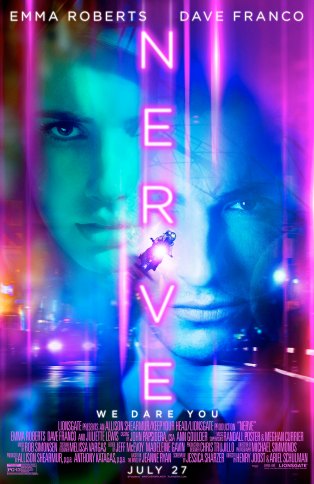
Nerve_PosterVee is a young woman who lives life safely.  Her friend Sydney pushes her to take a risk.  And so she joins an online game called Nerve.  In Nerve, there are people who pay to watch, people who pay to play…and the unknown overseers.  In the game, participants are given dares and they must complete each one to make it to the end and make a lot of money.  At the start, the dares seem to simply push people out of their comfort zones.  As you complete a task, money is added to your bank account.  If you fail or chicken out, you are dropped from the game.
Vee soon finds herself paired up with another player, Ian.  But as the game progresses, the dares get riskier and more deadly.  Ultimately, Vee finds herself trying to survive the game and save her family.

The film has one of those “You are all Complicit” story-lines, chastising the viewer’s online voyeurism.  And there is nothing wrong with that…but the execution here is just clumsy, and Roberts does not really sell this.

The film uses the popular visual of pop-up windows mimicking social media news feeds.  This is somewhat tired, but I understand why movies themed around the internet use them.

The visual style of the film is garish colors, blues and greens especially.  The film ultimately comes apart because it simply because the concept feels implausible.  The idea that this internet game show that can result in regular deaths is super popular and well known, but allowed to function is hard to buy.  Not because the masses cannot be cruel…but it just feels hard to buy this is a game that has the blessing of the authorities.

Nerve has some lofty ambitions as a thriller, but it never is able to make you really care about these characters.  It generates, ironically enough, the very complacency it condemns.

Round and Round (The Circle, 2017)

Circle_PosterThe Circle asks the question: What if Google Were an Evil All Seeing Corporation?
(And somebody responds… “IF??”)

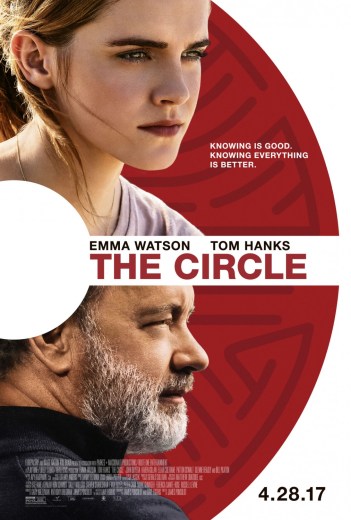
Emma Watson is Mae, a young woman who dreams of being more than another faceless customer service rep.  Her friend gets her an interview with the Tech Company “The Circle”.  She is overwhelmed at first, they seem to know things about her life that she had not informed them of.  But as her star rises, she becomes drawn in by the very likeable and charismatic Bailey.  Bailey is the “ideal” CEO.  Personable, treats everyone as equally important, regardless of status in the company…he charms Mae into overlooking her concerns as the Circle’s influence grows.

It cannot last, of course.  There are people, even within the company, who believe there is a darker and seedier underside (unsurprisingly, they are correct).  After a tragedy, Mae finds herself at a crossroads.

The Circle is established very well early on as “This could be the coolest place to work!”  But it early on starts to drop hints of creepiness.  Mae’s transition from sweet but overwhelmed to complicit in the organization’s overreach is well handled.  And Hanks just turns on his “I Am Tom Hanks” charm to make Bailey someone you cannot help but like.

The problem for the film is that it spends so much time on build up, it feels like it gets resolved in about six minutes.  They beat the corruption in a sentence.  It feels like the final act should have been developed a bit more.


You Take the Good, Take the Bad (Life, 2017)

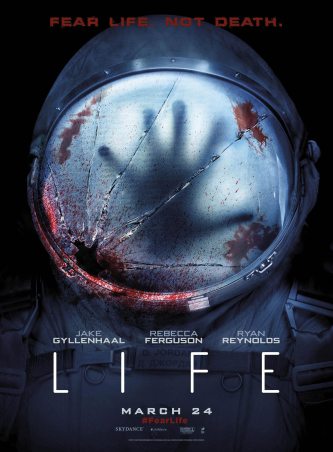
life_2017_posterA sci-fi thriller set aboard the International Space-station, Life is a competent film.  The effects are good enough to allow for suspension of disbelief.  The cast  is quite likeable.  The story is uncomplicated.
A research team discovers a life form in soil samples from Mars.  Eventually, the life form grows and as often happens, it gets free and starts killing people.  The scientists must find a way to keep the creature from reaching earth and…well, not die.

It might sound like I disliked Life.  But actually?  I enjoyed it just fine.  I never got bored and liked the characters.  But it was not nearly as risky, even the ending feels like an attempt to feel edgier than it is.

Again, I enjoyed the film, but it won’t be joining the pantheon of Sci-Fi monster movie classics.  But it was okay.

The Bigger They Come Part 4 (Pacific Rim, 2013)

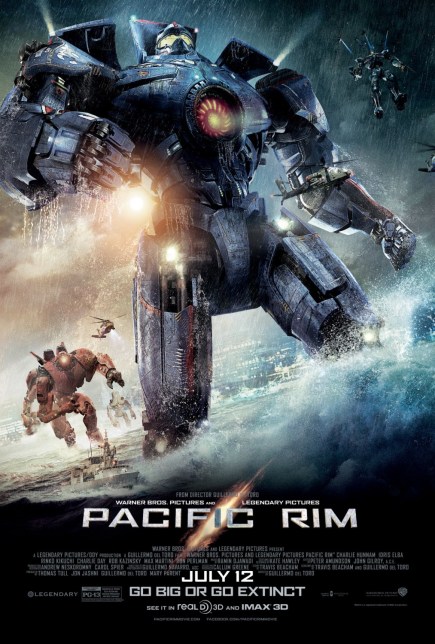
pacific_rim_PosterGuermillo Del Toro is a man of unique vision.  He always has his own take on traditional monsters.  In Cronos, he tackled vampires in a heartbreaking tale of a grandfather who finds a mysterious device.  Both Crimson Peak and the Devils Backbone are period pieces focusing ghost stories where humans are the truly frightening characters.  And so we find that del Toro’s love letter to Japanese giant Monster movies and Anime mech cartoons and brought together with his own vision.
In a near future, the earth finds itself under attack by giant monsters nicknamed Kaiju.  At first, the giant creatures are able to be taken down with conventional weapons…but as newer Kaiju emerge, a new approach is needed.  The nations of the world build giant robots,  called Jaegers, controlled by two pilots who are psychically linked.  Raleigh and Yancy Becket are celebrity pilots, but when a fight with a Kaiju ends in tragedy,  Raleigh walks away.

He is called back into action by Stacker Pentacost and paired with young pilot Mako Mori.  Raleigh, Mako and several other pilots are about to take on a special mission.  They need to close the interdimensional portal in the Pacific Ocean.

As expected, Del Toro created a visual feast.  The Kaiju are immense and impressive.  The Jaegers have weapons and are exciting to watch.  The characters are not especially unique but are used effectively.  Charlie Day and Burn Gorman are entertaining as eccentric scientists specializing in Kaiju sciences.  And the always enjoyable Ron Perlman is a stylish black market dealer who traffics in Kaiju parts.  And Idris Elba is always reliable for a gruff but heroic role.

Fun and bombastic, Del Toro has given us a fun film.  It is not a deep film, but it is a ride.

Dial-A-Danger (Dial M For Murder, 1954)

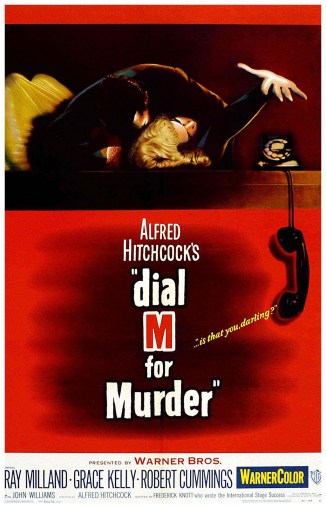
dial-m-for-murder-posterBased on a stage-play, Alfred Hitchcock’s Dial M For Murder is a tense tale of murder and deception…gone wrong.
Grace Kelly plays Margot Wendice, a rich socialite married to former tennis super-star Tony Wendice (Ray Milland).  Robert Cummings is Margot’s former lover.  What follows is an attempt at revenge that unfolds in ways even it’s plotter did not expect.

The film opens rather playfully, giving no hint of the drama yet to play out.  Hitchcock focuses on dialogue in this film, rather than shocks and scares.  Milland is perfectly cast as the duplicitous husband.  The lovely Grace Kelly is, on one hand the adulterous wife, and yet devoted.  Her reason for ending her relationship with Mark was a change made by Tony in their life.  But we discover Tony to have ulterior and dangerous motives.

The verbal game of cat and mouse is excellently executed even though we are given information about Tony’s goals almost with the first twenty moments.  The thriller aspect comes from wondering if Tony will escape justice.

This film is a terrific and simple film that draws a viewer in.

Tense Swim (The Shallows, 2016)

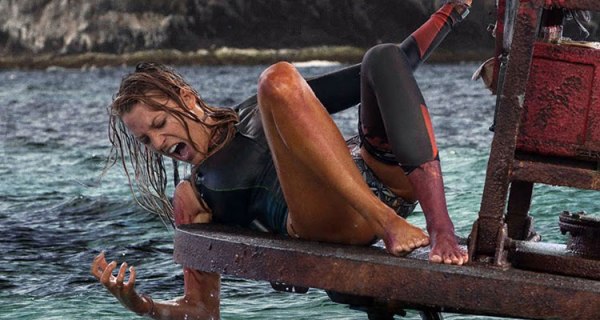
shallows-movie-posterI confess, I saw the trailers and thought this would be a pretty standard survival flick.  Instead, what I discovered was a very tense thriller of woman versus nature.
Blake Lively is Nancy…a young woman grieving the loss of her mother.  She has discovered a remote beach and is there to surf.  Late in the day, she follows some dolphins and discovers a dead whale.  After a large great white shark attack, Nancy finds herself trapped on a rock.  The shark seems determined to make Nancy a meal, and she struggles to find a way to survive.

Director Jaume Collet-Serra has brought us an intense story that does not often give you time to breathe as Nancy tries to find a way to outsmart the shark.  When you consider a large chunk of the film is Lively sitting on a rock, it is pretty impressive that they are able to keep the audience on their toes.

This film was a very good surprise.  

Crypt Keepin’ Carpenter (Body Bags, 1993)

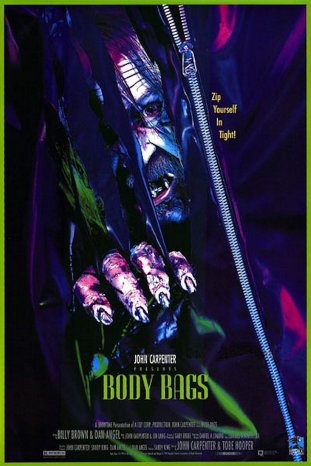
body-bags-coverAn attempt by Showtime to create a Horror Anthology to compete with HBO’s Tales From the Crypt, Body Bags both starred and featured direction from John Carpenter.  Showtime killed the series but released the three shorts set against bookend segments hosted by Carpenter as a creepy coroner.  His assistant was Tobe Hooper, director of the Texas Chainsaw Massacre.  Both directed a segment as well.
Just like the Crypt Keeper, the Coroner makes schlocky jokes, before introducing the story.  It is not entirely certain each bookend was meant for the story that followed.

The first tale, the Gas Station, is about a young woman on her first night working at a gas station on a lonely stretch of road.  After a parade of weirdos, she discovers she is being stalked by a serial killer.  It is not a unique story, but it is well done, with a nice little twist.  Wes Craven has an amusing cameo as a creepy drunk who hits on the young woman.

The second segment, Hair, is about a man who is obsessed with his thinning hair.  In spite of his girlfriend’s insistence that it does not matter to her, he cannot stop fearing losing his hair.  Everywhere he looks he sees luxurious heads of hair.  He drives his girlfriend away because he won’t accept himself.  One night, he discovers a clinic that promise actual regrowth of lost hair.  Richard runs to the clinic for their service.  He is stunned when they try and talk him out of it, but he wants hair.  But in the end, he finds the hair wants him just as much as he wants it.  This is an entertaining story with and entertaining performance from Stacy Keach.  This is also the most humorous of the stories.

The best segment is the Eye, starring Mark Hamill as a minor league baseball player whose career is cut short when he loses an eye. He is offered a chance at a new experimental surgery that gives him a donor eye.  But with the eye comes dark and depraved visions.  Are they his own or the previous owner of the eye? Hamill gives a strong performance.  Of the three tales, this is the best of the bunch.

As with all anthologies, some installments are better than others.  But thankfully, in the case of Body Bags, all three are ranging from decent to very good.  While the first two segments are directed by John Carpenter, the Eye is directed by Tobe Hooper.  This is an enjoyable film.  And for those curious…you get to see Luke Skywalker’s bare butt.


Devil in a Can (Prince of Darkness, 1987)

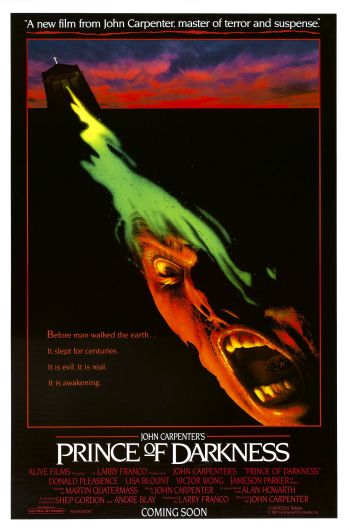
prince_of_darkness_posterJohn was pretty prolific in the 80’s and most of them are quite memorable.  Prince of Darkness is a religious themed horror film that is played straight.  Carpenter brings back Victor Wong and Dennis Dun from Big Trouble in Little China.  He also brings Donald Pleasence back.
Prince of Darkness begins with a dying priest passing a secret on to Pleasence’s character (simply called “Priest”).  The secret could rock the church.  With the help of a local Professor and his students, a study is taking place in an abandoned church.  In the Church basement is a giant glass container with a swirling green liquid.  It is revealed that this is the container of the son of Satan…it is prophesied that he will release his father.

As the film progresses, there are stranger and stranger events.  The local homeless community, led by Alice Cooper (who also provides the theme song), are amassing around the church.  People start to disappear, and then show up possessed and passing on the virus.   The name of the game is both survival and stopping the father of evil from being unleashed on the world.

The film is set around an intriguing story.  It is not a serious exploration of religion.  The theology is pretty wonky.  But the film is not trying to establish a truth kept hidden by the church.  Carpenter is not pulling a Dan Brown.  He is just working to tell a scary story.

Is Prince of Darkness John’s scariest film?  No.  For one thing…(Son of) Satan in a Can is a pretty goofy concept.  But the film does have a nice, creepy atmosphere at play.  One of the strong suits of pretty much any Carpenter film is casting.  He had people he seems to have liked working with and would bring them back.  His films are full of great character actors.

The visual effects are very good.  They do a lot of simple, yet effective, practical visuals here.  The score (by Carpenter) is eerie.  In spite of a goofy concept, the film works pretty well, and is part of Carpenter’s more memorable films.

Guys Love Their Cars (Christine, 1983)

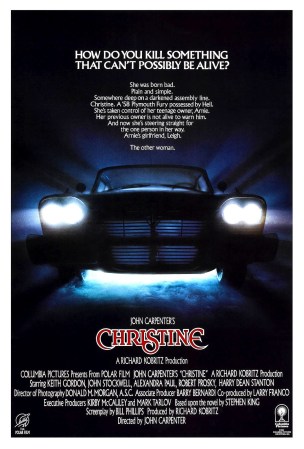
Christine-1983-PosterAfter the Thing, Carpenter went with a different type of terror.  In some ways, it is a return to the ghostly tale of the Fog.  But instead of Leper Pirates, Christine is the tale of an obsessive car.

Nerdy Arnie is put upon…he has one friend (athlete Dennis) and overbearing parents.  He discovers a decaying old car, a 57 Plymouth Fury.  It’s first owner named it Christine and Arnie falls in love.  He buys the car, and it begins to love him back.  Christine brings about a change in Arnie.  He dresses a bit cooler, he behaves with a bit more attitude.  He even gets a girlfriend.  Attractive Leigh, who is new to the school.  Christine begins to take out the bullies who make Arnie miserable, but the obsession between Arnie and Christine grows and becomes dangerous to his only friends.

Christine is a very good adaption of Stephen King’s work.  It focuses on what is important, even when it makes changes.  Christine’s first owner (Roland LeBay) is the ghost that haunts her.  Arnie purchases the car from him and then he dies.  It is revealed he was a dark man and he has a dark history.

Carpenter optioned to, instead, make Christine a spirit of her own.  And it works quite effectively.  Keith Gordon (Jaws 2, Dressed to Kill) captures Arnie’s descent into truly obsessive behavior effectively.  He take Arnie from Sympathetic to frightening so well.

Visually, the movie is impressive.  There are some amazing shots of Christine (one where she is driving down the road engulfed in flames).  The effects are  “simple” but very effective.  When Christine is damaged, she “fixes” herself and it looks great.

It is interesting to note that the initial negative response to Carpenter’s The Thing left John feeling like he had to take the job.  He did not find the book particularly scary.  And yet, in the end, he created an effect story of obsession certainly belonging in a list of great John Carpenter films.

Create a free website or blog at WordPress.com.

Up ↑