
But I care about love
I care about truth
And I care about trust
And I care about you
I care about us
~Michael Been, Us, On the Verge of a Nervous Breakthrough, 1994
 Get Out made people step back and reassess their perception of Jordan Peele. Known for his comedy work, the biting horror thriller that took aim at white liberal racism, viewers took notice. For a lot of this, that made us want to see what came next. And the fact that he had more ideas in the realm of horror no longer seemed a question.
Going deeper down the horror rabbit hole, Us tells the story of young Adelaide. In the eighties, her parents take her to the Santa Cruz beach. She wanders away from her parents and enters a strange hall of mirrors. There, she meets a little girl who looks exactly like her. She is traumatized by the event. The film picks up years later with Adelaide, now married to Gabe, on their way to the family cabin with her children. When they go to the beach, her son Jason disappears briefly, causing a dread in Adelaide. And with good reason. That night, they find themselves under siege by…themselves. A warped set of duplicates seemingly full of malicious intent.
Saying much more just gives away the film. Astute viewers will likely start to put things togethers fast and start seeing where the story is going. Others will be blindsided. Unlike Get Out, Peele has formulated a far more… complex plot. The twists and turns start coming fast after the initial frights of the home invasion.
Peele has a terrific eye, and the film is a visual feast. There is, for instance, a really nice arial shot looking down on the family as they walk along the beach, attached to their shadows. He and his team of film makers use light and shadow masterfully to create discomfort and fear. In one scene, a person appears from the shadows of the background seamlessly.
You cannot ignore the performances here. Everyone has a dual role…and pretty much everyone gets to shine. The doppelgängers are chilling in their simple outfits and creepy makeup. Lupita Nyong’o is especially compelling, with her dual role. Red speaks in a disturbed creaky voice and moves in ways that are psychologically unnerving.
One of the things that makes the film so effective is how much I found myself liking the family. They draw you into their world making it impossible not to become invested in their survival.
Some have suggested Us marks the reveal that the director Peele most reflects is M. Night Shyalaman. And while I did not really see it in my viewings, I get what people are saying, mainly in the fact that this is a film with some big ideas that then throws a lot of twists and turns, yeah. But I am inclined to agree with the people who are saying this is a good thing, that this shares more in common with Shyalaman’s best work.
People who are bothered by smaller questions with struggle hard here. The film aims big, but leaves some stuff off. Because, honestly…where do the doppelgängers all get their matching red outfits is not important to the story.
Us is a terrific follow up to Get Out, and Jordan Peele has delivered a new an original vision.
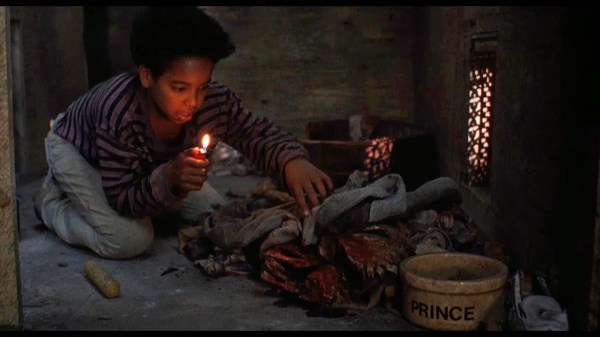
 In 1988 Wes Craven explored Voodoo, but it was through the eyes of a white man in Haiti. With the People Under the Stairs, Craven looks at the plight of under privileged communities and the underlying causes of crime (poverty).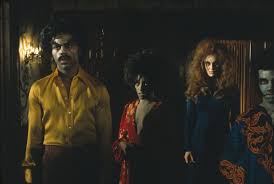
 Blacula was a straight forward vampire film. And it spawned a sequel. Because if Dracula can keep coming back, why can’t Blacula??!!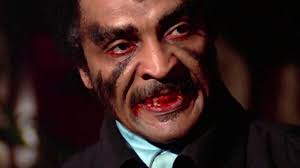
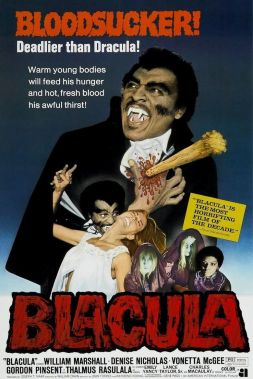 The 70’s were a time of revolution in cinema. Directors were finding greater freedom in the stories they could tell and what they could put up on the screen for mainstream audiences. Those years also saw the rise of blacksploitation films. Blacula was one of the first of that era’s blacksploitation horror films. It also was one of the rare films of the time with a black director. If you want to hear some interesting stories of what it was like, see Horror Noire (currently on Shutter), which includes interviews with Blacula director William Crain.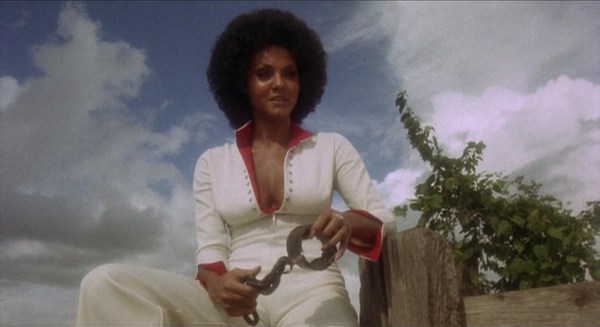
 Diana’s beloved has been murdered…seeking revenge, she reached out to Mama Maitresse who calls forth the mystical Voodoo Priest Baron Samedi. He raises an army of the undead, telling Diana to “put them to evil use…it is all the want!”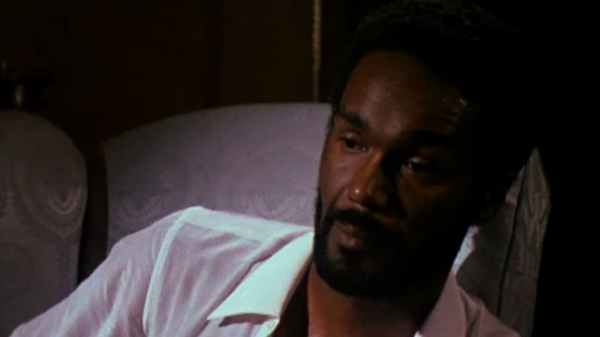
 Dr. Hess is attacked by his assistant, who promptly commits suicide. When he awakens, Hess has no wounds and he has a compulsion to drink blood. He stores his assistant’s body for safe keeping, but then is contacted by Ganja, the assistant’s wife. Ganja discovers her dead husband, but ultimately is both seductress and seduced by Hess.
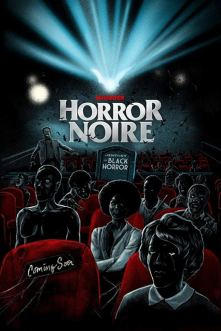 When you think of horror, it can often seem like people of color don’t exist. The Universal classics were devoid of black people. And even when they were present, they were violent savages (1933’s King Kong).
 After Signs, Shyalaman’s career took a hit. Critics were brutal and try as he might, his films were not grabbing fans. It was not until 2015’s Visit that he seemed to be picking up some steam.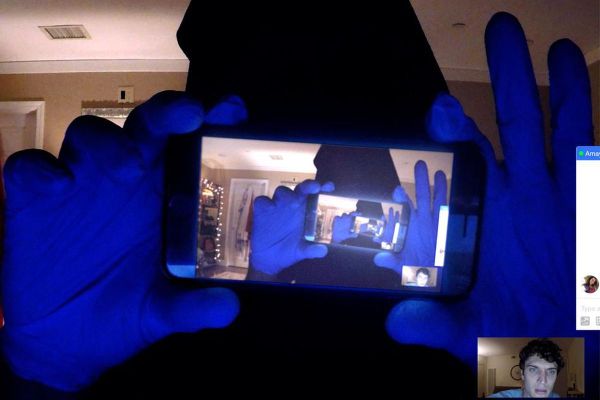
 In the first film, a vengeful spirit killed a group of friends via Facebook. It was a sort of clever concept. In this low budget sequel, things are a little different.
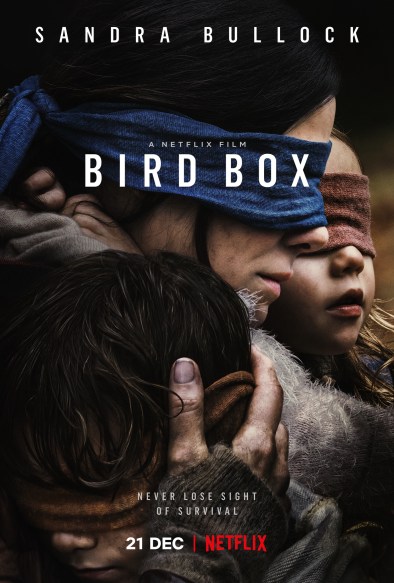 One day, the monsters arrived. People seem to be taken by a force and then kill themselves. If that sounds familiar, you actually remember 2008 M. Night Shyalaman film the Happening. That film had people committing violent suicides and people trying to flee the city and solve the mystery. The twist was that it was the trees that did us in.
 Tripping Through Gateways