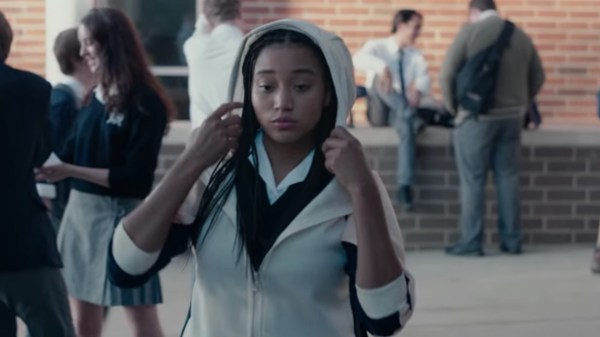
 Starr and her family live in the poor part of town. But her mother pushed for sending Starr and her brother Seven to a prestigious (and mostly white) school. There Starr lives a very different life, downplaying any aspect of herself that might invite the accusation of being “ghetto”. She even has a (white) boyfriend named Chris. Chris is a goofy guy who wants to be a bigger part of her life, but Starr wants to keep he and her friends their separate from the world of her home life.
When one of her oldest friends, Khalil is gunned down by a cop in front of her, Starr’s world rapidly starts to unravel. She tries to retain anonymity, but finds the weight of injustice harder to compartmentalize than the rest of her life has been. As she becomes more vocal, her friendships and family relationships are tested.
Based on the book by Angie Thomas, The Hate U Give is a painful and yet hopeful exploration of blackness in America. Starr’s family has faced a lot of adversity, including her father having been the right hand man to the local drug lord King. After a stint in prison, Maverick Carter turned his life around, working hard to be an honest man with a local business. Her mother Lisa, on the other hand, would like to leave their community for a safer place.
The film might be a hard watch for some whites, especially those who are prone to “blue Lives Matter” ideas. The film does not flinch from challenging the whole problem of such arguments. And the film very deftly offers those defenses first through a black man, Starr’s uncle Carlos. Played by Common, the police officer takes a more middle ground position. In one scene, he calmly explains the struggle police face in a routine traffic stop. And it really seems logical…until she asks what would happen in a white neighborhood. In that moment, he confesses a white man would get a warning before being fired upon.
The film only has one truly sympathetic white character, and he is capable of cringey moments. After learning about Starr being the previously anonymous witness, he pleads that he does not see color. He does, however, prove himself an ally in his willingness to trust and help Starr when she needs his support. But Starr is not a fragile child. Amandla Stenberg portrays her with sweetness, but also an edge. And when she finds her voice, it is a powerful moment.
I think that this film is a very strong rebuke to a culture that likes to pretend racism is no longer an issue of prominence. Emotionally engaging, heart breaking and inspiring, The Hate U Give is a message that cannot be heard too much.
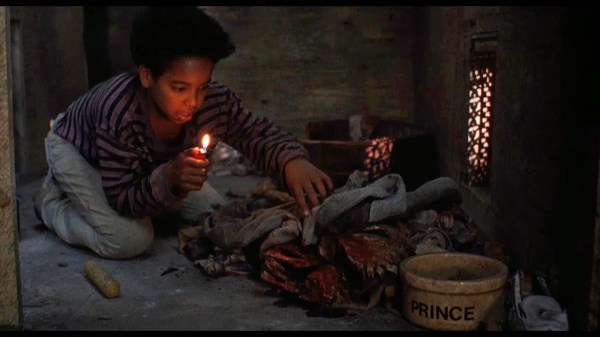
 In 1988 Wes Craven explored Voodoo, but it was through the eyes of a white man in Haiti. With the People Under the Stairs, Craven looks at the plight of under privileged communities and the underlying causes of crime (poverty).
 Blacula was a straight forward vampire film. And it spawned a sequel. Because if Dracula can keep coming back, why can’t Blacula??!!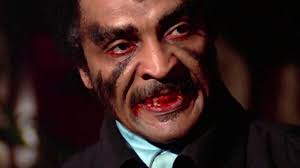
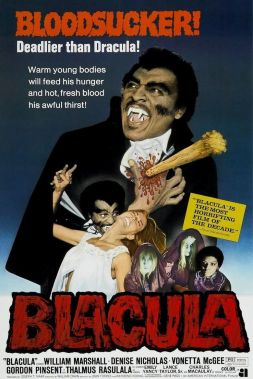 The 70’s were a time of revolution in cinema. Directors were finding greater freedom in the stories they could tell and what they could put up on the screen for mainstream audiences. Those years also saw the rise of blacksploitation films. Blacula was one of the first of that era’s blacksploitation horror films. It also was one of the rare films of the time with a black director. If you want to hear some interesting stories of what it was like, see Horror Noire (currently on Shutter), which includes interviews with Blacula director William Crain.
 Organized by Louis Farrakhan, the Million Man March was a march on Washington for black men. The purposed was a reclaiming of roles that some leaders felt had been taken from black men (both through institutional racism and by their own choices). Farrakhan was always a rather controversial figure (mainly due to his tendency towards anti-semitism). But back in the 1990’s he was still seen as a leader for many black Americans.
 Set 300 years after all but one “sky city” fell to the earth, Dr. Dyson Ido finds the remains of a cyborg with a still functional human brain. In this future, cybernetic are a part of life, there are many that have cybernetic limbs. Ido runs a clinic helping the people of the earthbound Iron City that is in the shadow of Zalem. He provides her with a body and when she awakens with no memories, he names her Alita.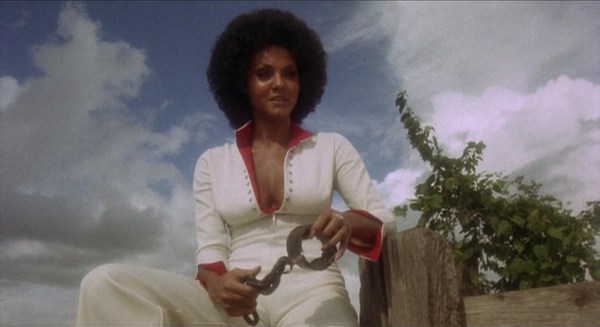
 Diana’s beloved has been murdered…seeking revenge, she reached out to Mama Maitresse who calls forth the mystical Voodoo Priest Baron Samedi. He raises an army of the undead, telling Diana to “put them to evil use…it is all the want!”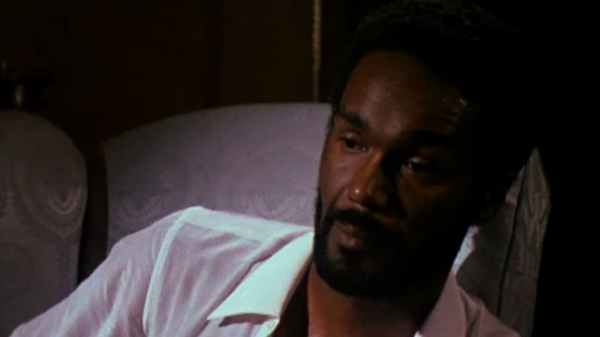
 Dr. Hess is attacked by his assistant, who promptly commits suicide. When he awakens, Hess has no wounds and he has a compulsion to drink blood. He stores his assistant’s body for safe keeping, but then is contacted by Ganja, the assistant’s wife. Ganja discovers her dead husband, but ultimately is both seductress and seduced by Hess.
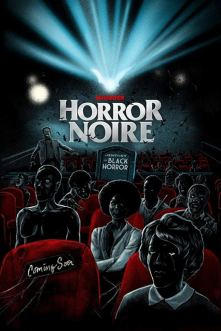 When you think of horror, it can often seem like people of color don’t exist. The Universal classics were devoid of black people. And even when they were present, they were violent savages (1933’s King Kong).
 Veronica, Linda and Alice have lost their husbands in a tragedy. They discover their husbands were professional thieves. To add to their grief, they find their lives under siege, specifically from Jamal Manning. While he is running for public office, Manning is also a local crime lord…and it so happen’s the women’s husbands died stealing from him. He wants his money and gives them a month.
 Tripping Through Gateways