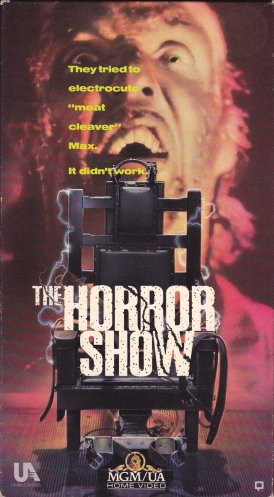
Open House pt 3 (House III: The Horror Show, 1989)

House_3_PosterAfter the failure of House II and the collapse of New World pictures, the franchise took a bit of time off.  When Sean S. Cunningham found new studio for funding, the new team wanted to give the franchise a fresh start. So in America, they called the film the Horror Show, while in Europe it would be called House III. Cunningham decided this was better than nothing.

But the end result is that there is nothing that really ties the film to the franchise. There is no house the film is centered around.  Instead, the film focuses on traumatized detective Lucas McCarthy.  A family man, he is overwhelmed by nightmares about Max Jenke, a notorious serial killer he put away. Okay, most of the kills happen in the house and Max’s spirit is primarily focused on the McCarthy family, but the house never feels like a center piece or character as the two prior films.

But when Jenke is put to death by electrocution, he is actually set free as a vengeful spirit and sets out to torment McCarthy.

McCarthy must try and stop Jenke, while convincing himself, the police and his family that he is not going crazy and homicidal. This film also lacks the sense of fun of the previous two entries, it’s tone dreadfully dark. I mean, Brion James turns in a wicked performance, but he is a much darker take on the Horace Pinker character, making this film a more dreary ride.  Even with Lance Henrickson at the lead, it never rises above the standard fare of super natural horror. Writer Allyn Warner even took the infamous Allan Smithee credit. This one just lacks the identity of the first two films.

Open House Pt 2 (House II: the Second Story, 1986)

House_2_PosterJesse has inherited his ancestral home and finds himself drawn to the history of the structure.  His girlfriend works for a sleazy music executive and so his friend Charlie arrives with his girlfriend, the singer in a band to try and get her career a boost.
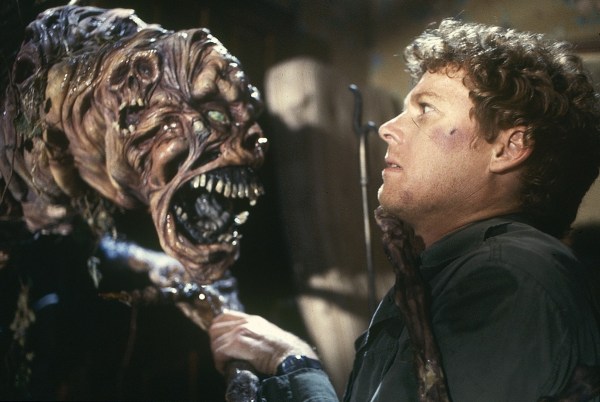
Jesse discovers that his great great grandfather (for whom he is named) may have been buried with a great treasure…he and Charlie decide to go to the graveyard nearby and exhume his grandfather.  When they find the  treasure, it is a crystal skull…but that is not all… great great grand dad is still alive. They bring him back, and it turns out that the elder Jesse is a kindly old cowboy who explains that the house is a unique nexus of time and space.  But they must protect the skull as evil seeks it out for evil’s own gain.

Each room can lead to another time and place, fraught with excitement and danger. And it is this premise that makes House II stand apart from the first film.

Rather than follow Cobb on another tale in the house, they opted to tell a stand alone tale in an all new house. The tagline was “It’s Getting Weirder” and boy how… the premise is really more of a sci-fi fantasy adventure with little horror elements. Heck the film features Jesse and Charlie acquiring a weird but cute Caterpuppy and a prehistoric baby bird.

The cast of characters are a lot of fun, especially Royal Dano as Gramps (who even gets an emotional moment when he realizes he looks more corpse than living man) and a real highlight in John Ratzenberger as Bill Tanner. The second Cheers alum in the franchise was a coincidence…but frankly it would have been a hilarious conceit to continue the trend.

The film did not do very well upon release, but found new life on TV as it was PG-13 and could actually be played virtually uncut.  And the fact is, this movie is just a lot of fun. It may not be much of a horror movie, but it is funny and exciting.

Open House pt 1 (House, 1985)

House_1986_PosterSo, in the early 80’s Sean S. Cunningham was working on expanding on his success with the Friday the 13th franchise. Teaming up with Fred Dekker (screenwriter and director of Night of the Creeps and the Monster Squad) and Ethan Wiley to make a haunted house film directed by Steve Miner (Director of Friday the 13th pt 2 and Halloween H20).

House tells the story of a popular horror writer who struggles with his post traumatic stress from his time in Vietnam. In addition, since the death of his son, his marriage has fallen apart. He decides to tackle his demons by writing a book about his time as a soldier. He inherits a house from his aunt who hung herself.

As he sets forth making the house his new home, he starts to deal with bizarre phenomenon…like monsters coming out of closets and a monster version of his ex-wife and visions of his dead son.

House is one of the more unique horror films of the mid-80’s. It is very intentionally meant to be fun.  The monsters are fun old school practical, but the film never is all that scary. William Katt plays Roger Cobb serious, but with just a hint of a man wondering if he is caving in to absurdity. George Wendt (Norm from Cheers) is his neighbor Harold.  Wendt is pretty open that back in 1985, his Cheers success kind of fed his ego to feel he was better than appearing in a horror film (Wendt looks back on this as foolishness on his part and feels the movie held up). This may have benefited his performance though, because he is really entertaining.

house_newspaper_adAs noted, in spite of there being plenty of monsters, this film is tonally light.  But it benefits the film. House is a lot of fun to watch, and overcomes any limitations of it’s budget to be a memorable time.

Poisoned Earth pt 4 (The Color Out of Space, 2020)

Color_Out_0f_Space_2020_PosterRichard Stanley has returned after nearly a 20 year absence from theatrical filmmaking. And I must say, it is a welcome return.

Using a modern setting, Stanley and writer Scarlett Amaris stick closely to the source material.  The meteorite falls near their home and starts to infect the land around them.  The trees seem to have an unearthly sway and there is beautiful unearthly lights.

The family’s youngest son starts to hear a voice from the family well.  There are weird noises and the animals start to behave in an odd fashion.

I like that the family in the film is in less conflict with each other.  It really sells the terror that they seem to really love and care for each other. Cage gives a really good performance here, not as bombastic as Mandy, but very much a man trying to protect his family in the face of a pending implosion.

The effects are quite good, and Stanley shows a real understanding of how to use digital to enhance his practical effects.

The Color Out of Space is a strong return for Stanley and easily one of the best Lovecraft adaptions committed to film.

Poisoned Earth pt 3 (The Color Out of Space, 2010)

Color_Out_of_Space_2012_PosterA young man goes to a small town in Germany in a search for his father.  His search for the truth leads to the discovery of a meteorite that landed years before and corrupted the land.

This is mostly a german language film made on a small budget.  What really makes it stand out is the visual choices the filmmakers have chosen. It is primarily presented as a black and white film, giving a feeling of desolation to the film.

But when things start to fall apart, we are introduced to a neon violet color that pops beautifully against the stark black and white.

The visual spectacle is what really makes the film interesting, and it definitely is a visual treat.

Poisoned Earth pt 2 (the Curse, 1987)

The_Curse_PosterThis adaption of the Color of Space picks up at the time the meteorite crashes.  Going back to a small farm setting the focus is on the struggling Crane family.  The local realtor is working on a secretive deal to get people to sell their land to him cheap, but Nathan is holding out.
This film amps up Nathan as a religious man, making him a stern preacher.  His youngest son Zack feels out of place in his family.  There is the implication that his mother has a wandering eye and has been unfaithful.  The family is a bit stressed before the meteorite lands, but once it hits, the family starts to unravel.

This is closer to the original story, though as I recall, the religious emphasis  is more prominent in the movie.  The effects range from decent to blatantly obvious latex masks that do not blend very well at all. Claude Akins is very good at the role of deeply religious man teetering on the edge.

This is a decently fun adaption, clearly done on a restricted budget. One of only three films directed by actor David Keith, this showed some promise.  The Curse became an anthology series with three more direct to video films.  The Curse II: the Bite (which I have a soft spot for) and the Curse III: Blood Sacrifice and a film not actually made for the franchise call Catacombs (but titled as the Curse 4: the Ultimate Sacrifice) had no connection to the first film, and none were based on Lovecraft either.

Again, this is a decent adaption, it is definitely very much a product of the eighties, even in its reflection of the world encroaching on the struggling farmer. But it is a fun watch.

Poisoned Earth pt 1 (Die, Monster, Die!, 1965)

Die_Monster_Die_PosterLovecraft is a writer that, in spite of his personal failings (you know…racism), inspires creative people. His stories are creepy cosmic and occult based horror. Die, Monster, Die! adapts the memorable the Color Out of Space.

Stephen Reinhart has been requested by his girlfriend Susan to come to her parent’s remote home.  When he tries to find transportation from the nearby town, nobody will take him out there, refusing to explain why they seem so fearful of the Whitley Estate.

On his way he finds a decaying forest and when he arrives at the Whitley home, he finds that Susan’s mother has taken ill and her father is behaving very mysteriously.

What he discovers could doom the world and Susan’s mother begs Stephen to take Susan far from their estate before what has befallen her starts to consume Susan as well.

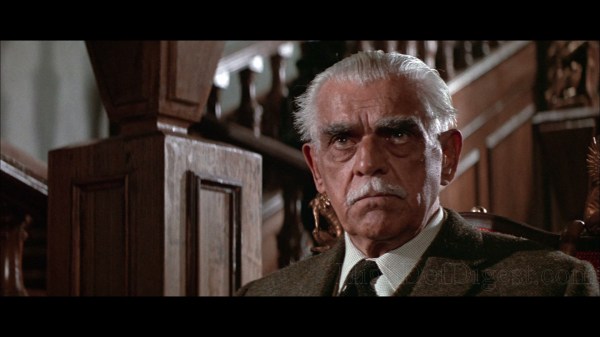
Die, Monster, Die follows the core idea of a meteorite that mutates the world around it…giant plants, mutant farm animals, people deteriorating monstrously. But it abandons the setting of a farm house for more of a gothic stately mansion.  The film is colorful, especially the greens.  The visuals still hold up and Karloff gives a nice menacing performance throughout the film, without being so far that he cannot also be sympathetic.

This is an entertaining adaption that is definitely a product of it’s time without not being to corny. Instead, it has a nice Hammer film feel to it.


World Washed Away (The Last Wave, 1977)

The_Last_Wave_posterWhen five Indigenous men in Sydney are accused of murder, a lawyer (with no experience in murder defenses) is called on to provide their defense.  But instead, he finds he may have always been a part of something larger.
Haunted by nightmares and visions, including of Chris Lee (one of the accused), he finds he may be on the verge of a world ending cataclysm.

The Last Wave is Peter Weir taking his time and looking at the possible end of the world on a very small scale.  This is effective, as Richard Chamberlain struggles to piece things together and learn from his indigenous clients what is truly happening.  It ends on a haunting and slightly ambiguous note, but so very effective visually.

The Last Wave is kind of a forgotten film, but it is a strong entry in the realm of apocalyptic horror.

Now You See Me (The Invisible Man, 1933)

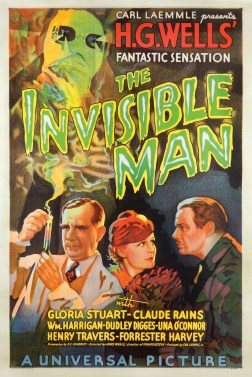
Invisible_Man_1933_PosterThe Invisible Man opens mid story.  A mysterious bandaged stranger arrives at a tavern and demands a room.
When he becomes abusive to the tavern owners the police come and the truth is revealed…beneath the bandages is emptiness. Meanwhile, associates of the invisible man are trying to locate him in the hopes of curing his condition.

It is revealed that while he is initially trying to heal his infliction, Jack Griffin is being driven mad with power through the invisibility. Through his beloved Flora and her father, we discover he was a better man, and they are hoping to return him to that.

The idea that invisibility would turn any man or woman deviant no matter how decent they are is not really quite explored here, as it is shown to be a side effect of the formula that is driving him mad.

The Invisible Man is short and moves quickly, and Claude Rains is quite entertaining.  The effects are still incredibly effective, making this a fun part of movie history.

The Art of Gaslighting (The Invisible Man, 2020)

Invisible_Man_2020_PosterWhen the Tom Cruise update of the Mummy crumbled, so did the planned Dark Universe that Universal was placing hopes on. Instead, Universal penned a deal with low budget horror production studio Blumhouse.  They brought in director Leigh Whannell to make a lower budget re-imagination of the character.

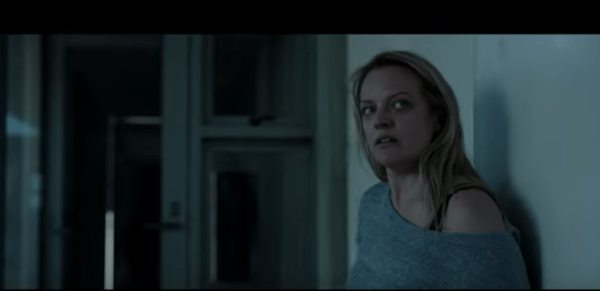
Whannell moves the focus to Cecilia Kass who is trying to escape an abusive relationship with a famous optics tech scientist.  She tries to hide from him until she is informed that he has committed suicide. At first, things start to look up and improve…but suddenly, mysterious occurrences begin to occur that slowly cause Cecilia to unravel…she is convinced that her ex Adrian is still alive (the film does not hide this, both the trailers and film make it clear that Adrian is messing with Cecilia).  However, she cannot convince anyone of this.  Adrian starts to escalate things, severing her relationships and interfering with all attempts to move forward.

Moving the focus from a mad scientist to the victim of an obsessed stalker is highly effective.  Whannell constructs an incredibly intense opening sequence, with no effects beyond the use of sound and the motion of the camera.

The whole film uses angles, shots and general camera movement that causes you to distrust your eyes.  And it is incredibly impactful for the viewer as we search the screen for what is…wrong.

Moss gives a terrific performance.  We know she is not crazy, but her descent into obsession with proving Adrian is still alive is visceral and shocking.

I also really liked Aldus Hodge who is a police detective friend allowing Cecilia a home in which to stay.

The Invisible Man is an excellent thriller and I highly recommend it.

Blog at WordPress.com.

Up ↑