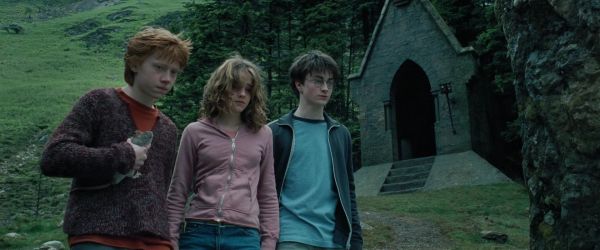
 Continuing to steamroll on, the third film introduces the concept of the wizard prison Azkaban. It appears to be the only prison, and it is a place you do not want to go. The wizarding community is on edge, because of the notorious killer, Sirius Black has escaped. He is infamous among good wizards of his betrayal of his friends James and Lily Potter.
The kids meet their new Professor for the Defense Against the Dark Arts. Professor Remus Lupin is another mysterious character who appears to harbor a dark secret (but magically, was born with the last name that gives it away). He, however, seems very kind and Harry learns that Lupin was close to his parents.
The film also brings in two important plot devices. One is a cloak of invisibility (which will figure greatly later in the series) and the other is the Marauder’s Map. The map shows everyone who exists in the school and where they are. When Harry notices a person on the map believed to be dead, it kicks off a mission to determine what is going on.
A large focus of the story is Lupin teaching the kids to conjure a defensive spell known as a Patronis. The Patronis allows defense against mystical creatures and in this film, that is primarily the Dementors. Looking like a grim reaper, the Dementor is an Azkaban guard. They can literally suck the joy and will to live from your body, leaving the victim in torment.
Harry, Hermione, and Ron uncover information hinting that Black may not be who everyone claims he is. The story culminates in Harry and Hermione pulling a magical stunt to pull off some rescues and save the day.
Columbus stepped away as director for this film Warner Brothers brought in Alfonso Cuarón. This turns out to have been a good choice, as instead of being dedicated to forcing the novel into a couple of hours, he (and screenwriter Steve Kloves) focus on the tone of the story. Azkaban represented a turn towards darker themes in the books, and the film matches that.
Gary Oldman and David Thewlis are welcome additions to the cast, with Oldman turning in a manic performance, reflecting the decade or so of imprisonment. But the biggest change occurred because between Chamber of Secrets and this film, Richard Harris passed away. Harris was just about 70 when the first film was being made, and he did seem quite fragile in the first two films. This played into the warmness of Dumbledore found in the books. He was replaced by Michael Gambon (Ian McKellen was offered the role, but turned it down on the reasons that he thought it would be risky trying to play another iconic character after playing Gandalf and felt it inappropriate to take over for Harris who had considered McKellen a “dreadful” actor). Gambon’s approach to Dumbledore is very different from Harris. His Albus is a bit tougher and sterner. This gets tempered out as the series progresses. Part of this difference is likely due to Gambon never reading the books.
The visuals of the film stand out in this film, with far better CGI than the previous films.
After two decent films, the Prisoner of Azkaban represents a step up for the franchise.

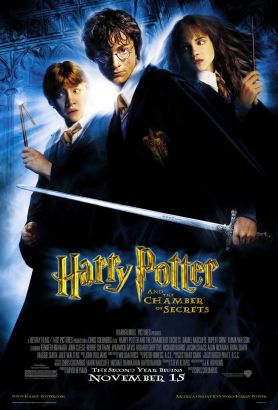 The first film was a huge success, and so a follow-up was certain. When the film opens, his guardians, the Dursleys, have given Harry an actual bedroom. But they also put bars on the window. A strange creature calling himself Dobby (and reveals himself to be a house elf) tries to convince Harry to not go to his second year at Hogwarts. But when the Weasley boys show up with a flying car, they break Harry out and get on their way. But after Ron and Harry are blocked from the magical platform to get to the train for Hogwarts, they take the flying car.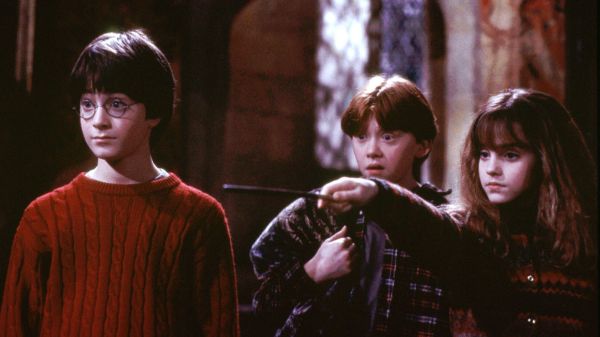
 Every so often there is a major phenomenon. And for the late 1990’s? That was Harry Potter. In a series of seven books, J.K. Rowling broke records with a tale of a young boy wizard. Kids were showing up to midnight release parties for the latest books and dressing up as the characters for conventions.
 Okay, the title there is a little unfair. The cast is not all white or European. You have Chadwick Boseman and Elodie Yung for example. But still, our core heroes and central gods are pretty white. So, the title stays.
 Sea of Monsters leaves behind a lot of the characters from the original. And several of the actors. Lerman, Daddario and Jackson are back. Replacing Pierce Brosnan in the role of centaur Chiron is Anthony Stewart Head (Giles from Buffy the Vampire Slayer). This is actually a decent fit, as Head is capable of both intensity and scholarly attitude.
 Studios are always on the hunt for their franchises. And Harry Potter had everyone convinced they knew the formula. And so 20th Century Fox brought in Chris Columbus, director of the first two Harry Potter films to adapt the Percy Jackson and the Olympians by young author Rick Riordan.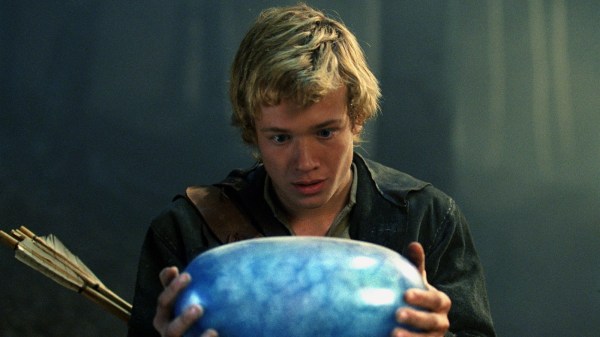
 in 2001 we got the two biggest film franchises of the new century. Lord of the Rings and Harry Potter proved the appetite was there for fantasy films. And so everyone was trying to get the next major franchise, snapping up young adult fantasy novels. One of those was Christopher Paolini’s Eragon.
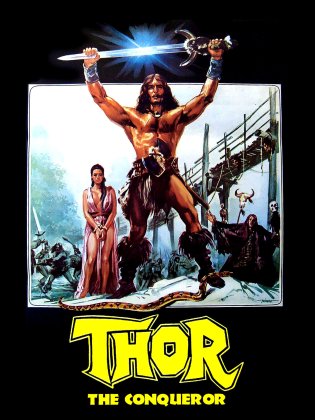 The prophesied ruler of the land has weaker language skills than the Hulk and has no idea what a woman is.
 Young Ilias is given a magic bow and sent on a quest. After saving a girl named “Girl Ilias Saves From Snake” from being bitten by a snake, he runs into Mace, a guy who has no friends. How do I know this? Because Ilias asks Mace his name and Mace tells him that his enemies call him Mace. Ilias asks what his friends call him and he answers back that he has no friends. He is a tortured soul, the man called Mace.
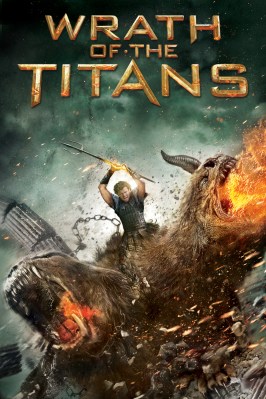 Wrath of the Titans tries to rectify the one thing missing from Clash of the Titans. Titans. In the original Clash, the Kraken was a Titan, but in the 2010 film, this was a bit clear. Wrath opens with the story of how Zeus, Poseidon, and Hades defeated their father Kronos and imprisoned him in the underworld. It also reminds us that Zeus and Poseidon had conned Hades by binding him to the Underworld.
 Tripping Through Gateways