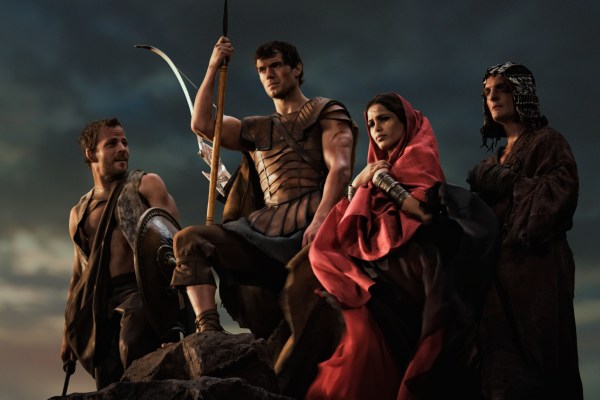
 Immortals begins with an ominous dream in which a man uses a mythic bow to free the Titans who were locked away by the gods. We are told how the gods defeated the titans, and in the midst of their battle the powerful Epirus Bow was lost. Now, eons later, the vicious King Hyperion seeks to find the bow and set free the Titans, allowing him to reign destruction across the earth.
A seaside village is under threat from Hyperion’s armies, hastened when a soldier betrays them. This results in Hyperion killing the mother of peasant Theseus. Unknown to anyone, including Theseus himself, he was trained as a warrior by Zeus himself (in the guise of an elderly man). Theseus is hopeless and enslaved, until Phaedra, the virgin oracle, seeks his help in escaping the grasp of Hyperion. Their mission becomes that of stopping Hyperion from freeing the Titans.
The gods of Olympus are not playing games here, and in a way the film kind of inverts the Clash of the Titans remake. Instead of the gods demanding the faith of men, here, Zeus implores the other gods to follow his lead and have faith in mankind. They have a rule against direct interference (Zeus’ loophole for helping Theseus was that he did not use his god state, but rather did his work in the form of a human). The other gods are more impatient, wanting to intervene directly.
The film does not hold very tightly to the myths of Theseus (the mythical founder of Athens). This is not to say those stories go unacknowledged. But they occur more as brief incidentals, or serve other purposes than the original tales.
Immortals is quite a visually stunning film. This is no surprise, coming from director Tarsem Singh, known for films like the Fall and the Cell. An aesthetic of beauty stands above practicality with wild armor and flowing robes filling the screen.
And while it uses a similar style to films like Zak Snyder’s 300, it feels very much like it is truly the vision of it’s director, rather than following in a popular style. The gods move in a unique way, with their golden armor creating motion trails, and while they are moving through fights quickly, their blows strike the targets in slow motion (simultaneously). And yet, the film ends up feeling more like eye-candy than a real story. Everything is so pretty to look at and yet, feels incredibly empty.

 King Aristo has been killed and his throne taken by Pelias. But it is revealed that there is a prophecy that one of Aristo’s sons (wearing one sandal) would bring the downfall of Pelias. But before Pelias strikes the child down, he is told that killing the infant will mean his own death.
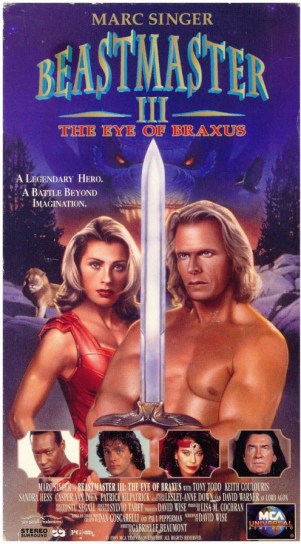 So, this movie picks up with Dar continuing on his casually nomadic life. The evil Lord Agon is trying to gain the power of the demon Braxus. He is living off the life force of his community and needs the Eye of Braxus to complete the process and gain power and immortality.
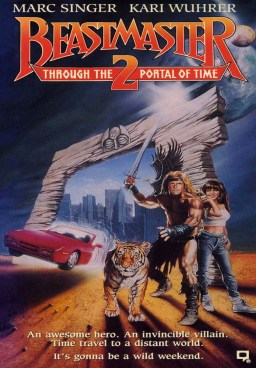 Dar is off living as a nomad with only his animal companions. The evil Arklon is trying to take over their world. He is promised the ultimate weapon by the sorceress Lyranna. She brings him to a portal to another world. Just as they are planning to go through, a car, followed by two cop cars burst through. The first car is occupied a young woman named Jackie. She meets up with Dar, and is, obviously confused.
 The early eighties brought us a lot of sword and sorcery type films. Don Coscarelli followed up his crazy 1978 horror film Phantasm with this more straightforward (but still odd) fantasy film.
 Ten years of film-making culminates with Harry Potter and the Deathly Hallows Part 2. After managing to destroy a couple of the Horacruxes and escaping the clutches of Bellatrix Lestrange, the trio realizes they need to return to Hogwarts. But this is not so simple. Snape is now Headmaster, Dementors patrol the grounds and Death Eaters are on the watch for Harry Potter.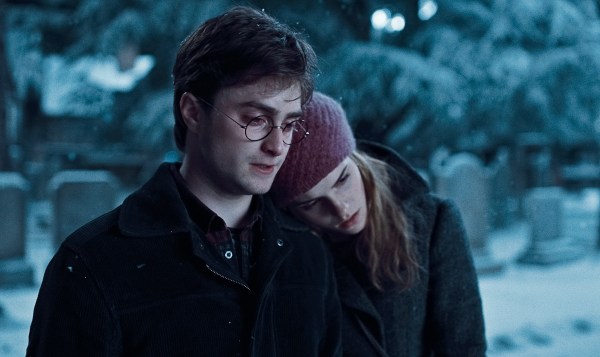
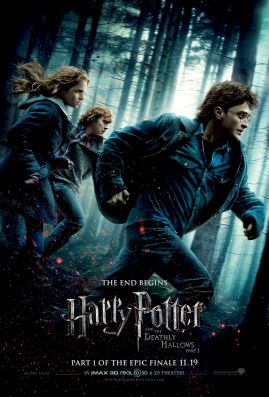 Finding the world becoming more and more dangerous, Harry and his friends leave behind the muggle world. We see them saying their goodbyes, or in the case of Hermione, tragically causing her non-magical parents to forget she even exists. Several members of the Order of the Phoenix arrive at the now empty Dursley residence for Harry. To protect him, several of the members take the polyjuice potion to assume the likeness of Harry, creating multiple Harrys.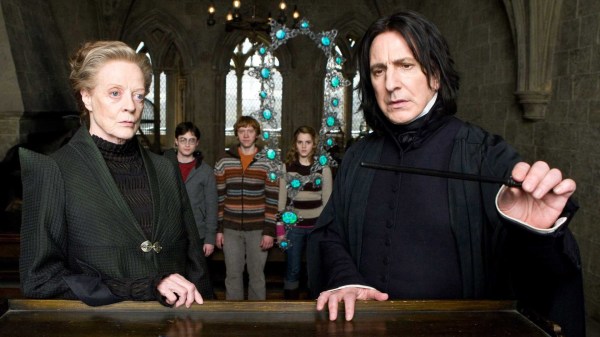
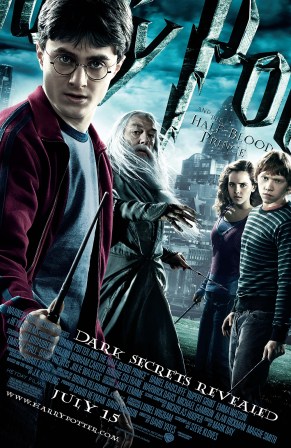 Now that the magical world knows Harry and Dumbledore were, in fact, correct and the Voldemort is back, the Death Eaters are becoming bolder than ever, going as far as to attack the non-magical world. Harry is hesitant about returning to Hogwarts, but Dumbledore convinces him and uses Harry to entice another professor back to Hogwarts.
 The film opens with a rather heartbroken Harry Potter, haunted by the death of Cedric Diggory and the rise of Voldemort. The Ministry of Magic has worked very hard to portray Harry and Dumbledore as crackpots. Confronted by cousin Dudley and his friends, Harry becomes angry with Dudley and pulls his wand on him. This is a nicely acted scene, as the moment Dudley sees the wand, his expression goes from cocky to scared (while his friends all laugh, having no idea Harry is a wizard).
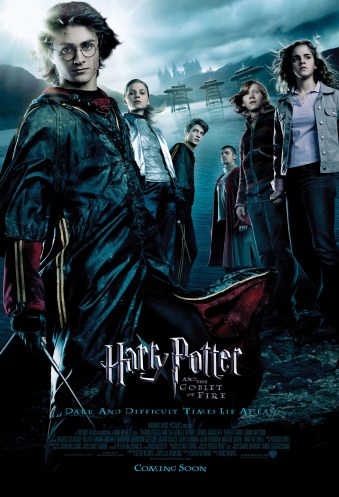 With the fourth film, we find an expanded universe. Harry and the Weasley family are off to watch the Quidditch World Cup. This is really the first view the films have given us of Quidditch beyond being a school sport. Much like an international football, people wear the colors and logos of their favorite teams.
 Tripping Through Gateways