To Rule Them All Thrice (The Lord of the Rings: The Return of the King, 2003)

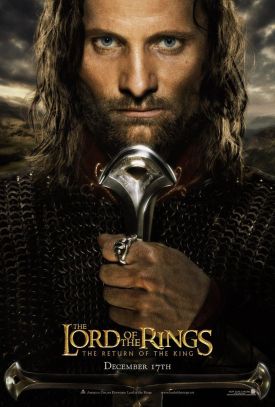
LOTR_Return_PosterAll stories must conclude.  Some just take longer than others.  A lot longer. But more on that later. Sauroman is defeated, Aragorn and the people of Rohan have defended Helms Deep and Frodo, Sam and Gollum are at the door of Mordor.

Te film actually opens by jumping back several hundred years before the story we have been watching where we see hobbits Sméagol and Déagol fishing in a small boat.  After being pulled into the water, Déagol finds… The Ring. Both are gripped by obsession for the ring, resulting in murder.

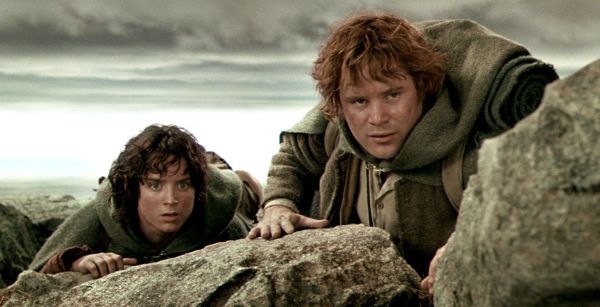
Aragon and the others make their way to Gondor to unite the armies of men against Mordor and it’s seemingly endless forces.  We see most of our characters reunited.  Sam and Frodo’s relationship is tested by the duplicitous nature of Gollum.

Without question, the visual effects, costume and set design are top notch.  There really is not much to say here that I have not recognized in my previous reviews.  Sure, there are minor slip-ups (hobbits that are clearly height doubles wearing masks of the actors) and a few of the “Legolas being amazing” sequences in battles are surely CGI.

Faramir and the hobbits all get better deals here. Both Merry and Pippin get to be more than comic relief, with downright heroic moments and emotional moments.  There is a scene between Pippin and Gandalf where they say nothing, but share a look of great heart break from across the room, as if Gandalf knows Pippin is about to face some truly unfair tests.

Gimli, unfortunately, has never recovered from the Two Towers and remains embarrassingly frustrating comic relief.

Elijah Wood tells the story of how Jack Nicholson told him he left after the first ending. And this film has, like the book, several endings.  Though, most lamented is the scouring of the Shire, which the extended edition and theatrical cuts never included (the first film paid tribute to it in a vision with Galadriel). Here, the extended cut moves the unceremonious end of Sauroman from the scourging to earlier in the story.

But the frustrating part is that each “ending” feels somewhat necessary. Each gives a certain sense of closure to the tale. For all their flaws, the trilogy comes together and has far more to love than hate.  The strengths of the performances, the overall writing, the effects, the set design, the costumes…brings together one great epic.

Two Rule Them All (The Lord of the Rings: The Two Towers, 2002)

LOTR_Two_Towers_PosterPicking up in the aftermath that split the fellowship apart, the Two Towers has a lot on it’s shoulders. Frodo and Sam are now on their own, making their way for Mount Doom to destroy the ring.  Aragorn, Legolas and Gimli are trying to rescue Merry and Pippin, who are believed to have been kidnapped by Orcs.

We quickly learn that Merry and Pippin found escape from the orcs on their own.  Aragorn, Legolas and Gimli are diverted by Gandalf who directs them to Rohan.  Gandalf realizes the time has come to prepare the armies of men for an epic battle against Sauron and his forces.

Rohan is under the influence of the Wizard Sauroman.  Their king is in a sickly trance, poisoned by Wormtongue, the agent of Sauroman.  Upon arrival, Gandalf excises the presence of Sauroman and chase out Wormtongue.  They warn the people there of the coming danger, and all agree they must make their way to an old fortress to protect everyone.

Meanwhile, Merry and Pippin discover the ancient race of Ents.  The Ents are ancient and sentient trees.  Pippin becomes determined to convince Treebeard and his fellow Ents to fight against the advancement of Sauroman and his orc army before it can join Sauron’s army.

And of course, there is Frodo and Sam.  Theirs is a somewhat less exciting route, as they are trying to avoid being seen.  Frodo confronts Gollum, who has been shadowing he and Sam in his attempt to get the ring back. Frodo takes pity Gollum, and chooses to take him along as a guide.

In the first film, we only had glimpses of Gollum.  This character presented a huge challenge and still stands as a monumental achievement in CGI effects.  Coupled with a terrific performance by Andy Serkis, Gollum comes to tragic and frightening life.  Serkis takes on a voice that can seem almost painfully childish and monstrous…sometimes at the same moment.  The film has a great moment using reflections and camera angles in which Gollum argues with himself over serving Frodo faithfully versus betraying him and stealing the ring back.

In the book, the stories are separated into two parts.  The first half follows Frodo and Sam and the second half follows the other characters. In one way, this does allow some interesting storytelling moments.  Frodo and Sam’s story will reference them seeing stuff we only see played out in the second half of the book.  But it also can make the Two Towers a tough read.  It does not break up the story enough.

Gimli continues his slide into little more than comic relief and Legolas even ends up having plenty of his swashbuckling antics coming off as comedic and cheesy (using a shield as a surfboard).

The film also undermines the character of Farimir, brother of Boromir.  In the book he is not tempted by the ring in any way.  He is a strong and confident man in ways his older brother was not.  Unlike Tom Bombadil, this not being tempted is an effective statement of Farimir’s character.  The film makes him much less sure of himself.  He is haunted by the ghost of his brother and his father’s greater love for Boromir. He does, of course, make the choice he makes in the book, but the overly wrought drama of giving him severe daddy issues works against the character in frustrating ways.  Yes, it allows Sam to be a dramatic voice of reason…but it really is an unnecessary detour that also makes Farimir come off as needlessly cruel at times.

The Two Towers does start to feel a bit meandering at times.  The extended cut suffers from this even more, though some of the additional scenes are quite entertaining.  While not quite an Empire Strikes Back (which is a bit leaner storytelling) it still is a pretty impressive film.

To Rule Them All (The Lord of the Rings: The Fellowship of the Ring, 2001)

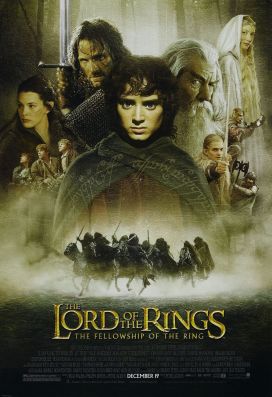
LOTR_Fellowship_PosterJohn Rogers, one of the writers of the abysmal Catwoman film once also wrote “There are two novels that can change a bookish fourteen-year old’s life: The Lord of the Rings and Atlas Shrugged. One is a childish fantasy that often engenders a lifelong obsession with its unbelievable heroes, leading to an emotionally stunted, socially crippled adulthood, unable to deal with the real world. The other, of course, involves orcs.”

And the Lord of the Rings is definitely one of those book series that had legions of admirers.  Ralph Bakshi has adapted the three books into two animated films in 1978 and 1980. And there were a lot of false starts until the late 90’s.  The first plan was to try and make one film…then they thought they could convince a studio to do two…but somehow, Peter Jackson convinced New Line the only proper way to do the film was to adapt each novel and film them back to back.  They then took it a step further and released the special edition DVDs.  These sets were expanded to include many scenes not used in the theatrical releases.  My reviews will be of the Expanded Editions.

The story of the Lord of the Rings is that long ago the evil Lord Sauron tricked the leaders of the Elves, the Dwarves, and Man, creating powerful rings for them all…secretly creating the one ring that would rule them all.  In a battle between Sauron and the final alliance of men, dwarves, and elves, Sauron was defeated.  Instead of destroying the ring, Isildur keeps it for himself. He is eventually killed.  The ring was then lost to time.  It was found by a creature who hid with it in the mountains.  It eventually fell into the hands of the Hobbit Bilbo Baggins. He has had it ever since.  The Fellowship of the Ring is the beginning of the final push to destroy the ring.

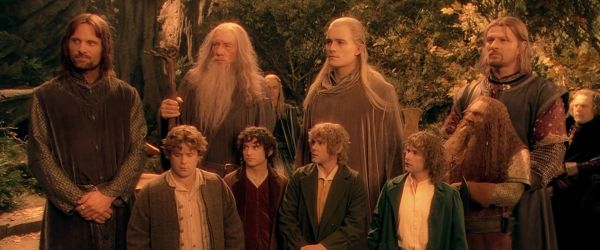
The wizard Gandalf the Gray calls upon Frodo, nephew of Bilbo for this task. He sends Frodo on, promising to meet in a small town.  Frodo is accompanied by his friend Samwise (or more simply, Sam).  Soon after leaving, they are joined by fellow Hobbits Merry and Pippin.  As they go on their journey, they pick up help from the mysterious ranger Strider (Revealed to be Aragorn, a descendant of Isildur).

When Frodo is wounded by a Ringwraith (the souls of the original nine kings of men who were enslaved to Sauron), he is whisked away to the Elvish city of Rivendell. There they meet up with what are to be the final members of the Fellowship of the ring, the Elf Legolas, the Dwarf Gimli and Boromir, son of the Steward of Gondor.

They find themselves constantly under attack, primarily from Sauroman, a wizard like Gandalf, but having chosen to serve Sauron. Using magic and a new generation of Super Orcs he tries to stop them at every turn.

Filmed in New Zealand, almost every shot of this film is awe-inspiringly beautiful. The Hobbit Shire has been carefully created bringing the environments of the book to life in a vibrant way.

Along with the sets, the film’s costumes are incredible.  Everything has power and weight.  The craftsmanship of the weapons and costumes immerses you into this world.

The visual effects have withstood the test of time.  A lot of Weta Workshop’s work is a combination of digital and practical.  But unlike far too many movies, the digital is groundbreaking and almost never distracting (except in it’s dedication to looking natural).  The Fellowship of the Ring broke new ground in its digital work to create massive armies that seemed to move without being duplicated.

The film also uses a lot of practical tricks to create the illusion of different heights.  Both Hobbits and Dwarves are supposed to be significantly smaller than the rest of the cast, and in spite of actors who are as tall as anyone else in the cast, using perspective tricks, smaller actors as stand-ins they manage to create a nearly seamless illusion.

And then there is the cast.  Some scoffed when Elijah Wood was cast as Frodo.  The books describe Hobbits in a fashion that insinuates, they are naturally a bit hairy and pudgy.  But Wood (and really the other hobbit actors) are rather attractive.  But They all do quite well.  And Wood and Sean Astin really sell the deep and heartfelt friendship between Frodo and Sam.  Frankly, I love the fact that the films capture this love.  Films featuring male relationships can often be quite superficial.

Ian McKellen, so compelling as Magneto in the X-Men films carries great weight here as the wizard Gandalf.  He is warm, yet can seem stern and menacing when necessary.  And he brings a sense of grandeur so necessary for such a character.  Viggo Mortenson brings a quiet nobility to Aragorn.  And Cate Blanchett’s Galadriel as an unearthly and elegant beauty.

This is not to suggest there are no flaws.  While not as large of an issue here, Gimli can often be reduced to comic relief (the same with Pippin and Merry). On the other hand, the storytelling is more expedient than the books. Often, Tolkien can seem a bit obsessive in his world-building, with sudden diversions into poetry and legends and language of Middle Earth.  The filmmakers wisely cut the Tom Bombadil sequence.  While this is a fairly loved section of the book, the screenwriters are correct that it undercuts the narrative of the Ring to suddenly have a character who is not impacted at all by it.  Especially so early in the story.  Personally speaking? I don’t care for that section of the book, and so I did not miss it within the film.

The Fellowship of the Ring is s very strong adaption of the book, full of epic adventure. It was a risky venture that paid off quite well for the filmmakers and the studio.



Roid Rage Part 5 (Conan the Barbarian, 2011)

Conan_the_Barbarian_2011_PosterAfter the attempt to (kind of) expand the Conan Universe with Red Sonja in 1985 fell short of expectations, the Conan Franchise went silent on the silver screen. While barbarians and fantasy seemed to have a fanbase on television throughout the 90’s, it was not until Game of Thrones that people seemed to feel like the genre of sword and sorcery could be revived.
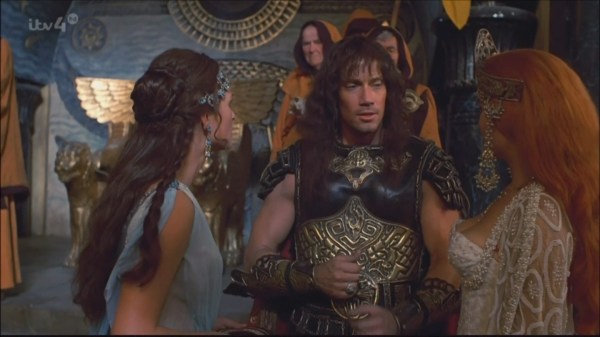
Stepping into the loincloth of Conan was Game of Thrones star Jason Momoa.  This film begins a bit more dramatically.  We are treated to a narration by God (an uncredited Morgan Freeman). The film explains Conan was born of Battle and then makes this wholly literal, as his pregnant mother is fighting at her husbands side.  Upon being mortally wounded, she commands her husband to cut the baby out so she can see him before she dies. So, it is a bit…over the top.  Conan is raised by his father, the chieftain of a tribe dedicated to being powerful and wise warriors. But when their village is overrun by Khalar Zym who is hunting for a piece of a mystical artifact that Conan’s father has kept hidden, Conan and his father are tortured.

The movie then jumps ahead to a grown Conan living the lifestyle of adventurer. He finds himself drawn back into the fight to end the dark plans of Zym, who, along with his daughter Marique, seeks revenge on the world for the loss of his wife.  They are seeking a pure blooded virgin for their special sacrifice. This turns out to be Tamara, whom Conan saves, forcing a battle of wills.

This Conan is a bit different from the Schwarzenegger version.  Momoa is a leaner and more verbal Conan.  This is actually more in line with Howard’s writings.  The massive musculature we associate with the character was a development of Fantasy artists and the 1982 and 1984 films.

They are clearly trying to touch on all the versions of Conan.  There are hints of the comics, the TV shows and films.  Here Conan is a more skilled warrior.  His father emphasizes the importance of the mind as a major component of the warrior.

Momoa is certainly entertaining as Conan.  But the story is rather lackluster.  Stephen Lang brings more to his role than seems to have been in the script.  And Rose McGowan is fairly creepy as Marique.

Tamara is a problem for the film though.  There is little for her to be, beyond a damsel in distress.  She spends a good chunk of the final action tied up, and contributes little to the resolution of the film.

Conan the Barbarian is uneven, and this results in a lot of it just not keeping one’s attention. We are left with a rather average film, rather than an epic barbarian adventure.

Roid Rage Part 4 (Kull the Conqueror, 1997)

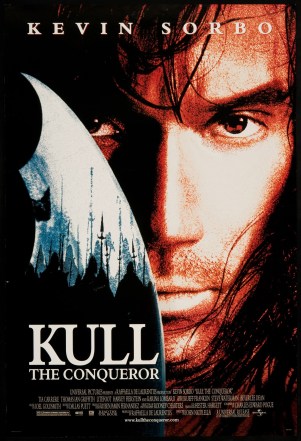
Kull_the_Conqueror_PosterBased on the popularity of Hercules the Legendary Journeys and Xena Warrior Princess, an attempt was made to revisit the worlds of Robert E. Howard.  This time, it was another of his sword and sorcery heroes.  Kull is a barbarian who blunders his way into the crown.
Really. He is trying to join an army, but the general mocks him, noting his army is comprised of men of noble blood and Kull is a mere barbarian.  The General is called back to the castle because the King is slaughtering all his next of kin. Kull shows up, gets into a fight with the king, slaying him.  As both the general and one of the King’s sons tries to claim the throne, the King gives them the finger and proclaims Kull King with his dying breath.

Rules are rules, and so Kull gets to live the good life.  Meanwhile, this shady guy with a beast man assistant is resurrecting an ancient sorceress who happens to be the magically babelicious Tia Carrere.  She plans to rule her kingdom again and seduces Kull.  After she and her minion convince everyone Kull was poisoned by a member of his Harem, Kull is tossed into slavery, but he escapes.  Then they go on a mission to get the magical power that can stop Carrere.

This is a pretty sub-par tale, even by fantasy standards.  It is not pulpy fun, and in spite of being a theatrical release? It feels like a weak TV movie. And frankly, the appeal of Sorbo is kind of lost on me here.

Kull is a lifeless adaption of Howard’s work.

Roid Rage Part 3 (Red Sonja, 1985)

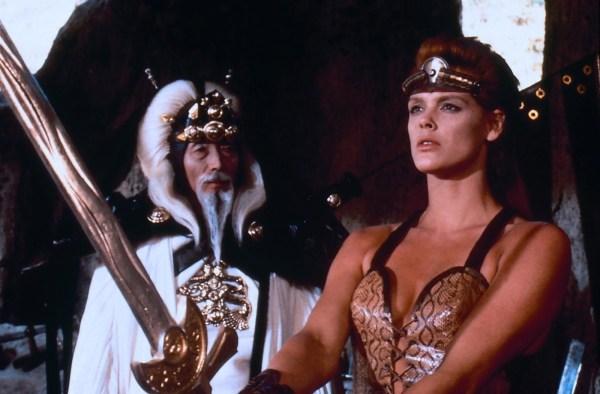
Red_Sonja_PosterThis film is an example of not getting your ducks in a row.  The producers wanted to capitalize on the success of Conan.  They decided on Red Sonja, a warrior woman within the same universe.  Well, sort of.  Red Sonja as written by Howard was not set in the world of Conan at all. She was a swashbuckler in the 16th century.  Roy Thomas introduced her in the Conan comics.
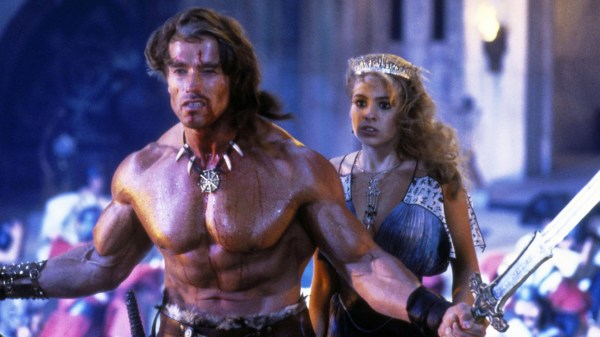
The producers convinced Arnold to return as Conan for what was supposed to be a glorified cameo, though, basically, he was tricked into a co-starring role.  But here is where they also ran into problems.  It turns out they did not have the rights to use Conan.  So, instead, after a brief prologue getting us up to speed on Red Sonja’s past (her family was killed when she rejected the advances of the evil Queen Gedren, who also had Sonja raped by her soldiers) we see Not Conan.  Now called Kalidor, he is on a mission, but keeps running into dead ends.  His destination is a temple where Priestesses are preparing to destroy a Mcguffin called the Talisman.  It is super powerful, so evil people want it, and the ceremony is interrupted by Queen Gedren.

One Priestess escapes and finds Not Conan.   She is Red Sonja’s sister.  Red Sonja has been training to be the Ultimate Warrior. And her trainer confirms she is officially the best.  But she should really trust men better.  This is one of those weird cartoon feminism things.  It also is a little odd that she is only distrustful of men, considering it was the Queen that had her family killed.  But whatever.

Red Sonja goes on a quest for vengeance after her sister dies, but also to, you know, destroy the Talisman.  She is joined by Not Conan, a boy prince and his man servant, the Beast Rabban. The second two characters are more comic relief, which undermines any possible seriousness the film has.  And Brigitte Nielson is not the most charismatic actress as Red Sonja.  Which is a problem, as she has to carry the weight of the film. Add to that the fact that this is her film debut and it seems remarkably unfair to her.

Directed by the same man who directed Conan the Destroyer, Richard Fleischer, this film really lacks the excitement of the Conan Films. A lot of the action seems repetitive and kind of boring. Red Sonja has enjoyed a resurgence in popularity, but this film does her no service.

Roid Rage Part 2 (Conan the Destroyer, 1984)

Conan_the_Destroyer_PosterConan the Barbarian was a decent size hit, so a sequel was put into motion. Conan and his narrator Akiro the wizard.  They are joined by comic relief and thief Malak.  The Queen Taramis calls upon the trio to join her guard Bombaata in escorting the virginal Princess Jehnna to retrieve a mystical gem.  Her goal is to harness the power of Dagoth, god of dreams.
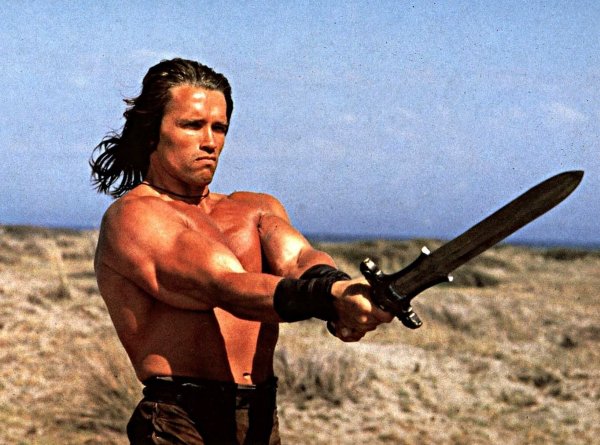
Along their journey they add the fierce warrior Zula.  Grace Jones is a striking figure in this role.

The story is slightly more detailed than the previous film, with Conan being a bit more talkative, though still mostly relying his physically imposing presence.  Wilt Chamberlain’s Bombaata is effective as a counter to Conan.

There are some moments that become almost comical that I suspect were not meant to be.  One example is a sequence where a monster swings Conan by his ankles…and it looks hilariously goofy.

That said, I kind of enjoy this film a bit more than the first film.  I think it is a bit more fun and the plot device is more interesting. The first film is another revenge plot, here, Conan is more of a Mad Max type of lead.

As an aside, I love that instead of calling the film Conan 2 or Conan the Barbarian II, they went with Conan the Destroyer.  I wish more films would do that with pulp and comic book origins.  Marvel has kind of started doing this (after missing opportunities like Invincible Iron Man).  But I think it helps give this film it’s own identity.

There has been talk about a third Schwarzeneggar film, called King Conan, paying off on the final images of the first film.  But I am not to hopeful after the recent attempt at reviving the franchise in film was not so successful.

Roid Rage Part 1 (Conan the Barbarian, 1982)

Conan_the_Barbarian_1982_PosterConan the Barbarian has conquered a lot of mediums.  Books, comic books, television…but I think it is hardly an exaggeration to say that the Arnold Schwarzeneggar films heavily defined the public’s perception of the character.
As a young boy, Conan’s family is slaughtered by a snake cult led by Darth Vader’s voice. Thulsa Doom lets his men sell young Conan into slavery.  Conan grows up to be super strong, going from slave to popular pit fighter.  This affords him rewards.  Eventually, he is free and goes to find Doom.  He makes friends with the mystic Wizard and the beautiful warrior Valeria.

Conan’s world is full of magicians and demons.  Thulsa can transform himself into a snake and commands his people to perform human sacrifices.  There is not a lot of depth to this character, and really, the story does not call for it.

Robert E. Howard’s Conan was on the high end of the “noble savage” trope.  This film aims more for the brute force savage.  Granted, they try and make sure he has a sense of goodness.  In one early scene, he is offered a  nearly slave girl. His first action is to give her a blanket to cover herself.

This Conan is a man of few words.  Even in the opening scenes with his parents, there is no real dialog. This may have been a bit of necessity, as Schwarzeneggar was very fresh to acting.

Conan the Barbarian is one of the better barbarian films of the early eighties and remains pretty entertaining.

Just Because… (Warcraft, 2016)

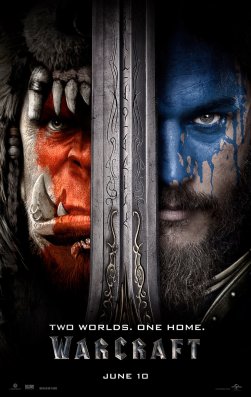
Warcraft_PosterSo…apparently, a horde of angry and evil Orcs travel through a portal to take over the world of Azeroth.  Some of the Orcs side with the humans, because “Not All Orcs” or some such.
To be honest? I watched this movie based on the popular Blizzard Entertainment open world game twice.  I know people got super immersed in the game.  I have never played it and do not know much beyond it is kind of like D&D…? And after two viewings, I remember very little about it.  My last viewing was actually less than 24 hours from when I am typing this.  And I absolutely have no strong memory about the film.  Which is disappointing.

I remember it had Jesse Custer and Tulip from Preacher in it.  And Ben Foster. And a sexy orc woman. Kind of a taller, more muscular Orion Slave Girl from Star Trek. Some magic powered guy talked about how he renounced his vows and wants to still help the kingdom fight the evil orcs. Lots of fights that did not make a whole lot of overall sense.  Or rather the plot seemed remarkably inconsequential.

I kind of hate writing these types of reviews.  I actually don’t like spending a tremendous amount of time tearing movies down.  Certainly, so movies are so ridiculous that they inspire hilarity.  And that can be a bit fun to write.

But Warcraft?  It is a competently made film.  It has a perfectly good cast.  And this is from Duncan Jones, a director who I think is quite talented. And yet, it just was…painfully forgettable. Not a good sign since, according to IMDB, the title is actually Warcraft: The Beginning.

The Myth, the Legend… (Hercules, 2014)

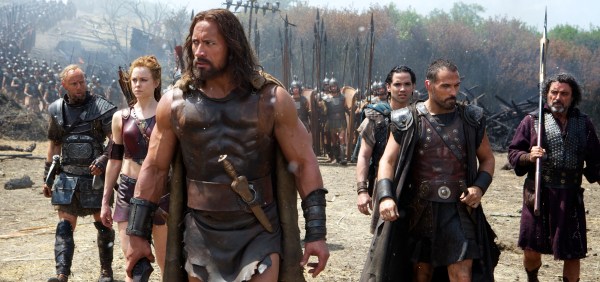
Hercules_2014_PosterThe film begins by detailing the great legends of Hercules.  As a child he defeats snakes sent by a jealous Hera. He fought the Hydra.  He defeated the Erymanthian Boar.  The Nemean Lion.  We discover this is a tale being told to some pirates about to kill a young man. Hercules walks into the camp, and before the lead pirate’s eyes, dispatches his crew.  We the audience realize he is not doing it alone. Hiding among the camp are a skilled team. It turns out that Hercules has a bunch of super friends that help feed the legend of an unbeatable warrior. And they are really just mercenaries.

While celebrating their latest victory, they are approached by Ergenia, daughter of Lord Cotys. She is asking for help to protect their home from a local warlord and promises the team their weight in gold. After agreeing, Hercules and his Amazing Friends help Cotys defeat the Warlord.  But they soon find they may have aligned themselves with the wrong people.

Hard to believe there were two Hercules films in 2014, but here we are.  This film is all about playing with the myth.  The film never confirms whether Hercules is truly a demigod or if the gods are even real.  At the same time, it never truly denies it either.  In fact, the film pretty much ends on a “Who knows???” kind of note.

There is also a mystery, as rumors of Hercules having killed his own wife and children dog him.  He was cast out of the kingdom of King Eurystheus for this and it is what led to his life as a mercenary. All of this plays around with the idea of myths and legends versus “the Truth”. This is another “all new tale”, though it tries to supplant those old tales of Hercules as the true story we never new.

Based on a graphic novel, I am somewhat relieved it did not go the route of 300 or Sin City. Or even it’s competition, the Legend of Hercules.  The action scenes are not heavily stylized.

The film seems to be relying entirely on Johnson’s charisma to sell the film.  The actions sequences are competent, but not especially memorable.  The element of the fantastic is blunted by the attempt to be coy about it’s place in reality versus fantasy. Even the best characters rely on great actors giving stock performances.  This is especially true of Ian McShane’s Amphiaraus, the wise drunk.

This is certainly one of Ratner’s better films…but frankly, that is not saying much.  Nothing really saves this from being disappointing at best.

Create a free website or blog at WordPress.com.

Up ↑