
 Back in 2008, Bill Gates retired from the day to day of Microsoft and had the plan to devote his fortune to charity. Twelve years of giving charitably, Bill Gates is now worth more than he was in 2008.
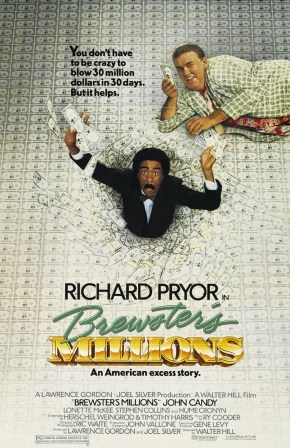
Monty Brewster is a down on his luck minor league baseball player who discovers he had a long lost rich uncle. Monty is the last living relative and is set to receive $300 million on one condition.
Monty is required to spend $30 million in thirty days. At the end of thirty days, he can only have the clothes on his back.
Monty takes the challenge, but finds quickly discovers the odds are against him. The Law Firm dispensing the money will gain all of the estate if they fail, and so they set about trying to sabotage him. His friends enjoy spending the money with him, but Monty has the problem that people assume he does not want to go broke and he cannot tell them why he is spending like a madman.
The seventh adaption of a book from 1902, this version is written by Timothy Harris (who wrote Trading Places, another “rich men put the poor through the ringer” story) and directed by Walter Hill (48 Hours and the Warriors), this version is a vehicle for the late Richard Pryor. And it is a fun vehicle. The antics as Monty tries to spend his way to being broke is supported by terrific cast. John Candy is Spike, Monty’s best friend. This is pure Candy charm at work, emphasizing a nice and goofy nature with just a hint of being a womanizer. Lonetta McKee is the person assigned to keep track of Monty’s spending, but unaware of his full situation, she is repulsed by his squandering of money when it could be used for good.
Thirty five years later, Brewster’s Millions still holds up as a fun comedic farce.
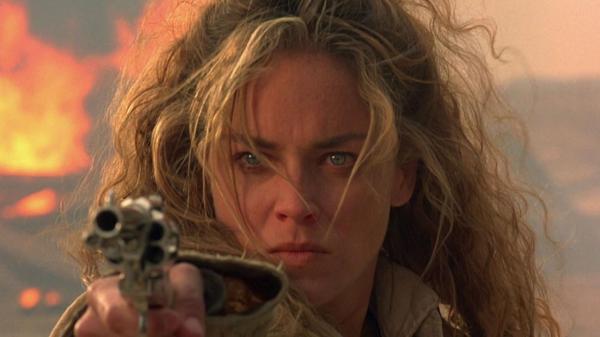
 Stop me if you’ve heard this one…a mysterious drifter comes to town with a purpose only known to her.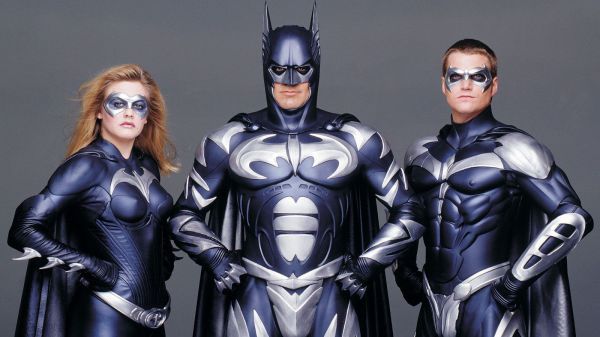
 Remember how I said Schumacher hoped to make Batman Year one by giving the studio what they wanted? Well, Batman Forever was actually a hit. It made a ton of money. And guess what the studio wanted? If you said, “A gritty look at Batman’s first year”? Slap yourself. They said “Give us more toys and product placement. Which led to a seen where Batman uses his BatCredit Card.
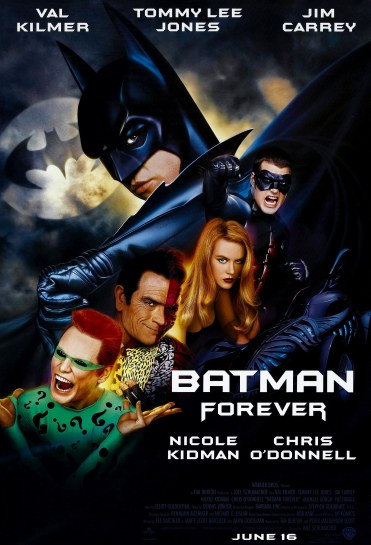 Batman Forever had some big shakeups. Tim Burton and Michael Keaton were out. Joel Schumacher and Val Kilmer were in. But the real shakeup was…Warner Brothers wanted to sell more toys. Schumacher had read Batman: Year One. He really wanted to tell that story. The studio was not interested. Schumacher thought that if he gave them the movie they wanted, he might be able to persuade them on the next film to do the film he really wanted to do.
 Jack Nicholson kind of established the villains would always be played by big names. Danny DiVito was brought in to play the Penguin. But this was not the traditional Penguin from the comics. Not merely a short round guy is a top hat, Burton envisioned an origin in which Oswald Cobblepot is born to an affluent family who are repulsed by his grotesque appearance. His father (played by Paul Reubens, who would play Penguin’s father on Gotham decades later) and mother (Diane Salinger) dump him over a bridge where he is found by penguins.
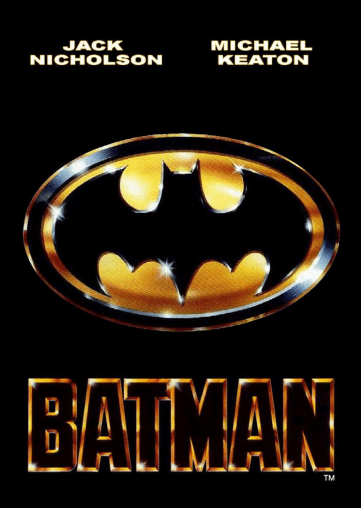 1989 saw the release of the most controversial Batman casting until Batfleck. Michael Keaton, known almost entirely for comedies such as Mr. Mom, Johnny Dangerously and Gung Ho was cast as Batman…oh the horror and oh the wailing. A long tradition of freaking out over casting began right here. People were a bit more open to Jack Nicholson playing the Joker.
 Tripping Through Gateways