
 Honestly, I was feeling slightly hesitant bout seeing this film. For one, the mini-series has a longstanding reputation as being “UN-filmable”due to it’s dense and complex structure. Certain “commentators” and critics had me wondering if I was about to see a movie that was setting new standards in levels of sex and gore.
Seventies Italian Giallo filmmakers have nothing to fear. Countless films crossed these lines long before Watchmen, and so as a film, Watchmen covers no new territory there, nor is it a sign of sinking depravity.
Overall, the film was one I really did enjoy. The visual look of the film is stylish, though not as hyper stylish as, say, Sin City or the Spirit. But it is a visual feast. It is interesting, because while the setting is often dark and grimy, the colors still seem vibrant.
The opening ten minutes are flat out brilliant, beginning with the murder that kicks off the mystery the forms the groundwork of the story. The credits are beautifully framed, they are like living photographs that give us a quick primer for the alternate timeline, from the rise of the masked hero to the present.
From there we jump into character introductions, following the one remaining masked vigilante, Rorschach. As personified by Jackie Earl Haley, Rorschach comes to life. Rorschach is admittedly a troublesome character. He’s a bigoted sociopath, yet, strangely compelling in his black and white view. The appeal of heroes that see in black and white is easy to understand. The willingness to step forward and fight a perceived evil without compromise sounds noble. But Rorschach is the other side of black and white thinking. People are rarely so easily divisible between all good and all evil (in spite of the right and left’s desire to cast anyone who disagrees with them in the role of great evil). And Rorschach is a reflection of the path blind devotion to a black and white view of justice can take. Haley still manages to give him moments where you are compelled to root for him, or even feel sorrow for him.
The Comedian, whose death is the catalyst of the story, is a heartless bastard, who has looked deep into the heart of the world and walked away without hope and full of cynicism and depravity. He likes hurting people and takes joy in cruelty. A nationalist with no soul, he ultimately becomes undone emotionally by own lack of compassion. He is the man stricken be a broken heart he did not think he had. And Jeffrey Dean Morgan brings the character to life. It’s a near perfect performance, successfully bringing Moore’s creation to life.
I was unsure of Patrick Wilson as Dan Dreiberg, the Nite Owl. Early pictures had him looking a tad too fit. But the instant I saw Dan, I knew this was the guy I remembered. Wilson brings the character a certain melancholy that I thought might be lost in translation. But this is a guy who regrets having given up, but has gotten soft over the years. He is truly the closes thing to a hero in the film.
Malin Ackerman was a bit more disappointing, at times her delivery is a bit stiff. However, there are times where she embodies the insecurity that riddles Laurie (Silk Spectre II). It just stands out against so many of the other performances. I also worried about Matthew Goode as he seemed… too fragile, but once on screen, I felt he carried the presence that was required by a character hailed as the smartest man on earth. Billy Crudup also provides a nice, distant feel with Dr. Manhattan. Manhattan is the most powerful, and only truly super powered hero in the story. But his powers are so immense, that he has lost touch with humanity, unable to connect to us any longer.
The story unfolds slowly, but certainly not at a boring pace, and Snyder has managed to keep it feel like it is moving along, even when watching talking heads. It’s a challenge to the traditional super-hero story in which might makes right and heroes are noble people. Instead, the heroes are driven by a myriad of goals. And even the film’s villain is seeking to save humanity from itself.
The film is visually stunning, and the costumed heroes do not look like silly tights. The sets (unlike Snyder’s 300, which was filmed in front of a blue screen, much of the streets of the collapsing 1985 cities were built) are carefully created and convincing. And the film really plays in to Snyder’s strengths as a filmmaker.
My two main criticisms are semi related. One is the music. The song choices are all so on the nose, Snyder shows little flair in this film for original song choices (unfortunate as his Dawn of the Dead remake had the single best use of a Johnny Cash song in a film ever, as well as other inspired choices). Really? The Sounds of Silence for a funeral scene? And then there is the absurdly explicit sex scene. People were laughing, suggesting it was having the opposite effect. It did not help that it was set to the Leonard Cohen classic Hallelujah. But in the overall scheme of things? These are minor quibbles, the film is largely a success and compelling in it’s own right.
Snyder did good. The cast did great (overall). The gory moment are not the point of the film, and while some are there, they are ultimately serving the story. Most of the condemnation I have seen for the film could be just as applicable to the source material.
It’s not for kids, and I would never recommend a parent take their child to this movie. But what do I know? I thought the Dark Knight was inappropriate for children and tons of people tell me their kids loved it.
On a random ending note…I saw one question that seems so, “Wait a minute”. On Veit’s TVs Rambo is playing on one screen. In a world where we won the Vietnam War… why would Rambo get made? I suppose in the world of Watchmen, it’s an alternate universe tale… “What if we didn’t win?” 

 Warner Brothers was seeking to expand the Superman franchise. Bringing on the director of Jaws 2 (
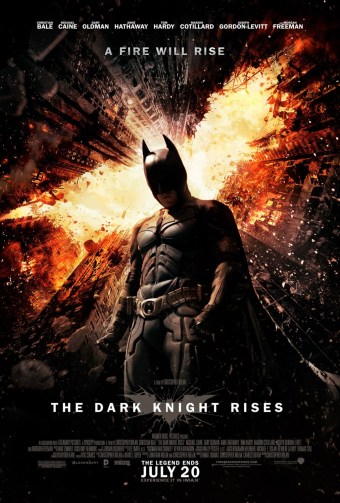 It was becoming clear that Nolan was planning to form a trilogy. The Dark Knight ended with Batman on the run, taking the blame for Harvey Dent’s death. It suggested Batman would be hiding in the shadows in his fight against crime. There were no real casting controversies this time. Generally, people seemed okay with announcements of Tom Hardy and Anne Hathaway.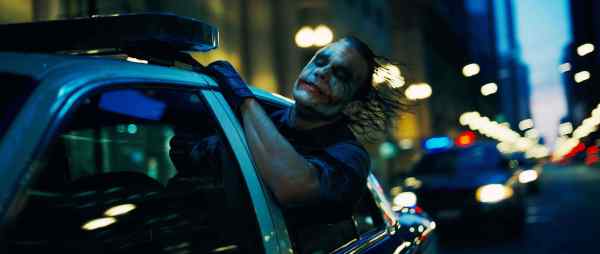
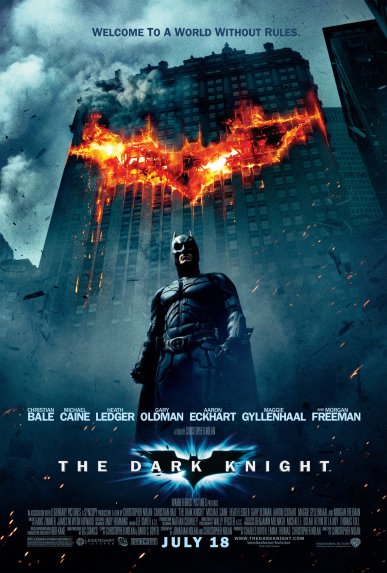 The recasting of Rachel Dawes with Maggie Gyllenhaal might have been the biggest casting controversy if not for the announcement of Heath Ledger as the Joker. Oh, the internet exploded. And then the movie came out and made a lot of people eat crow. The late Heath Ledger gave one of the best takes on the Joker. An anarchist who just wants to watch the world burn, The Joker starts out appearing like he is trying to take over the mob, only for them to be shocked as he proves he does not care about their goals at all.
 It took until 2005 for Batman to return to the big screen. From the start, we knew this was going to be a more serious take on the character than the previous films. They were starting over and taking their inspiration from Batman: Year One. Warner Brothers brought in Christopher Nolan (director of Following and Memento) to craft a Batman for the modern movie age. They started to announce their cast and people started to get excited. Christian Bale. Gary Oldman. Liam Neeson. Literally the most controversial casting choice was Katie Holmes…and that was more after the film was released.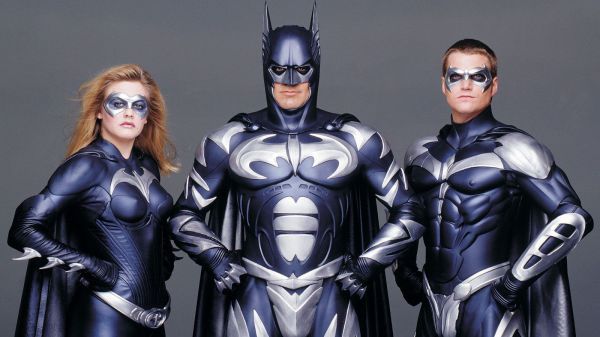
 Remember how I said Schumacher hoped to make Batman Year one by giving the studio what they wanted? Well, Batman Forever was actually a hit. It made a ton of money. And guess what the studio wanted? If you said, “A gritty look at Batman’s first year”? Slap yourself. They said “Give us more toys and product placement. Which led to a seen where Batman uses his BatCredit Card.
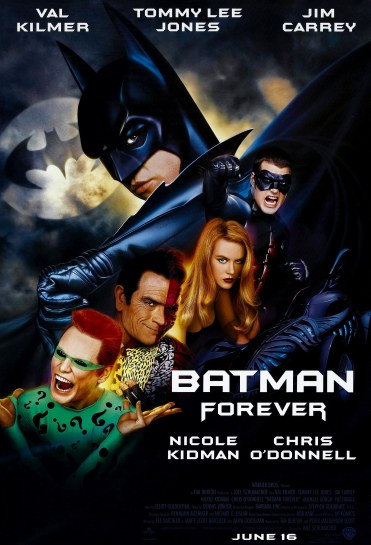 Batman Forever had some big shakeups. Tim Burton and Michael Keaton were out. Joel Schumacher and Val Kilmer were in. But the real shakeup was…Warner Brothers wanted to sell more toys. Schumacher had read Batman: Year One. He really wanted to tell that story. The studio was not interested. Schumacher thought that if he gave them the movie they wanted, he might be able to persuade them on the next film to do the film he really wanted to do.
 Jack Nicholson kind of established the villains would always be played by big names. Danny DiVito was brought in to play the Penguin. But this was not the traditional Penguin from the comics. Not merely a short round guy is a top hat, Burton envisioned an origin in which Oswald Cobblepot is born to an affluent family who are repulsed by his grotesque appearance. His father (played by Paul Reubens, who would play Penguin’s father on Gotham decades later) and mother (Diane Salinger) dump him over a bridge where he is found by penguins.
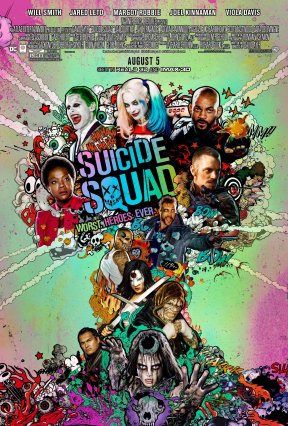 After the cool reception to Batman V Superman from critics and fans alike (It has it’s supporters) DC and Warner Brother started providing hype for Suicide Squad to divert attention. Set to classic hard rock music the trailers screamed “This will be fun and exciting!”

 Tripping Through Gateways