The Bigger They Come Part 9 (King Kong, 1976)

king_kong_1976_PosterIn 1976, we saw the first King Kong Remake.  Producer Dino De Laurentiis had this made amid legal hassles over who actually owned the rights to King Kong.  The setting is moved to the 1970’s and it is a new batch of characters.  Fred Wilson is an oil executive trying to reach the newly discovered Skull Island.  He is certain it will be a treasure trove of fossil fuels.  Jack Prescott is a primate paleontologist  who stows away.  He ends up being used as the staff photographer.  Finally, the freighter comes upon a raft with the unconscious Dwan, a beautiful young blonde.

The motives are different, but the results are the same.  The team discovers a giant wall (a surprise as it was assumed that the island had no native peoples).  The native chief is enthralled by Dwan and tries to trade girls for her.  They later kidnap Dwan  and offer her up to Kong.  Jack leads a team to save her, and then Fred decides to bring capture Kong.  It follows the original story pretty closely here (though substituting the World Trade Center for the Empire State Building).

One of the biggest changes is how Kong is a lot less sympathetic.  He is a bit of a creep, at one point practically molesting Dwan.  Fred Wilson is not like Carl Denham.  Denham was an obsessed dreamer as well as an opportunist.  Fred is simply a man of great greed.

The remake starts out serious, gets very campy and then ends with an attempt at being “powerfully dramatic”.

Of all the versions of the Kong story, this take on Skull Island is the dullest.  It has few creatures and there is little sense of danger.

Kong is clearly a guy in a suit, especially noticeable when he walks.  But the mechanics of the gorilla head are actually quite effective.  The face is especially effective.

Overall, the 1976 remake is a dud, in spite of a fairly strong cast.
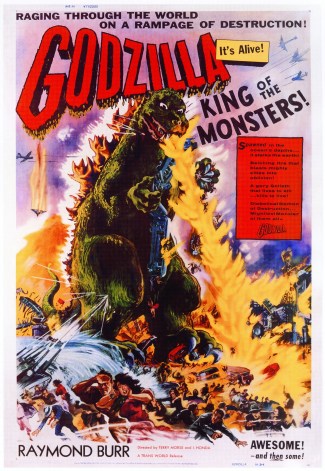
The Bigger They Come Part 8 (Godzilla: King of Monsters, 1956)

Godzilla_1956_PosterFilmmakers wanted to bring Godzilla to American audiences, and what they thought Godzilla needed was a white guy’s perspective.  Godzilla: King of Monsters was not so much a remake as it was a revision of the original film.  Adding footage of Raymond Burr, the film becomes a narrated flash black.
Opening in the wake of Godzilla’s attack, Burr’s American journalist Steve Martin starts to recount the destruction.  The story is basically the same, except it is now all told through a white American’s eyes.  Suddenly, the human stories of the film feel less personal and more foreign than they should.

The atomic fears are not removed, but altered a bit by changing the perspective of the story to America’s eyes.  It is still an entertaining story, but it feels like the cliff notes version.

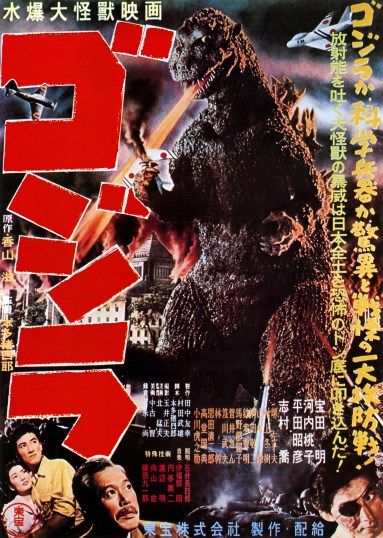
The Bigger They Come Part 7 (Godzilla, 1954)

Godzilla_1954_Japanese_posterIn 1954 with fears of nuclear annihilation feeding filmmakers hearts, it is no surprise Japan provided the most memorable monster of all.
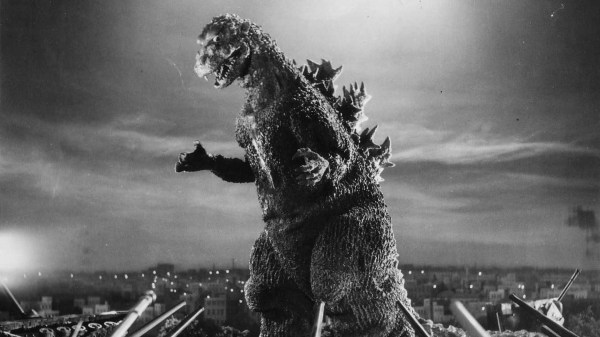
The film begins with a series of mysterious freighter accidents.  As attempts to determine the cause turn up no answers, an unseen threat is creeping towards Tokyo.  This is, of course, our titular monster.  Godzilla makes land and starts to terrorize the locals.

A lot is made of what Godzilla himself represents in the fears of the atomic age.  Certainly, the dramatic images of Godzilla’s destruction evoke the horrors of Hiroshima.  But when it comes to the fears of atomic weaponry, we see it in the character Serizawa-hakase, a scientist who stumbles upon the creation of a weapon so horrible, he dare not share it with the world.  When it is discovered, he is called upon to provide it for stopping Godzilla…but is it worth the sacrifice?

While Godzilla is pretty obviously a man in a suit smashing miniatures, the storytelling is very effective and the characters compelling.  Ishirô Honda tells a tale that overcomes the limitations.  Which says a lot, considering this first incarnation of Godzilla is a bit bug eyed and flails like Donald Trump at a rally.


The Bigger They Come Part 6 (Son of Kong, 1933)

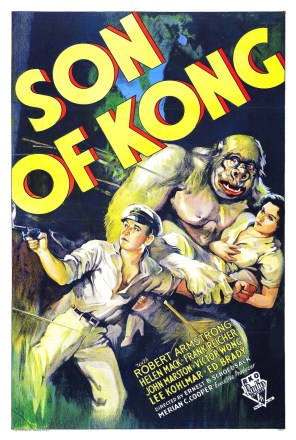
Son-of-Kong-PosterKing Kong was quickly followed up by Son of Kong.
Song of Kong finds Carl Denham trying to avoid the public after the King Kong debacle.  He ends up returning to Skull Island.  He and a few companions get stranded there.  They discover a “pint sized” Kong.  Unlike the first film, this is not an adversarial relationship.  Instead, they befriend the mini-Kong.

While the effects are are up to par with the original, this is a far less memorable film.  There is a reason it is forgotten.  It is kind of a dull affair, in spite of attempts to recapture the original film’s excitement.

The cast is primarily new, except for the returning Robert Armstrong (Carl Denham), Frank Reicher (Capt. Englehorn) and Victor Wong (Charlie the Chinese Cook).  Son of Kong is a minor footnote in the Big Ape genre for certain.

The Bigger They Come Part 5 (King Kong, 1933)

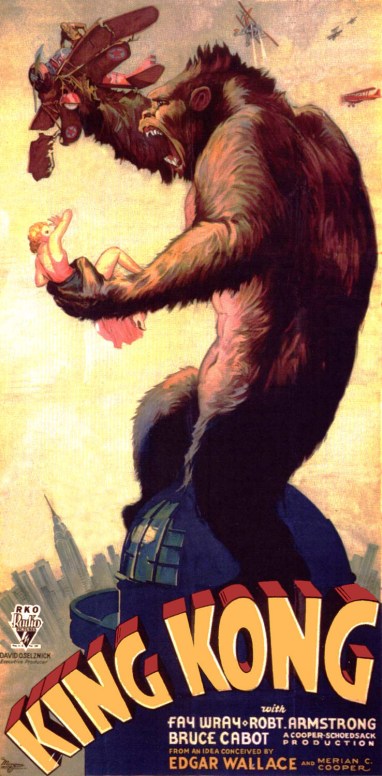
King_kong_1933_posterIn 1933, Merian C. Cooper began making giant ape movies.  King Kong still stands as the most memorable.  Carl Denham is committed to make an epic film on the newly discovered Skull Island.  Bring his cast and crew, they discover horror as Ann Darrow is kidnapped by the native people and sacrificed to Kong.
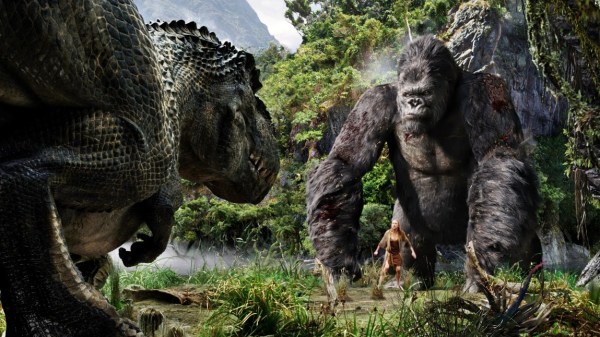
King Kong is a pretty impressive feat for it’s day.  While the stop motion does not compare to, say, Ray Harryhausen’s later works.  The sets are also pretty impressive.

The story moves at a fast pace, rarely taking time to slow down.  The performances are all pretty good, though most people really only remember Fay Wray (in part for screaming a whole lot).  Darrow is, typically for the times, strictly in the “Helpless Damsel” mode.

The Savage Natives trope is embarrassingly outdated.  Peter Jackson made no attempt to change this in his 2005 remake, while Kong: Skull Island overcompensates by going the Noble Savage route.  It is one of those rather frustrating stamps of the past that lacks justification beyond “It was the times”.

King Kong is a memorable piece of genre film history and overall a fun watch in spite of it’s shortcomings.

The Bigger They Come Part 3 (King Kong, 2005)

king-kong-2005-posterFollowing the smashing success of the Lord of the Rings films, Jackson had the cred to get a pet project off the ground.  A remake of 1933’s classic King Kong.  He wanted to make an epic, and it is far from the cheesey camp of the 1976 film starring Jessica Lang, Jeff Bridges and Charles Grodin.
Instead of updating the location to modern times, Jackson meticulously recreates 1930s New York.  He introduces us to Carl Denham, a director who dreams very big and is trying to secure financing to go to a mysterious island shown on a map he has acquired.  He hires down on his luck playwright Jack Driscoll to write a script for a grand adventure.  He finds a beautiful leading lady in struggling actress Ann Darrow. His male lead is the egotistical Bruce Baxter.

They get on a boat, go to Skull Island, explore, find monsters, the Natives kidnap Ann who is sacrificed to a mysterious monster.  The monster is the giant ape Kong who takes a liking to Darrow.  Jack and Carl lead the crew to rescue Ann.  Denham, of course, has an ulterior motive of getting film of the monsters on the island.  They save Ann, capture Kong and Kong is brought to New York.  Kong Breaks free and runs amok in the city.

Jackson hits all the beats, and it all sounds exciting.  He is very faithful to the original story.  Except…well, in typical Peter Jackson fashion, he overdoes it.  The film takes an hour to set things up.  A full hour before they get to Skull Island.  All in a misguided attempt to set up character motivation and romance.  Once on Skull Island, the film picks up and gets very exciting.  But an hour of setup and added time for the reveal of King Kong…makes for a dull and slow film.  The whole cruel savages approach to Skull Island’s natives is embarrassingly dated.

The performance by Andy Serkis as Kong is really impressive looking.  The digital Kong is still impressive looking.  But the film clocks in at three hours (and that is before Jackson’s expanded cut) and that results ina ridiculous amount of bloated storytelling.

The Bigger They Come Part 2 (Godzilla, 2014)

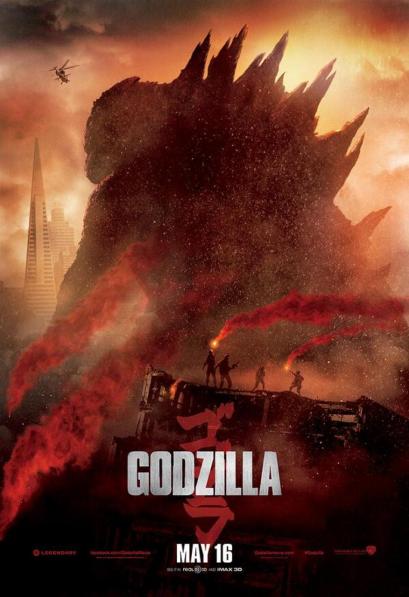
godzilla_2014_posterGodzilla has always seemed to have some trouble when Hollywood takes the reins.  1998’s misguided spectacle is the pinnacle of this.  Gareth Edwards and his team opted to take a step back.  They did not, of course, go with the “Man in Rubber Suit” approach…but their digital Godzilla is far more in line with the traditional Godzilla.

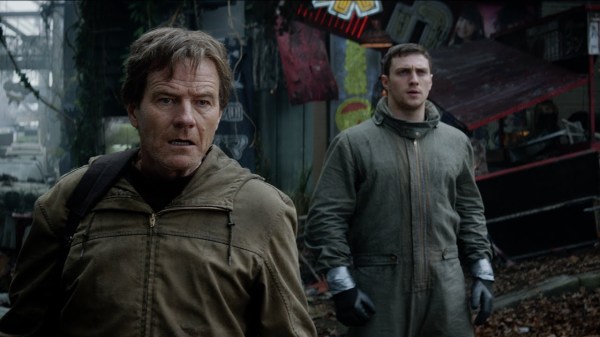
Starting in 1999, there is a mysterious and horrifying event at a nuclear power plant in Janjira, Japan.  American employee Joe Brody (Bryan Cranston) loses his wife (Juliette Binoche) in the event, while his relationship with his son Ford becomes estranged as the years pass and Cranston’s obsession with the accident grows.  In 2014, Ford is in the military and returning home to his wife and son.  He gets a call that his father (still in Japan) has been arrested.  The location of the event is off limits to the public, due to claims of radiation.  Joe convinces Ford to explore Janjira one more time…and they discover a a secret research facility and some large monster referred to as a Muto that appears to be in hibernation. Of course, it wakes up and starts seeking it’s other half.

This results in the awakening of something else that comes in to fight these giants.  You know…Godzilla.  Godzilla is setup in this film as the hero, with no questions by the end of how people see him.

Edwards takes a very slow reveal approach.  This serves the film well, making it very satisfying when the audience gets to see Godzilla in full monster lizard glory.  At the same time, the film’s primary focus is on Ford and nurse (and wife) Elle.  And honestly?  They are tremendously boring characters.  So, when the film does not have Cranston or Ken Watanabe or Godzilla on screen, things get dull fast.

The opening credits are really nicely done, giving the audience old news reels indicating the existence of monsters…we get brief hints of Godzilla (mostly his back-plates) and evidence the military attempted to kill him.

Overall, the story is pretty simple, giant monsters appear and fight and cause destruction.  It is a fairly strong attempt to capture the feel of older Godzilla films, and in some ways does it smashingly well.  It is the centering of Ford and Elle that lacks any emotional punch that is needed in a film like this.  What makes it a bit more disappointing is Cranston and Binoche do have chemistry that makes them compelling…and they pull it off in about ten minutes of screen time.

The Bigger They Come (Kong: Skull Island, 2017)

Kong-Skull-Island-PosterKing Kong and variations on the Giant Ape concept are older than even Godzilla.  Kong: Skull Island has opted to not re-tell the story of King Kong.  Instead, this is a new story.  Not new in the sense of it completely new territory.  You have the mismatched band of explorers arriving on Skull Island, encountering monsters and natives.

The film opens in 1944 where an American and Japanese pilot crash land on Skull Island.  They fight until they stumble on a frightening sight that changes everything for them.  The film jumps to 1973, with soldiers about to leave Vietnam.  They are brought in by the mysterious Monarch company as a military escort on a top secret mission to visit and explore a newly discovered island.  The company has also brought along an award winning anti-war photojournalist and a tracker to help then go through the wilderness.

Of course, the mission goes very wrong.  Hope that does not spoil anything.

Really, the film sets everything up at a fast pace.  They give you what you need to know without giving the film a chance to get boring.  And unlike previous Kong film outings, the filmmakers introduce us to Kong very quickly.  No hiding him, just Kong smashing helicopters.

The characters are engaging to various degrees, though John C. Reilly is the strongest and most memorable.  Samuel L. Jackson is…well, Samuel L. Jackson.  I found myself liking Hiddleston’s James Conrad and Brie Larson’s Mason Weaver…but I must admit, most of what separates the characters is who is performing them.  You also know which soldiers are “important” because they get a lot of set up, while most of the soldiers are just “people to die”.  Of course, they also give Jackson his motive for wanting to destroy King Kong.

But the truth is, I found Kong Skull Island a lot of fun.  Yes, the post credit scene confirms that Legendary has plans of a “Giant Monster-verse”…and Kong Skull Island serves the purpose, in part, to set it all up (It is supposedly connected to 2014’s Godzilla film as well, with the tie being the Monarch organization).  But I did a far better job of still telling it’s own story than some other attempts to create a shared universe franchise.

Really, Kong Skull Island is no game changer, but it is a lot of fun.  Visually, it is good, and the digital monsters look great.  The cast is great and make for an overall very entertaining film.

Mythical Voyagers (Moana, 2016)

moana_posterDisney’s Moana is the second time they have visited Polynesian.  The first was the fun Lilo and Stitch. This time around, Moana goes for mythical adventure.
Moana is a young woman, destined to be chief of her island, like her father before her.  But part of her longs to go beyond the reef at the entrance to the island’s cove.  She tries to fulfill her duties, and is doing well, until she suggests going beyond the reef, as the fishermen are catching no fish.  The coconuts are spoiling.

The reason is, because long ago, the Demi-God Maui stole the heart of Te Fiti…and this resulted in a malevolent force spreading across the sea.  Moana’s people have not left the island for fears of what lies beyond the reef, but Moana finds no choice when the sea gives her the Heart of Te Fiti.  She seeks out Maui to make him right his wrong.  The two are forced to endure each other on the mission.

Mismatched heroes is nothing new, and yet, the personalities of Moana and Maui are quite charming.  This is in spite of the fact that Maui is a tremendously egotistical guy who sees everything he has done as heroic.  Moana is both responsible and adventurous, which is a bit more unique.  Often, it seems brash and impulsive heroes have to learn the lesson of responsibility.  Not Moana.

The fact is, rather than take the easy route of making impediments for Moana some brand of villain?  They opted for making them likeable and relatable.  The one time we see Moana’s father express anger, it is not cruel or abusive.  It is out of personal fear that Moana may be to much like him.  Her parents are loving.  Her grandmother is gentle, wise and goofy.

The writers and Dwayne Johnson are able to imbue Maui with charm even when he is being stubborn and selfish.  You want to see him turn it around.

The animation in Moana is vibrant and beautiful.  It is fluid, like the ocean it crosses.  The concept of Maui’s tattoos being a living part of him that act as a conscience is a terrific idea.  It is also worth noting that the tattoos are hand drawn and animated.  They are seamless with the digital animation.

The songs, by Hamilton’s Lin-Manuel Miranda, Opetaia Foa’i and Mark Mancina are both powerful and engaging fun.  The more Polynesian influenced songs play, they swell and explode with a certain power.  The more pop songs (there is one Bowie-esque songs that is truly enjoyable) make you want to move.

The story is inspiring, built on thoughtful dialog, along with a whole lot of humor.  I have tried to find something not to like.  But you know what?  I cannot.  Moana was pure joy to watch.

Mid-Life Crisis (Tim Burton’s The Nightmare Before Christmas, 1993)

the-nightmare-before-christmas-posterAt the time when Disney was still experiencing their 2D Renaissance, Tim Burton and Director Henry Selick brought us this stop motion classic.

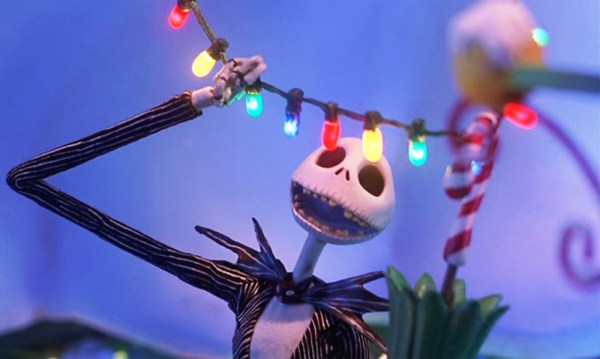
The story follows Jack Skellington, the Pumpkin King of Halloween Town (in a world where Holidays all have their own town).  As another Halloween comes to a close, the monsters of Halloween Town celebrate.  But Jack feels like life is missing something…and while wandering through a forest, he discovers Christmas Town.  Jack believes this is the answer he has been looking for and aims to step in and give Christmas Town some time off.

Jack has Halloween Town citizens creating toys and decorations…but because they are monsters, they make scary toys and decorations.  Of course, nothing quite goes the way Jack had hoped.  One citizen, Sally, is in love with Jack and tries to steer him from making a terrible mistake…but Jack is one determine skeleton.

Visually, The Nightmare Before Christmas is darkly beautiful.  The stop motion puppets have a delightful and yet scary design.  The songs, by Danny Elfman, are infectious (try and not get sucked into singing This Is Halloween or Making Christmas) and yet heartfelt.  Part of what makes it work is how earnest Jack is.  He is genuinely enthralled by Christmas Town.  He really thinks he is doing a good deed.

This is a real joy of a film, having earned it’s place as a Christmas Classic.

Blog at WordPress.com.

Up ↑