
 After the attempt to (kind of) expand the Conan Universe with Red Sonja in 1985 fell short of expectations, the Conan Franchise went silent on the silver screen. While barbarians and fantasy seemed to have a fanbase on television throughout the 90’s, it was not until Game of Thrones that people seemed to feel like the genre of sword and sorcery could be revived.
Stepping into the loincloth of Conan was Game of Thrones star Jason Momoa. This film begins a bit more dramatically. We are treated to a narration by God (an uncredited Morgan Freeman). The film explains Conan was born of Battle and then makes this wholly literal, as his pregnant mother is fighting at her husbands side. Upon being mortally wounded, she commands her husband to cut the baby out so she can see him before she dies. So, it is a bit…over the top. Conan is raised by his father, the chieftain of a tribe dedicated to being powerful and wise warriors. But when their village is overrun by Khalar Zym who is hunting for a piece of a mystical artifact that Conan’s father has kept hidden, Conan and his father are tortured.
The movie then jumps ahead to a grown Conan living the lifestyle of adventurer. He finds himself drawn back into the fight to end the dark plans of Zym, who, along with his daughter Marique, seeks revenge on the world for the loss of his wife. They are seeking a pure blooded virgin for their special sacrifice. This turns out to be Tamara, whom Conan saves, forcing a battle of wills.
This Conan is a bit different from the Schwarzenegger version. Momoa is a leaner and more verbal Conan. This is actually more in line with Howard’s writings. The massive musculature we associate with the character was a development of Fantasy artists and the 1982 and 1984 films.
They are clearly trying to touch on all the versions of Conan. There are hints of the comics, the TV shows and films. Here Conan is a more skilled warrior. His father emphasizes the importance of the mind as a major component of the warrior.
Momoa is certainly entertaining as Conan. But the story is rather lackluster. Stephen Lang brings more to his role than seems to have been in the script. And Rose McGowan is fairly creepy as Marique.
Tamara is a problem for the film though. There is little for her to be, beyond a damsel in distress. She spends a good chunk of the final action tied up, and contributes little to the resolution of the film.
Conan the Barbarian is uneven, and this results in a lot of it just not keeping one’s attention. We are left with a rather average film, rather than an epic barbarian adventure.
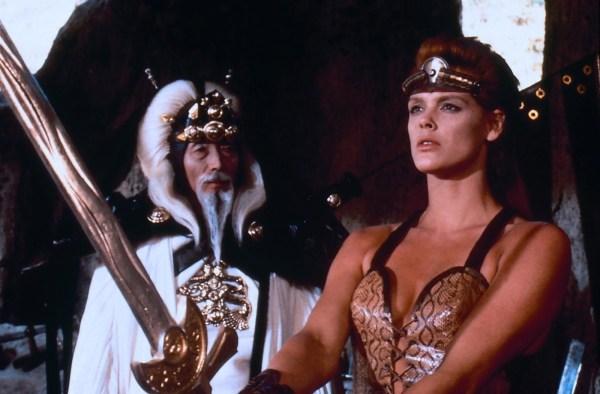
 This film is an example of not getting your ducks in a row. The producers wanted to capitalize on the success of Conan. They decided on Red Sonja, a warrior woman within the same universe. Well, sort of. Red Sonja as written by Howard was not set in the world of Conan at all. She was a swashbuckler in the 16th century. Roy Thomas introduced her in the Conan comics.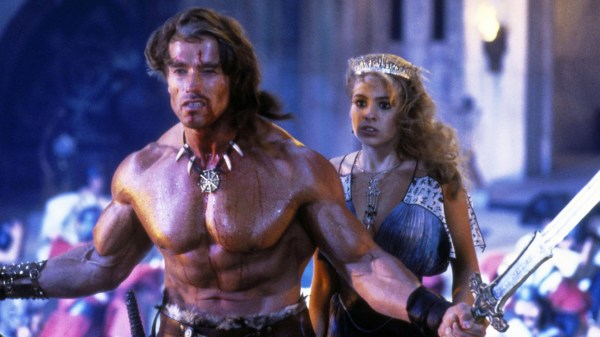
 Conan the Barbarian was a decent size hit, so a sequel was put into motion. Conan and his narrator Akiro the wizard. They are joined by comic relief and thief Malak. The Queen Taramis calls upon the trio to join her guard Bombaata in escorting the virginal Princess Jehnna to retrieve a mystical gem. Her goal is to harness the power of Dagoth, god of dreams.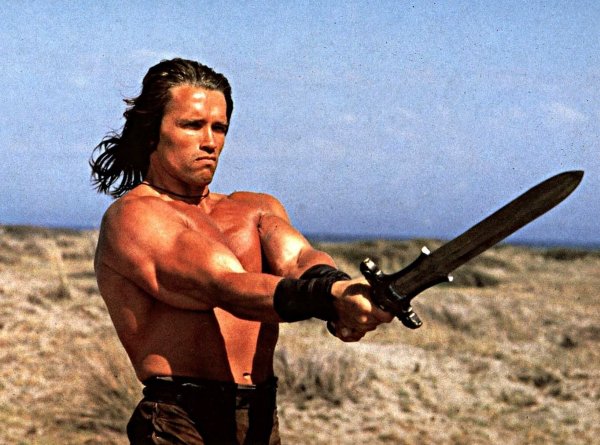
 Conan the Barbarian has conquered a lot of mediums. Books, comic books, television…but I think it is hardly an exaggeration to say that the Arnold Schwarzeneggar films heavily defined the public’s perception of the character.
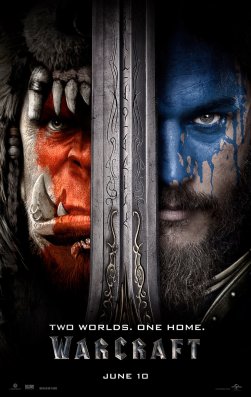 So…apparently, a horde of angry and evil Orcs travel through a portal to take over the world of Azeroth. Some of the Orcs side with the humans, because “Not All Orcs” or some such.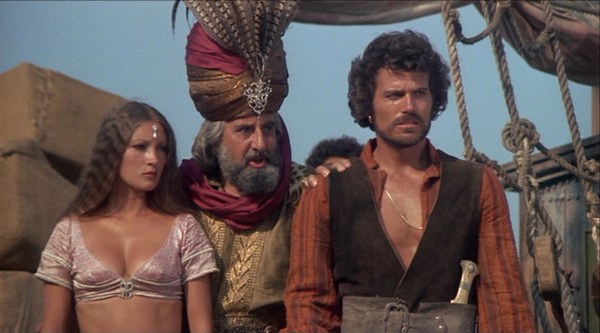
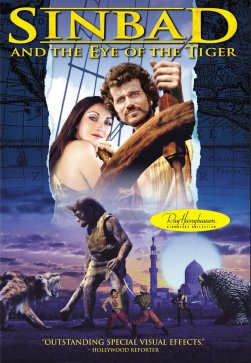 Prince Kassim has been transformed by his stepmother into a Baboon. She wants her own son, Rafi, to inherit the throne. For help, his sister, the Princess Farah calls on her beloved Sinbad for help. They go on a quest to save Kassim from his cruel fate.
 While at sea, Sinbad happens upon a golden tablet that he decides to wear as an amulet. During the night, his ship is hit with a storm and Sinbad has a dream of a man dressed in black and a beautiful woman. He and his crew find themselves near Marabia. There he is met by a man who wants the amulet. After a chase, Sinbad meets the Grand Vizier who wears a Golden Mask to conceal his deformed face. He tells Sinbad about the tablet, that it is only part of a larger puzzle that will reveal a map to the Foutain of Destiny.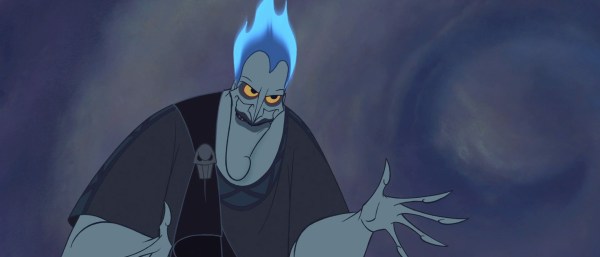
 The gods of Olympus are celebrating the birth of the son of Zeus and Hera (um…slight change from myth, Disney cannot be seen as endorsing extramarital god flings) Hercules. Everybody seems happy except brother Hades. Hades attempts to turn Hercules mortal…but is only half successful, forcing Zeus to allow his son to be raised on earth by a poor couple of peasants. Hades is unaware that his plan was unsuccessful, mislead by his minions Pain and Panic, and believes Hercules is dead.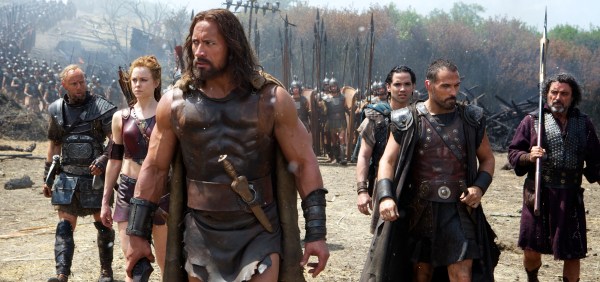
 The film begins by detailing the great legends of Hercules. As a child he defeats snakes sent by a jealous Hera. He fought the Hydra. He defeated the Erymanthian Boar. The Nemean Lion. We discover this is a tale being told to some pirates about to kill a young man. Hercules walks into the camp, and before the lead pirate’s eyes, dispatches his crew. We the audience realize he is not doing it alone. Hiding among the camp are a skilled team. It turns out that Hercules has a bunch of super friends that help feed the legend of an unbeatable warrior. And they are really just mercenaries.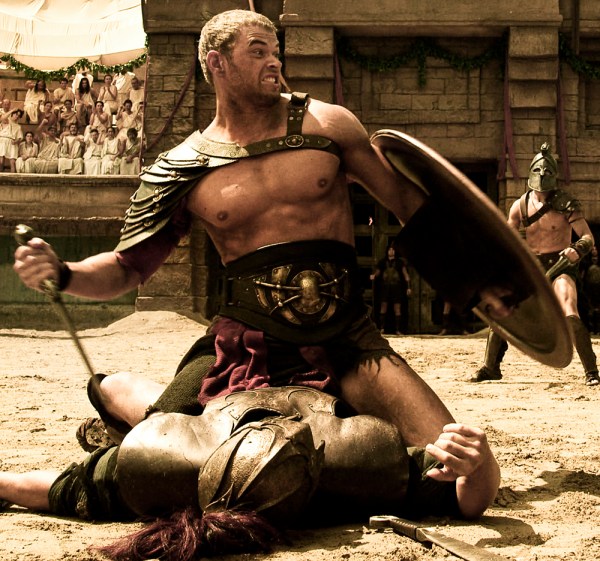
 Years ago Queen Alcmene for her husband’s lust for power terrifying and pledged to Zeus to bear his son, with the purposes of ending the King’s reign. Their first born, Iphicles, grows up to be a selfish brat, jealous of his more loved younger brother. Hercules seems oblivious to his brother’s petty nature, even allowing him to publicly take credit for Hercules deeds. Hercules is happy as long as he has the love of the beautiful Princess Hebe. But one night, the King announces that she is to be married to Iphicles. Hercules and Hebe run away together, but are caught.
 Tripping Through Gateways