Welcome to Part three, where I continue my discussion of Man of Steel and begin talking about Batman V Superman: Dawn of Justice.
The Past, Present and Future of the DC Cinematic Universe Part 3
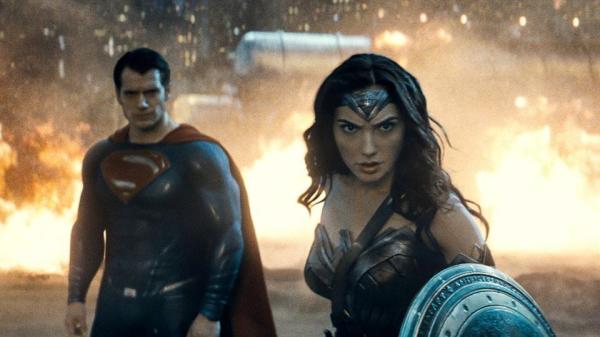
Welcome to Part three, where I continue my discussion of Man of Steel and begin talking about Batman V Superman: Dawn of Justice.
In Part two, we explore the movies that came right before the Man of Steel, as well as some of the failed attempts to kick off the Cinematic universe. We also begin discussing Zack Snyder’s Man of Steel.
Marvel and it’s related characters are copyright © Marvel Entertainment
DC and it’s related characters are © Warner Brothers.
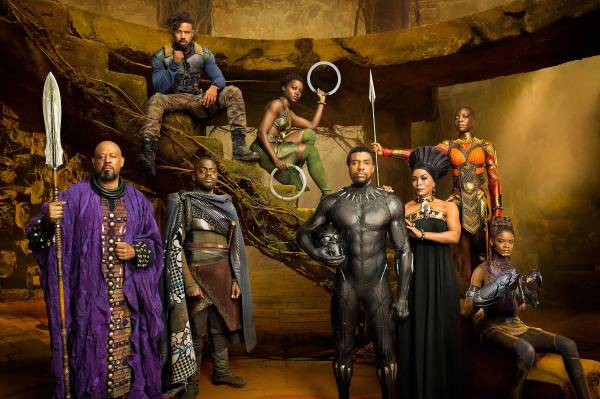
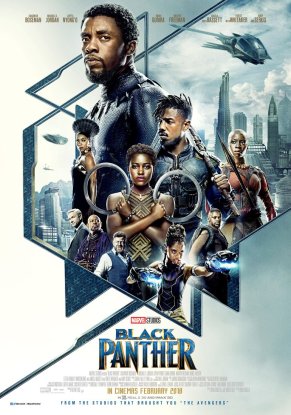 Created by comic book icons Jack ‘the King’ Kirby and Stan Lee, Black Panther has seemed like a character Marvel wants to really make active…but struggles to figure out how to make him work best. Initially being a guest star in the pages of the Fantastic Four and the Avengers, T’Challa (the titular Black Panther) got solo stories starting with 1973’s Jungle Action # 5. The series was not a top seller, and Marvel cancelled it. They tried to continue the Black Panther in his own series, which lasted until 1979. They tried again in 1988, with a mini-series. This was followed by an appearance in Marvel’s anthology series Marvel Comics Presents in 1989. 1990 saw another series. But it was 1998 where Black Panther found some footing. Christopher Priest began his run and truthfully, he cracked the code with an incredibly engaging series. It lasted 62 issues (Priest wrote 60 of those issues). They worked on a new series in 2005 with Reginald Hudlin. 2016 brought back the Panther in his own series led by Ta-Nehisi Coates. This, for me, has come the closest to rivaling Priest’s terrific run.
While the Black Panther film was announced a few years ago, we did not get to see the Marvel Cinematic Universe take on the character until Captain America: Civil War. I really enjoyed his introduction. The film only hinted at a larger Wakandan culture, and so now is the opportunity to explore it deeper. This is a spoiler free review (so story references remain vague).
Opening with a young boy asking him to tell the story of home (Wakanda) before bedtime. This works rather nicely, filling us in on how Wakanda was built on Vibranium, how five tribes were united under a single king who was granted powers via plant life altered by the vibranium. Wakanda grew more technologically advanced than any other nation. They sought to hide from the world.
The film quickly establishes that while the world believes that Wakanda is a low tech third world country, it is a vibrant high tech society. T’Challa and his family are still reeling from the events of Civil War, and it is time to T’Challa to take the mantle of King.
Of course, there are those who oppose him. The weapons supplier Ulysses Klaue (pronounced “Claw” and first introduced to audiences in Avengers: Age of Ultron) and a mysterious young man called Killmonger are collecting Wakandan tech.
T’Challa struggles with his role as king. Heartbroken over his father’s death (again, in Civil War) and struggling with the role of Wakanda in the world. His ex-girlfriend Nakia believes that Wakanda should be sharing it’s riches with the world…to be a beacon for the world, not tucked away. She loves him, but cannot see a place for herself in Wakanda when she has seen such suffering in the outside world.
The film shows us a society which has a richness of history and culture. The costume design is beautiful. The king’s personal guards are all striking in appearance with lush reds and gold. They are all warrior women with shaved heads (in one entertaining moment T’Challa, Nakia and general Okoye are undercover and she complains about having to wear a wig).
The Wakandan tech is exciting sci-fi tech that would make Bond jealous. The Wakandan landscape is a combination a immense futuristic cities and beautiful forests and mountains. There are some fight scenes set amongst giant waterfalls that Director Coogler and his cinematographer use lighting and sunsets to amplify the sequences with intensity and beauty.
I really liked the characters in this film. For T’Challa, it carries over his lessons learned from Captain America: Civil War. T’Challa is merciful and a good man. Heavy is the head that wears the crown…this film shows T’Challa struggling to be a King and Protector and not being blind to the world around him.
The women really steal the show in this film. Okoye is a formidable warrior and guardian. Nakia is intensely stubborn in her dedication. But she also is in love with T’Challa (who is also very in love with her). His mother is a woman of pride and wisdom (Angela Basset is just regal and beautiful). And then there is his sister Shuri. She is a fun character who lovingly spars with her brother. She is a brilliant scientist, but her youth presents a more brash attitude. She is like a super competent “Q”.
Everett Ross (created by Christopher Priest in his 1998 series) appeared in Civil War, but we did not get a real feel for the character. Here we find him seeming over-confident at first, but he rises to the challenge of helping the Black Panther and his family. While he begins seeming a bit like he might be the comedy relief, he becomes a character who shows himself as heroic and willing to risk himself for his friends.
Killmonger is a villain with a good back story. He wants to rule the world, but not in some cheesy maniacal ruler fashion. He wants to rise his people up to subjugate the colonizers. Klaue is just after money, and shows no arc…but Andy Serkis seemed to have a lot of fun in the role.
Full of action, heart and punctuated with some great humor, Black Panther was worth the wait. I would easily categorize this as one of Marvel’s best.

Here is my top ten… top eleven… top twelve … wait… top THIRTEEN… no, no…Top FOURTEEN films of 2017. Before anyone asks? I have not seen Ladybird, Blade Runner 2049, Call Me By Your Name, Dunkirk, Murder on the Orient Express, Wind River, Hostiles, the Shape of Water or Mother!
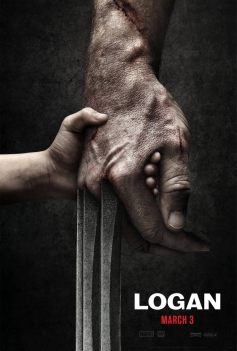 1. Logan
Logan is the swan song for both Hugh Jackman and Patrick Stewart in their memorable runs as Wolverine and Professor X. Set in a time where most of the X-Men are gone and Wolverine’s health is failing, Logan was a gutsy move. It earns it’s ‘R’ rating in the first five minutes, but what really makes it stand out is the emotion that is packed into it. Stewart gives a wonderful performance here.
2. Land of Mine
I know this was released in Denmark in 2015, but technically, it is a 2017 film for the U.S. So I am calling it as “this year”. After all, the director’s next film is due out in 2018.
3. War For the Planet of the Apes
Matt Reeves managed to make the most consistent trilogy of films. All three of his Apes movies have been top notch. Emotional and exciting, Reeve shows a real understanding of the balance of action and drama.
4. Wonder Woman
Wonder Woman was everything I wanted to see from the DC film universe. Wonder Woman is hopeful and filled with excitement. It was a bright spot for Super-Hero films in general, the DC Cinematic Universe quite specifically.
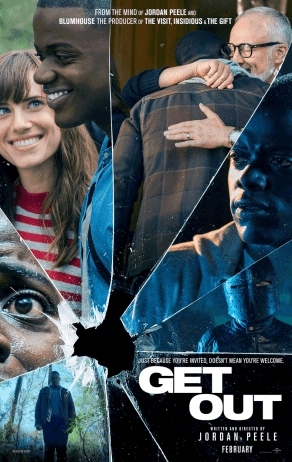 5. Get Out
Jordan Peele, best known as part of the comedy duo Key and Peele, wrote and directed this smart dark social satire thriller that skewers liberal attitudes towards black Americans. It has great writing and some really good performances.
6. The Big Sick
A wonderful and personal story from husband and wife creative team Kumail Nanjiani and Emily V. Gordon, the Big Sick mines humor and heartbreak from their real life experience. In what seems like the ultimate Rom Com movie plot, Emily had fallen into a coma early in their relationship. The Big Sick does not approach this from a glossy sense of “isn’t it romantic”. It is messy and gut wrenching at times. It is also endearing and joyful. They explore the issues of cultural differences, the pressures those can bring on relationships. Really, the Big Sick is a wonderful little movie.
7. Star Wars: The Last Jedi
Unexpectedly one of the most controversial films of the year… and one of the rare reversals for Star Wars where the critics largely love it, while the general audience is more sharply divided…The Last Jedi is kind of the Unforgiven of Star Wars. It also has one of Mark Hamill’s best live action performances ever.
 8. Atomic Blonde
This film was not what was advertised. This is not a James Bond Spy Action flick. This is an Espionage Thriller, and a very, very good one at that.
9. Edge of Seventeen
I thought this was a real good “coming of age” film, full of wit and heart.
10. It
It (Chapter One) is a pretty solid fright film. Dramatic with some of the strongest kid actor performances I have seen in a long time, this was a real intense scare film and one of the best adaptions of King to date.
11. Logan Lucky
I suppose this is really just “White Trash Ocean’s Eleven”…but it is full of great performances, and held together emotionally by Channing Tatum and young Farrah Mackenzie. Really, this was a lot of fun.
12. Baby Driver
Baby Driver is not a deep film. It is not even all that emotionally engaging. It is the simple story of a getaway driver trying to get out of his job for the girl he loves. But Edgar Wright does not give the film any such pretense of being more than just a really good noir action flick with a killer soundtrack.

13. Thor: Ragnarok
Ragnarok is a lot of fun. I simply had a terrific amount of fun. The Hulk has evolved, Cate Blanchett’s Hela is a good villain and Taika Waititi managed what seemed to be looking impossible…a Thor film that rose above, “I guess it was okay.”
14. Spider-Man: Homecoming
Sam Raimi had a decent run with Spider-Man, but ended on a flawed note. Marc Webb made Spider-Man films with some good points, but still did not quite connect for audiences. Sony’s deal with Marvel to bring Spider-Man into the Marvel Cinematic Universe paid off. Skipping over the origin story, we get a Spider-Man months into his role. Peter Parker wants to be an A-List Super-Hero badly, but he is stuck on a neighborhood level, and his connections to Tony Stark are not boosting him forward like he hoped. Between good arcs for both Spider-Man and his nemesis the Vulture, I am excited to see where Peter goes next.
Honorable Mentions:
John Wick 2. Somehow, these John Wick movies have me wanting to see more. I mean, they are really enjoyable. Kong: Skull Island was fun, much in the same way as Baby Driver. A Cure For Wellness was just such a weird film, but I really liked it. Also really enjoyed Guardians of the Galaxy 2. While not perfect, it is a lot of fun.


The Horror anthology has always been risky. There are few true classics. Mostly what you get are movies with a couple good tales among some duds. George Romero and Stephen King teamed up to create Creepshow.
The five stories included here are all pretty strong. The first is Fathers Day, the story of a somewhat rotten family gathering to celebrate the birthday of the late patriarch. This year, he intends to get his birthday cake.
The second story is the Lonesome Death of Jordy Verrill is about a simple-minded farmer who discovers a meteor on his land. After touching the meteor, Jordy finds frass growing uncontrollably, consuming his body.
Something to Tide You over features an adulterous couple who are discovered by the woman’s husband. He seeks to take revenge trapping them on the beach (so to speak).
The Crate follows an older professor who is constantly belittled by his alcoholic gossip wife. His respite is his fellow professor, Dexter. Dexter is called to the school by a janitor who finds a mysterious crate tucked away. The crate seems to be decades old…but to also contain something still alive. And hungry.
Finally, They’re Creeping Up on You is about an old man obsessed with cleanliness finding his home seems to be under siege by cockroaches.
The film is framed as a comic book, with art by Jack Kamen (an E.C. comics artist, which is the inspiration for Creepshow). As each story begins and ends, we see comic book art that fades into the live image (or Vice Versa). The art is great and provides a unique look to the film. The film also has an extra framing device of a story about a young boy (Played by King’s real-life son Joe) whose father (played by veteran character actor Tom Atkins) is angry when he finds him reading a horror comic book.
Tom Savini provides a great series of effects, with visuals that mimic the color of comics. The gruesome visuals are not interested in realism, rather in being lush and colorful.
The cast is really terrific. You have veterans like E.G. Marshall and Hal Holbrook along with upcoming stars like Ed Harris and Ted Danson.
Most of the film has a tone of cartoonish horror. The Lonesome Death of Jordy Verrill struggles the most in this regard because at times it gets absurdly comical. But overall, Creepshow is still one of Romero’s straight up most fun works.
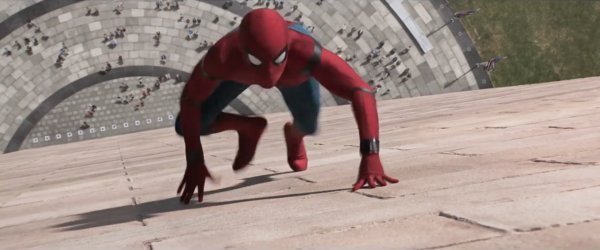
 Spider-Man has the distinction of having been rebooted three times in the last fifteen years. Both the Raimi Films and the Marc Webb films have good points. Raimi’s Spider-Man 2 is a high point for super-hero themed films. But they also never quite fully got Spider-Man as a character. Maguire’s Peter Parker could be to goofy, while Garfield’s Peter was to moody and mopey.
Sony hit some hard times, made all the worse by a major hack that exposed all sorts of internal issues. One thing it revealed? Sony had talked with Marvel about a deal that would allow Spider-Man to be a part of the Marvel Cinematic Universe. The talks fell apart before the hack. But this brought them back to life.
Sony decided to let Marvel bring a heavy creative hand in. In exchange, Sony got to include MCU characters in their Spider-Films. The MCU introduced Spider-Man into their world via Captain America: Civil War. Spider-Man was a highlight of that film. And rather than try to retrofit Peter Parker in, as if Spider-Man had been there all along… they stepped into his career early, so he is new on the scene.
Homecoming picks up roughly eight months after Civil War, with Peter enjoying using his Stark supplied super-suit and anxiously awaiting his next big Avengers mission. Which seems to never come along. Instead, Peter races around trying to get better by fighting street crime and helping lost old ladies. His day to day life has, of course, been tougher since Tony Stark has come into his life, and he starts to withdraw to make more time. He dreams of beautiful classmate Liz and hangs out with his closest friend Gan-uh-Ned. Of course, he makes a major discovery, the adults don’t listen and Peter over-confidently decides to take on guys who may be out of his league.
One of the refreshing story points is that this is not about Peter learning about “with Great Power comes Great Responsibility”…at this point, he has learned that lesson. We only get vague reference to Uncle Ben’s death. In fact, the origin of Spider-Man is tossed out in a two second exchange.
Holland’s Peter Parker is sweet and awkward…his Spider-Man is quippy, but still learning. He is not yet the confident Peter Parker, he practices lines, tries to get into a good pose before alerting bad guys to his presence. But of the previous film versions, this is easily the strongest portrayal of Peter. He may be in-experienced, but there are just so many things that make this version…well Spider-Man.
The rest of the cast of characters are updated in some interesting ways. Ned Leeds is really Ganke from the Miles Morales Spider-Man comics, and he is a very fun character. This is largely due to the comic timing and enthusiasm of actor Jacob Batalon. I was most hesitant about Marisa Tomei as Aunt May…not because of her acting ability…but because she is only a few years older than me…and she feels more youthful and vibrant than traditional portrayals of Aunt May. But I ended up really liking her in the role.
Michael Keaton’s Vulture is a terrific improvement on the character. I never really cared for the comic version…he never seemed like he was all that much of a threat. And the green suit did not help. Keaton’s performance is solid and menacing…yet his motives are understandable. He is a guy who wants to provide for his family, and saw secret government agencies undercutting his business. He turns to crime to make up for that. The Vulture look is a nice combination of modern with hints of his original look. It works very well.
The action scenes are all nice and effective. Sometimes these films can get confusing during busy action scenes. Homecoming makes the action easy to follow. And the film is infused with humor. While theses were not absent from the previous versions, it is much more present here. And yet, the humor is not at the expense of Peter’s character. He feels the heavy weight of responsibility, regardless of his experience.
Admittedly, the film does not break new ground for Spider-Man…but I think it may be the best of the Spider-Man films so far. Or, at worst, a close second to Raimi’s second Spider-Man film. This is a fun film, and fun should be part of (a lot more) super-hero films. Being overseen by Marvel, there are plenty of easter eggs…but what Marvel is usually really good about is that the easter eggs are a bonus for fans who love the comics…and if you have not read the comics, you won’t feel like you are missing something.
Honestly, I recommend seeing Spider-Man: Homecoming in the theater. It benefits from being seen with an audience.

 When a new Judge Dredd film was announced, there was no real fanfare. What people did not realize is that the film was being written outside of the Hollywood scene. Alex Garland (writer of 28 Days Later and writer/director of Ex Machina)…Garland is a fan of 2000AD and Judge Dredd.
Keeping the story very simple, Judge Dredd is taking a trainee with him, a hopeful Judge named Anderson. She has some limited psychic ability. Dredd is tasked with evaluating her. When three skinned bodies fall from the sky, Judges Dredd and Anderson arrive at a 200 story building that is pretty much a city unto itself. Dredd and Anderson capture a drug dealer who works for notorious gangster Ma-Ma. To prevent him from being taken out, Ma-Ma has the building in lockdown and then announces to the entire complex that she wants the two judges killed.
This simple setup makes for a very effective story of survival. Our leads must work their way to Ma-Ma to bring an end to their situation. They are cut off from the outside world and must rely on their skills and wit.
The look of the city is grimy and lived in. Full of pollution and decay, the sets of the film are effective. The effects, specifically the sequences depicting the effects of the drug Slo-Mo (it makes the user feel that time has slowed down) are very well thought out. The viewer sees everything in slow motion, with a shimmering effect.
Garland understands what makes Dredd work. Keeping the story simple is such a benefit here. There are no over the top conspiracies. Karl Urban never shows his face without the helmet in this film. And he wears a permanent scowl. Never does Dredd break down. Even when he seems to be relenting on his firm stances, it is in a fashion that he is in line with his attitude throughout the film. Urban really embraced the character and does Judge Dredd real justice here. Anderson is very sympathetic as a rookie and owns up to her mistakes. At one point, she knows she has failed the evaluation but refuses to back down from the challenge of Ma-Ma and her gang. And Ma-Ma? This is no glamor role for Lena Headey (Game of Thrones). She is a drug addict and psychopath…cruel and vicious with scars to show for it.
Dredd has gained a cult following over the past five years, with people hoping for a sequel. A few years ago an April fools announcement declared Netflix was doing a Dredd series with Karl Urban and Thirlby returning. Fans were bitterly disappointed it was untrue. But every so often, we get word of the filmmakers trying to press ahead. And Urban has welcomed the possibility of returning to the role. Most recently, there is the word that a series may be on the way after all, possibly with Urban back as Dredd.
Dredd is a very effective cop survival story, gritty and violent with strong performances. The creators get the characters and manage to remain true to what made the character work in comics, without being alienating to those unfamiliar with the source material.
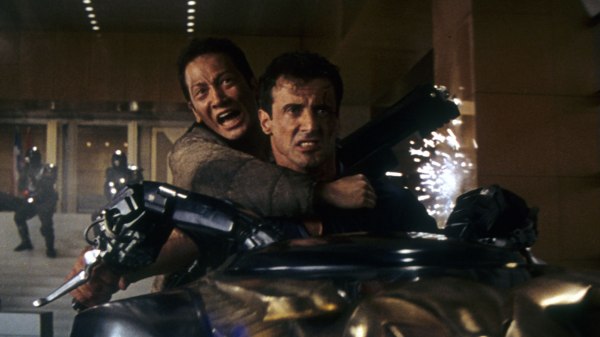
Somebody looked at Sylvester Stallone’s chin and declared him perfect for the role of iconic British comic book character Judge Dredd. And they were not wrong:

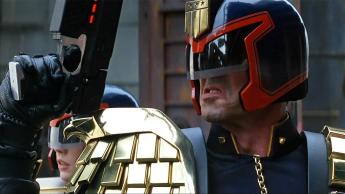
(I know I already showed this…but it seems relevant for the review)
 Anyhow, looking for a story, the filmmakers thought the best approach was to tell it through the eyes of SNL alum Rob Schneider. He is an ex-convict returning home who gets caught in the crossfire between thugs and Judges. A little background here. After a nuclear event society is rebuilt in heavily concentrated cities. In these cities are massive buildings, communities unto themselves. They are known as Megacities. Outside of the sprawling cities is a desert wasteland populated by outlaws and mutants called the Scorched Earth. The Society has combined Police Officers with Judges. You do not go to court, a Judge simply tells you your sentence and that is that.
The most famous Judge is Judge Dredd. Dredd has no tolerance for lawbreakers. The comic is a satirical look at fascist societies (the Eagle emblem is not a coincidence, it is meant to acknowledge both America’s national bird as well as the use of the bird as a symbol by fascist societies). Of course, fans also like the ultraviolence, making Judge Dredd’s popularity complex. As Neil Gaiman notes, the comic is one of the rare instances where you have something that is both the very thing being commented on and the commentary itself.
While attempting to hide in a robot to avoid death by gang members or a Judge, Fergie (Schneider) is caught and sentenced for tampering with the robot. In the meantime, Judge Dredd is framed for murdering a critic of the Judges. He is sent to the Scorched Earth, where he runs into Fergie. They return to stop a conspiracy to destroy the Judges and establish a new regime.
Judge Dredd is not very good in its story. It tries to give some emotional depth to Dredd that ends up feeling odd. Family angst is not something that drives the character and is an unnecessary addition. The film also tries to hint at a romantic tension between Dredd and Judge Hershey (Diane Lane) who plays the role of the angel on Dredd’s soldier, pressuring him to be less harsh.
There are some notable things about the film. The costumes look great. They feel like they are ripped from the pages of 2000AD. The sets are also like the strip come to life. The cities and the Megacity blocks are appropriately broken down and seedy looking and the Scorched Earth barren and unforgiving. Visually, the film is pretty impressive looking. There are some nice nods to other 2000AD characters (most notably the use of the ABC Warriors robots). Mean Angel (a cyborg and member of a cannibal outlaw family) stands out.
The cast includes Max Von Sydow, Diane Lane, and Armand Assante. Most of these choices are good choices. Rob Schneider is there as comedic relief, but it is not very organic in the story. There is one amusing moment where Schneider looks over to Dredd on the prison transport and tries to figure out why he recognizes him…Schneider uses his hand to cover the top of Dredd’s head and recognizes him based on the chin.
No, where the film fails is not in its look. It’s the story. Trying to create an origin for Judge Dredd makes all sort of unnecessary explorations of his character. Dredd does not question the Law. The Law is his life. You can have Judge Dredd question the application of the Law, but the character loses meaning if he questions the Law itself.
The biggest issue here is that ultimately, they did not hire Sylvester Stallone to bring Judge Dredd to life. They hired him to be a stock Stallone Action Hero. And Stallone delivers his lines as such. It is not that Dredd does not make jokes…but he does not deliver them as one-liners. He should always sound deathly serious. Also? Dredd does not smile. And most importantly…remember that gag I mentioned with Schneider recognizing Dredd? That scene should simply not happen. Judge Dredd is never seen in comics without his helmet. Never. I mean NEVER. And yet, in this film? He is seen far more without the helmet than in it. This is because it is a star vehicle for Sylvester Stallone, rather than Stalone making a character live on screen.
Judge Dredd pretty much killed other 2000AD film deals, and frankly, it is obvious why. The film fails in all the areas where it needs to succeed. Character and Story.

 For Americans, the character they probably most recognized from the British comic book series 2000AD is Judge Dredd. But 2000AD actually had a whole host of characters spawned from its weekly pages. Almost all of them every bit as violent and over the top as Dredd. There was Rogue Trooper, the ABC Warriors, Nemesis the Warlock, Bad Company, the Ballad of Halo Jones, D.R. & Quinch and Zenith to name a few.
Back in 1988 or so, I went to Northern Ireland as part of a church mission trip. I came upon a comic shop there and discovered 2000AD…I came home from the trip with several progs (the term for an issue of 2000AD) and a few books collecting specific characters. I fell in love with the world of 2000AD…the writers and the artists provided inspiration to my artistic side.
Future Shock! is an entertaining journey through the creation of the comic in 1977 to present day. Interviews with its staff and creators explore the controversies and successes. There are may familiar faces for comic book fans (As American companies, especially DC’s Vertigo imprint, poached a lot of their stars). Included in the film is commentary from Neil Gaiman, Brian Bolland, Alan Grant and Carlos Ezquerra (the creators of Judge Dredd) and more. One of the stories discussed is the unfinished the Ballad of Halo Jones. Written by Alan Moore (with gorgeous art by Ian Gibson), it is a story that verged on being epic. But Moore was frustrated by his treatment by the magazine and walked away, leaving it unfinished. Both Leah Moore (daughter of Alan and a writer in her own right) and Neil Gaiman lament that it was never finished. Moore states she wishes she could have convinced her father to return and finish the tale.
The film explores failures as well, for instance, their ill-fated movie plans. The only result is the heavily maligned Judge Dredd starring Sylvester Stallone. It is maligned for good reason, of course. I do disagree with the idea that choosing Stallone was a bad idea from the start…I mean…LOOK:


But more on the Stallone film at a later date. There is a pretty rich history behind 2000AD, and it is pretty well covered by this documentary. Both fun and educational, it makes for an enjoyable watch. This includes the titles and the transitions with animated art from 2000AD to great effect. It makes the film feel like it is moving quickly, as well as allow you to appreciate the rich history of artwork.
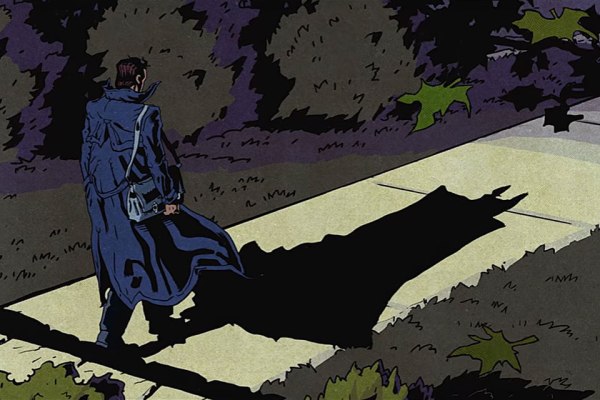

Everybody knows Batman. And most people know who Bob Kane is. He is the creator of Batman. Every Batman comic book tells you this. Right there in print. “Batman Created by Bob Kane”. Bob vehemently defended this idea that Batman was his creation and only his. But why? Why would he need to defend this notion?
The documentary Batman and Bill tells you exactly why. In the comic book world, it was long known that Kane had the name “Bat-Man”, but his original design was a guy with a red suit. He consulted friend and writer Bill Finger who contributed pretty everything we know to be Batman. Kane then took the idea to the publishers and presented it as solely his idea. He got a contract that established this. He promised he would share success with Finger in spite of this.
Bob Kane never did. In fact, it was long after Finger had died, and shortly before his own death that Kane changed his story and admitted Finger deserved a lot of the credit. But that is not the whole story, as author Marc Tyler Nobleman took it upon himself to try and find any heirs of Bill Finger. The path is full of surprises and heartbreak.
This is a tragic story of a creator who was not given the respect that should have been due to him. Through archival footage, we hear from both Finger and Kane. The story is expanded on through interviews with comic book pros familiar with the history behind it all. Directors Don Argott and Sheena M. Joyce present everything as an unfolding mystery, befitting the famous cowled detective himself. You are drawn into it by what starts as a frustrating professional injustice that evolves into a heartbreaking story of familial loss.
The first time anyone has credited Finger for Batman was 2015’s Batman V Superman: Dawn of Justice. 21 years after he died alone in his apartment.
 Tripping Through Gateways