Vampire Swipes Right (Vampire in Brooklyn, 1995)

Vampire In Brooklyn was a meeting of minds. Eddie Murphy was coming off a string of films and sequels that were not failures, but not grand successes. Eddie states he agreed to make the film for the studio for the rights to the Nutty Professor.

Maximillion is the last of a clan of Caribbean vampires who arrives one night in Brooklyn via a large freighter. He is seeking a woman to be his queen, and to help him, turns small time hood Julian into a servant ghoul.

Maximillion is searching for a woman born of a vampire and he discovers police detective Rita ( ridiculously gorgeous Angela Bassett) is the woman he is seeking. As he tries to enter her life, he runs into competition from her partner.

Vampire in Brooklyn really feels like a movie competing with itself. On the one hand, it is a gory vampire flick. On the other hand? It is an Eddie Murphy comedy that has the things you expect, like Eddie in various costumes as side characters. One is an Al Sharpton styled preacher which does result in an amusing scene where he bursts into flame and convinces the congregation to rush outside.

It is not that comedy and horror cannot mix, and honestly it is hard to tell where the conflict lies. I have read accounts that Eddie and the other writers intended this to be a more serious vampire film and it was Craven who altered the tone. Other accounts suggest that Craven pushed for Eddie to play the role more serious and Eddie did his own thing.

The movie is full of terrific performers, and so there are plenty of fun bits. Kadeem Hardison’s Julius finds himself falling apart as his body begins to rot, which results in a lot of funny moments as he freaks out. John Witherspoon is funny. And I think it is the problem…these are all talented performers and creatives…but it often feels like they are all working in totally different movies.

Tele-Visions (Night Visions, 1989)

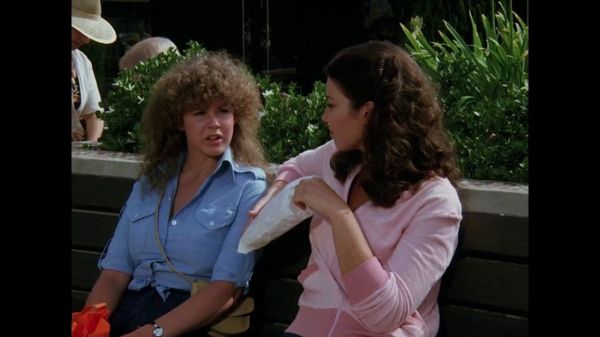
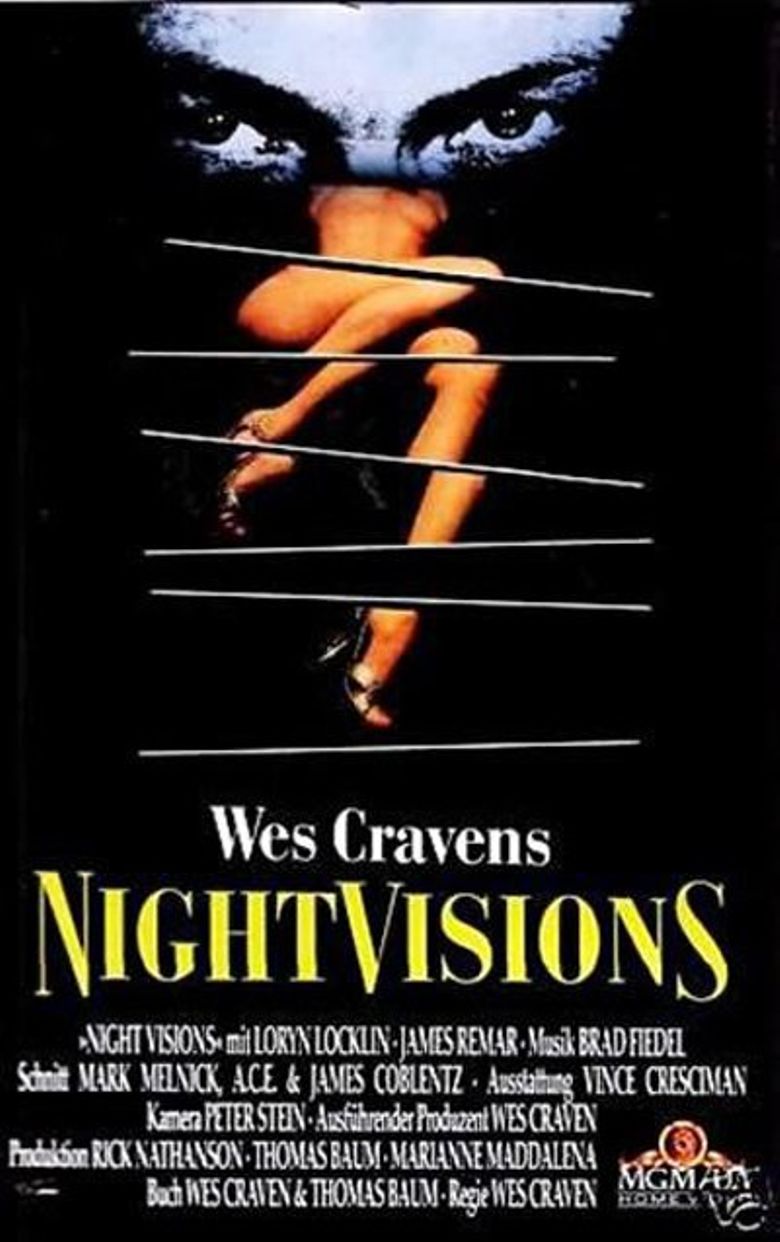
James Remar is Sergeant Thomas Mackey… a plays by his own rules guy who is forced to work with psychic Dr. Sally Powers (sigh) who has multiple personalities so solve his case. There is a serial killer who is killing women and…sigh.

Folks…I cannot say enough that this was a complete slog to get through. There were no surprises and it feel like the ultimate paycheck movie from Craven.

The characters are bland. The settings are boring. It feels like a dull; pilot for a dull series that the network wisely passed on. It is just terrible.

Shock Therapy (Shocker, 1989)

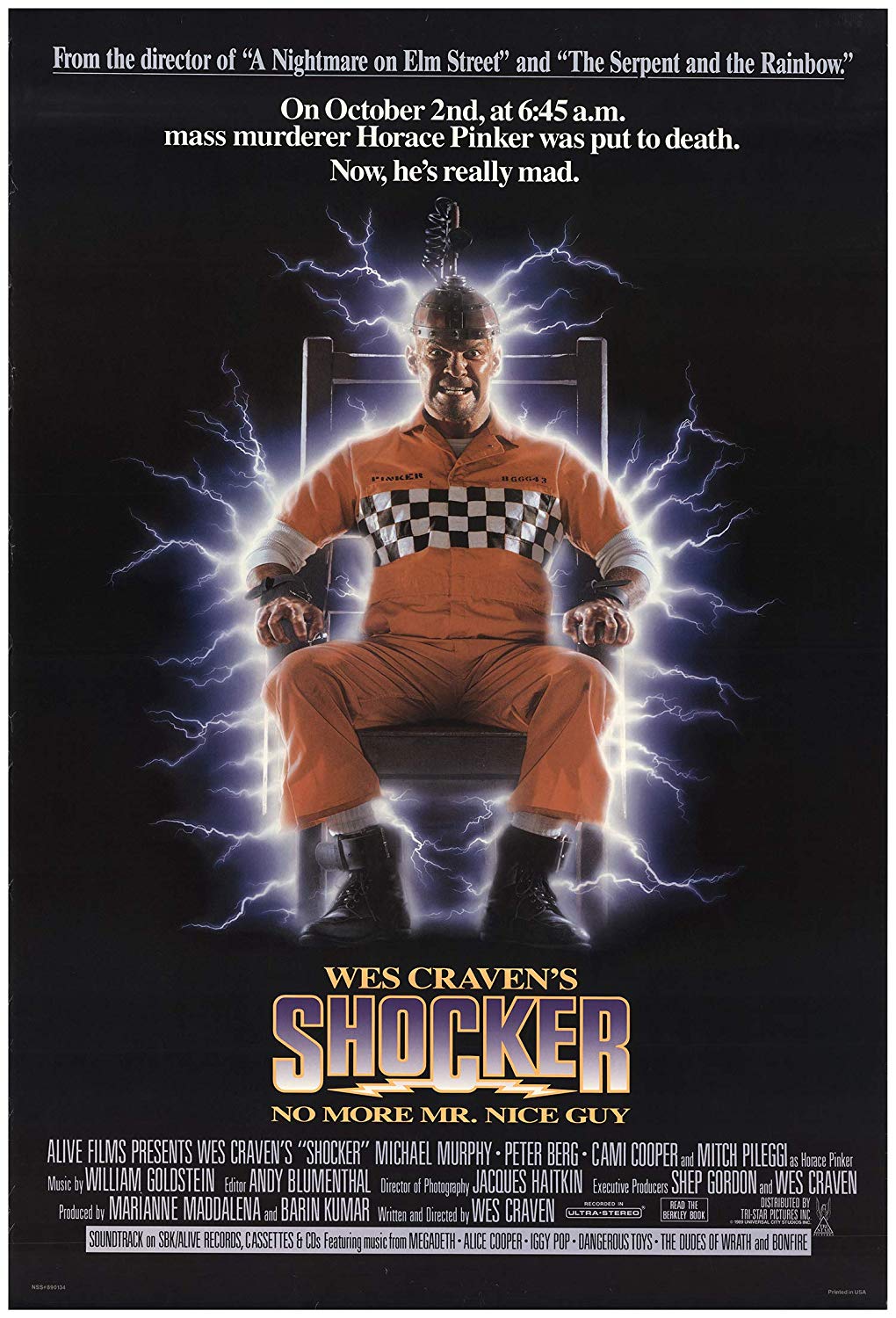
Shocker, Wes Craven’s follow up to the Serpent and the Rainbow is the entirely opposite animal. The story is that one night high school jock has a nightmare that a serial killer is murdering his family. He awakes and rushes to his family’s house where he is met by his police detective father who informs him their family has been slaughtered by the notorious local serial killer.

Using his dreams, Jonathan and his father ultimately identify and catch TV Repairman Horace Pinker. The evidence is damning and Pinker does not plead innocent, so it is a pretty slam dunk case. On the day of his execution, the guards find he has some elaborate set-up going on in his cell with his TV. While they fear he is killing himself, the audience can see he is performing some sort of ceremony.

Once in the chair, he uses his final words to to reveal that he is Jonathan’s real father. After the electrocution seems to go very wrong, they find Pinker is dead. But it turns out, Pinker’s body may be dead, but his spirit is alive and he can take over bodies.

Pinker and Jonathan begin a game where Jonathan hopes to find a way to stop Pinker’s new rampage, one where he can be anybody.

Where Serpent and the Rainbow was an attempt at a more serious film, and just a one off tale, Shocker feels like a blatant attempt to start a franchise with a new Freddy Krueger in Horace Pinker. But the inspiration is obviously from the late era Freddy. Pinker is a violent psychopath with a one liner for any situation. The dream connection feels like Craven was not even trying to set Pinker apart.

I enjoy a lot of the characters, even though the majority of them are fodder for Pinker to kill in his attempts to destroy Jonathan’s life. But without a doubt, Mitch Pileggi seems to be having a good time in the role.

Shocker gets incredibly goofy, as Horace can jump through TV signals as well as bodies. So when we see him outside of bodies he is transparent and has a static effect applied to him. When a person is possessed, the tell is that they have Pinker’s limp. I am not sure why his spirit would have a limp…but whatever, it is his tell. The goofiness goes off the rails when Jonathan and Pinker are flying in and out of TV shows and TV’s (landing in random living rooms, impacting television shows). And honestly? This is what kind of saves the movie.

While it lacks any nuance or deep themes, Shocker is a ridiculous and fun movie with a rock and roll soundtrack. I am almost a bit sad we never got Shocker’s two through six.

Dead and Buried and Back Again (The Serpent and the Rainbow, 1988)

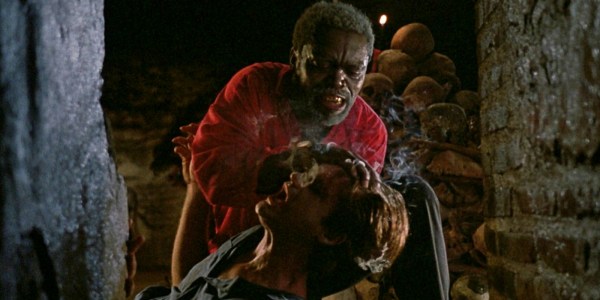
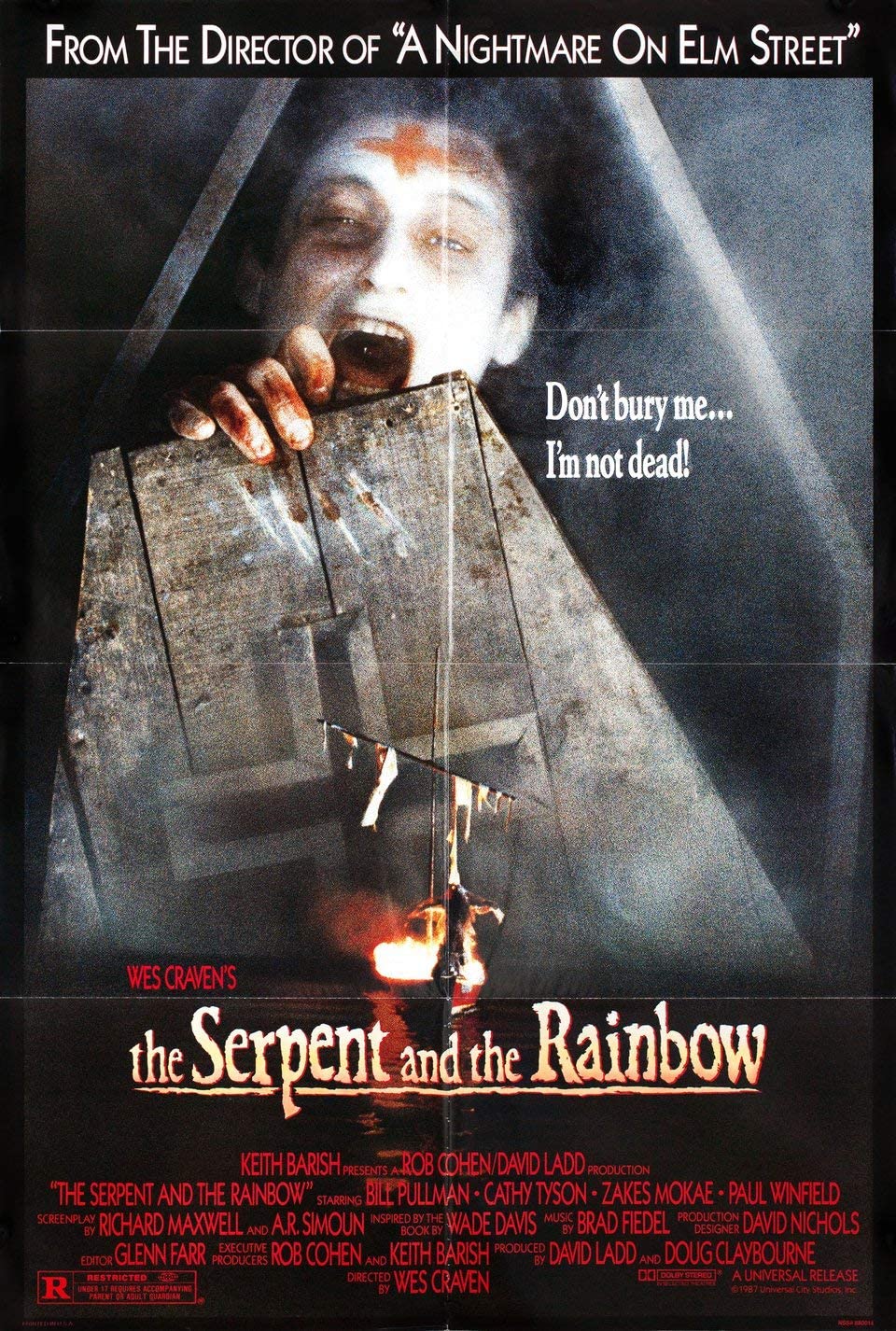
Taking inspiration from author Wade Davis’ book of the same name, Wes Craven explores spirituality and politics. This is not a direct adaption of the book, with Bill Pullman playing Dr. Dennis Alan. Alan is sent by his employer (a pharmaceutical company) too Haiti to investigate the stories of Christophe, a man who died in 1978, but has reappeared from the dead.

While there, Alan starts to work with Dr. Marielle Duchamp, who is treating Christophe. With her help, he is introduced to practitioners of Voodoo who are open to teaching him how to make the toxins that produce the zombie state. Dennis is convinced there are medicinal uses that would revolutionize medical care.

However, Haiti is in a state of revolution, and runs afoul of the local corrupt constable Dargent Peytraud (played with ominous relish by Zakes Mokae). After a threat to his life Alan realizes he cannot escape Peytraud’s grasp and returns to Haiti to help the friends he has made and confront Peytraud.

For the two thirds of the story, Craven plays things a bit coy. Any horror moments could simply be happening in his head, under the influence of hallucinogens. Up until the moment he returns to the United States, Voodoo is treated pretty respectfully. But then the film swerves into horror fantasy with a spiritual showdown between Alan and Peytraud.

The effects in the film are really solid with all sorts of creepy imagery. But what really stands out is the beautifully shot scenery. Filmed largely on location in Haiti, the cinematographer John Lindley takes full advantage of the environments.

Wade Davis has expressed some disappointment with the film for how it sensationalizes Voodoo, while the whole point of his book was to present it as a valid religion alongside the more popular and accepted religions of the world. He does not seem to lay this at Craven’s feet, whom he has suggested was trying to make something less in the horror vein (Davis had hoped for something more like the Year of Living Dangerously). He feels the studio kept the pressure on to provide them with a Wes Craven thriller.

While the film has some tonal flaws, it is still a very strong return to form for Craven, especially after Deadly Friend. This is Craven managing to bring his more intellectual ideas alongside his thriller instincts. And it works. This is an engaging film worth a watch.

Friendship is Science! (Deadly Friend, 1986)

Paul is a tech genius teen who has built his own robot named BB. BB has the ability to learn and grow in intelligence. When Paul and his mother move to a new neighborhood, he is befriended by Sam (a girl abused by her father) and Tom. The three form a bond which is shaken up when Sam is accidentally killed by her father.

Paul uses BB’s brain to re-animate Sam’s body. Paul hides Sam in a shed, but she goes out to explore and starts killing people who wronged Sam and BB. Paul finds this a problem as he tries to cover for Sam, but he is terrible at this. Instead, his lies start falling apart and when Tom threatens to go to the police and expose him, Sam goes on the attack. Seeing the threat, Paul tries to stop her so she is not killed (again). But it is clear that Sam and BB are not the girl Paul wanted to bring back.

Deadly Friend is an interesting concept and one of the early forays into the idea of IA and learning computers. BB’s design falls into the cute robot category and has a fun vocal provided by Roger Rabbit’s Charles Fleischer.

The film makes use of dreams and nightmares, much like a lot of Craven’s work. And the early parts of the film are equal parts fun and ominous. The film makes it clear that Sam’s father beats her showing bruises. But there is also the disturbing implication that he has raped her as well.

But where the film goes wrong is the choices made with the resurrected Sam. To show Sam is more reanimated flesh, they give her dark under-eyes and pale skin with light blue lips. This would be fine, if the choice was made to give her slightly more natural movement. While you could argue that her movements should be awkward, as BB is not used to walking. And there are moments where it is clear Sam/BB are trying to understand what is going on. But there was a clear and conscious choice for Kristy Swanson to move like a robot. BB had metal pincers for hands. So Sam walks around like this…

“I AM ROBOT”
“Kill!!!!”

It just looks hilarious, rather than scary or threatening. I do not know who thought this was a good idea. But it definitely makes it hard to take anything in the film seriously.

Deadly Friend had real potential on paper, but the execution is a pretty big disappointment. I mean, except for Anne Ramsey as the mean old neighbor who gets killed in a rather funny and memorable kill.

On Ice (Chiller, 1985)

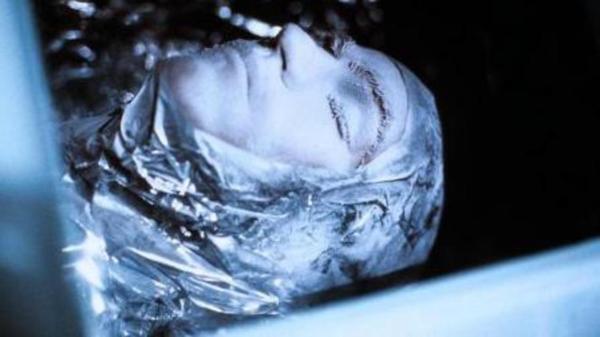
Miles Creighton was cryogenically frozen due to an incurable disease. Ten years later his chamber malfunctions. Miles is resuscitated, much to the joy of his mother.

But while his family is elated, the Priest his mother trusts worries that this is something that should never have been done.

Miles behaves in a creepy fashion at first, seeming distant and uncaring. He also seems to have some disturbed interests in his sister. Meanwhile, he starts to integrate back into the family business. As people begin to wonder if something is wrong with Miles, they have mysterious accidents (well, not to the audience). Miles is cold both to the touch and soul. Is this Miles? Or has something else returned in his body.

This is not a terrible concept, and there are all sorts of ways the film could have gone. It does raise the question of whether Miles was actually dead, or what became of his spirit. But this is done in a bland and basic way. There is no solid exploration of the meaning of life and death, and the spiritual dimension brought by the character of Reverend Penny (Paul Sorvini) is a very surface level Christianity.

Really the film leans towards being rather boring on top of a shallow exploration of the meanings of life death, life beyond death and the attempts to subvert mortality.

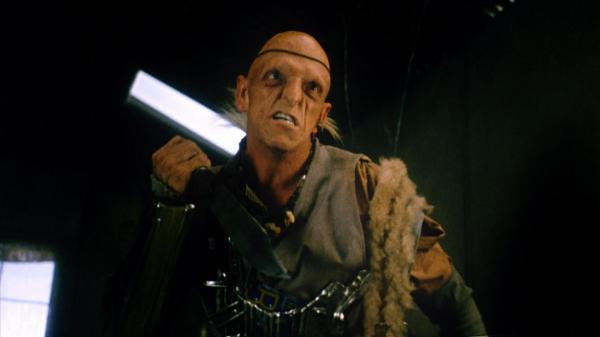
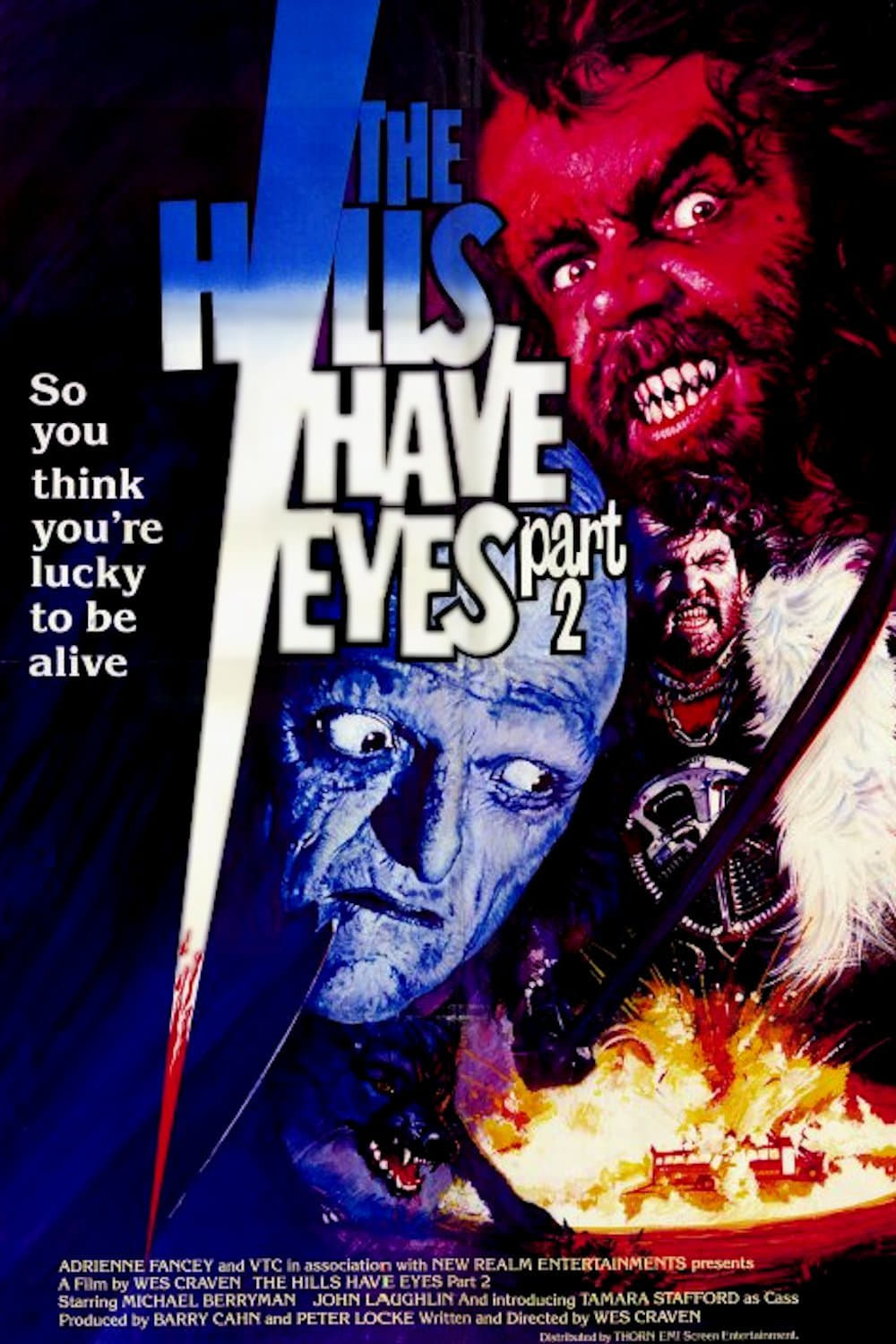
The Eyes Have It (The Hills Have Eyes Part 2, 1984)

Just on the verge of the success of A Nightmare on Elm Street, Craven got talked into a sequel to the Hills Have Eyes. and so they put together a script revolving around Bobby Carter and Ruby. Ruby apparently stayed with the surviving members of the Carter family after helping them escape her evil family.

Now Bobby and Ruby are part of a motor cross…uh…gang and they are going on a road trip. The film makes it clear that people are aware of the legend of Ruby’s family, and when the bus breaks down, they find themselves in the same vicinity. because…well, they have to so the story will work.

The truth is, this film was a labor of a paycheck. Craven had no real interest in making a sequel. And at one point they stopped filming because the studio ran out of funding for the film. When they later decided to have Craven finish the film, it did not get easier. They ended up relying heavily on archival footage from the first film to pad things out. And if you think I might be exaggerating…well…they have a scene where the dog has a flashback. The dog.

But honestly, the story is a convoluted mess and even with a bigger budget, there was little meat here. Characters decide to run off even after they know they are in trouble, rather than everyone banding together. At least in the first film, when the family split up, they mostly had no idea the danger they were in.

There is a blind girl with magical Daredevil level senses. Characters who spy on their naked friend while she showers and when discovered, he just stands in front of her talking to her like a creep.

You can tell Craven had little interest in making this tale and it really is embarrassingly bad.

Suburban Hell (Invitation to Hell, 1984)

So, if Deadly Blessing was mediocre? Invitation to Hell is a bit of a campy and predictable take. It opens with a driver who is making his way through a community. He is distracted and accidentally runs a woman over. It is okay, because she is Susan Lucci and is not going to die in the first three minute. She points a finger at the guy and he blows up or bursts into flame…I have already forgotten.

But the real focus of the (TV) movie Robert Urich as Matt Winslow. Matt is a scientist who has taken a high level job that requires his family to move to a prestigious community. There is an elite club run by Jessica Jones. She immediately sets about trying to convince Matt to join her club. While her family wants to join, Matt does not trust her.

Jessica tells Matt’s wife Pat that she could make an exception to the standard requirement of the entire family joining. So Pat and her kids commit to the club…with a whole selling your soul type of ceremony.

As time passes, Matt starts to feel like an outsider in both his family and the community at large. There are mysterious deaths and ominous goings ons…but um…well, it is pretty obvious between the title and early moments in the film…Matt has to save his family from hot demon lady.

I wish I could say this is campy fun…but it is boringly predictable and silly.

Dark Faith (Deadly Blessing, 1981)

Taking on religious zealotry, Deadly Blessing focusing on a couple who live in a farming community of Hittites. Jim was a Hittite, but left the faith when he married Martha. When Martha becomes pregnant, they seek the help of a local midwife who is also not a part of the Hittite community. When Jim is murdered one night, two of Martha’s friends come from the city to help and comfort her.

The women find themselves at odds with the local Hittite leader Isaiah who is certain they are a threat to his community, seductresses who tempt the men. When his son is murdered, things begin to escalate.

There are some pretty good frights in the film, especially some nightmares involving spider. Ernest Borgnine chews some scenery. The nightmare imagery hints at what was yet to come. But the storytelling just barely rises above the level of a TV movie (one of the writers was also a writer on Craven’s Summer of Fear). I never found myself feeling invested in the characters.

This is not a Wes Craven classic, and that is too bad. Seeing Craven explore religious and secular conflict feels like it would be fertile ground for him. But in the end, Deadly Blessing is fairly mediocre.

Replacement (Summer of Fear, 1978)

Wes Craven’s career took a detour into the world of TV movies. His first was the Linda Blair thriller Summer of Fear.

Blair plays Rachel, a teenager living in rural California with her loving family whose life gets shaken up when her recently orphaned cousin Julia comes to live with the family. As Julia seems to become accepted by the family and locals, Rachel starts to believe Julia is a menace out to replace her.

Rachel sees a series of misfortunes that convince her that Julia is a witch and sets out to convince her skeptical friends and family.

As TV movies go, this is… okay? There are no standout performances or anything. It is also not a very special effects heavy film. It is pretty forgettable and not particularly exciting. It certainly lacks Craven’s voice.

Create a free website or blog at WordPress.com.

Up ↑