
 This is a pretty slick and glossy remake. It begins much like the original, right down to the Stepfather clearing a fogged up mirror and shaving off a bushy beard. It is a little extended, but the idea is the same. Admittedly, it was a pretty iconic moment, and I get wanting to use it again.
In his new town he meets Sela Ward’s Susan. She has three children, one of whom is in military school (Michael, played by Penn Badgley). He returns six months after his mom and David (the Stepfather) met and they are already engaged. Michael instantly does not trust David. David tries to get him to trust him with a private conversation about they will heal the family together (over shots).
The film establishes that his back story is that his wife and daughter were killed in an accident by a drunk driver. And quickly, he starts to slip up, confusing names of his dead daughter while talking to Michael.
Unlike the first film, David needs to fix his problems very quickly. A little old lady in the neighborhood told everyone about how this police sketch of the family killer she saw on a TV show looked just like David. So, of course he has to kill her. Susan’s ex-husband gets inquisitive. So, He has to die. The film tends to take it’s kill count from the third Stepfather films, going for big numbers, rather than a nuanced exploration of the Stepfather’s psychosis.
The Stepfather of this remake is kind of confusing. The original films he was a very strict traditionalist. He believed in hardcore moral values. He did not believe in sex before marriage or living together before marriage. His rigid morality was a code he lived by and refused to falter on. When he did falter, that is when he started to crack. This version sees a guy who is accused of being to old fashioned, but he seems to have pretty modern attitudes. He lives with Susan and her kids, they are having sex. In a scene reminiscent of the original, Michael puts on headphones to drown out the sounds of sex. In the 1987 version, part of what makes the scene work is when we see O’Quinn and Hack together, O’Quinn has an expression of wanting to be anywhere but there having sex.
Anytime Amber Heard is on the screen, it feels like the director forgot he was making a movie…the film lingers on Heard in a bikini a lot…I mean, it is necessary I am sure…because Michael is a swimmer, so they spend a ton of by the pool. I get it, Heard is attractive…but it is just s obvious that it distracts from the film. It seems to have been distracting enough that we meet some detectives at the beginning working the case. And we never see them again.
Sure, this film is far more action picked, with a big fight, but everything that is no really does not add to the story, everything that links back to the original just feels like a pale imitation. While it is certainly better that Stepfather 3, this remake does nothing to improve on the original.
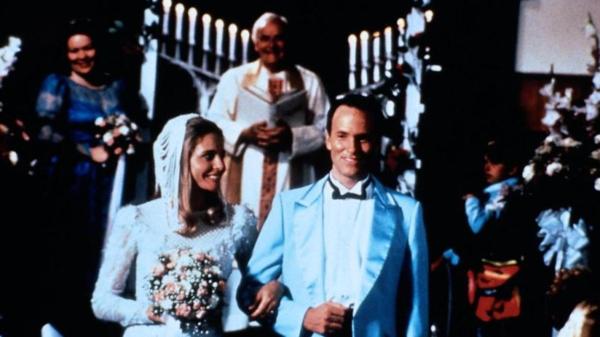
 While planning to make a third film, the filmmakers ran into a little snag. Terry O’Quinn turned them down. To be fair, he had a pretty television and film schedule going in 1992, so it may have been a scheduling issue. They ended up casting Robert Wightman (John Boy on the Waltons). To explain why he looks so different (and still living after the second film) he visits an underground plastic surgeon and gets his face changed.
 Terry O’Quinn returns in this sequel that finds a healed Jerry in a high security mental institution. He eventually breaks out and assumes the role of psychologist Gene Clifford (which will turn out to be a poor choice later in the film for a pretty obvious reason). While leading a therapy group for divorced women, he finds Carol Grayland (Meg Foster) and her son Todd (the late Jonathan Brandis). He starts building a relationship with them while her friend Matty (genre veteran Caroline Williams) starts to look into Gene’s background.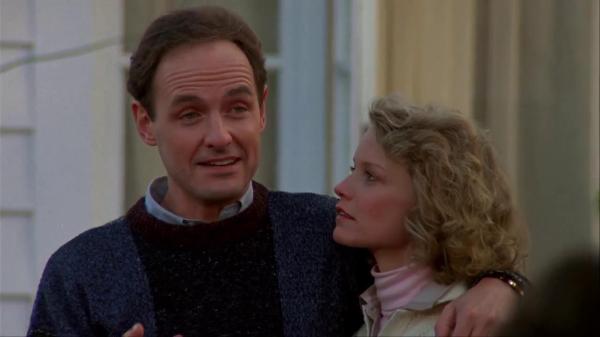
 A lot of People discovered Terry O’Quinn on lost. But horror movie fans discovered him back in 1987 when he played Jerry Blake, the titular Stepfather.
 Tripping Through Gateways