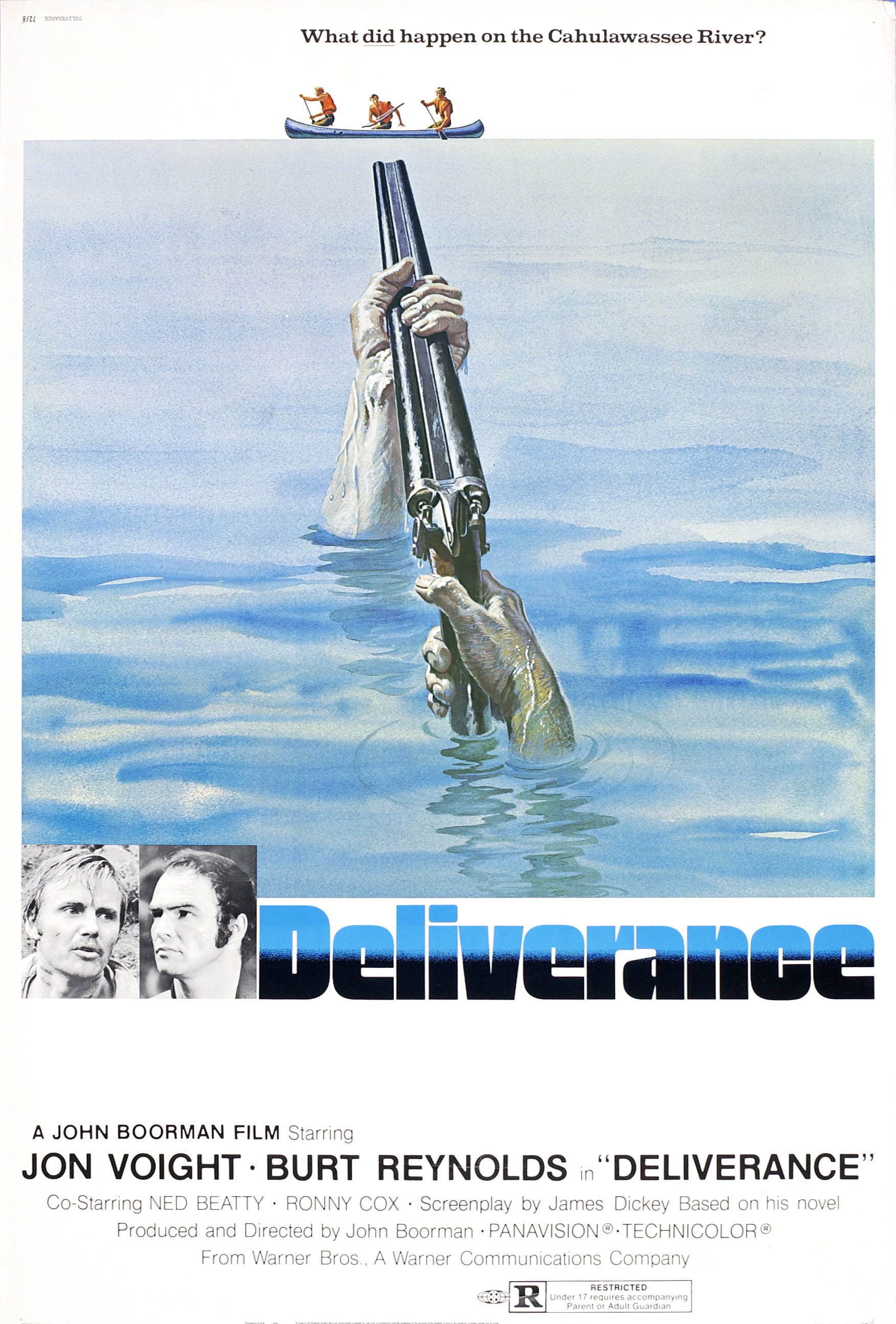
 Heads up. A bit “spoilerific”.
The first thing that stood out as the film began was that it looks and feels like it was made in the seventies. And it’s not just the presence of young Burt Reynolds. The cinematography screams early seventies. So does the audio. There is a certain muted quality to the audio of those films predating the surround sound era.
None of this is bad, and I am not stating these things as actual criticisms of the film, or even setbacks. Granted, the HD treatment helps it to not look as faded. The colors are a bit fresher than they most likely would have looked on video.
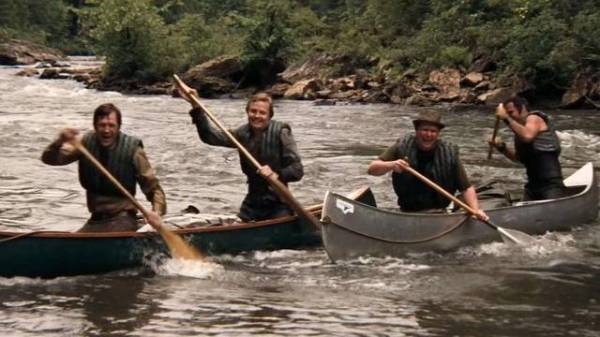
Deliverance also reflects the fears of it’s time. Fear of environmental catastrophes, and how modern man could survive them. Destruction of natural environments by humanity’s hands. Certainly, such fears and concerns remain with us, in some different fashions, but with us none the less. This is mostly embodied in the somewhat rough friendship of Ed (Jon Voight) and Lewis (Burt Reynolds). They appear to be long time friends, who have gone on similar outings in the past. Lewis is a self styled “survivalist” who thrives in the wilderness and is critical of the modern world. Ed, on the other hand, is a happy family man, with a comfortable life and job. It’s unclear in the film how they met or how it came to be that they take these trips, we only know this is not the first one due to Lewis asking Ed why he goes on these trips.
Along with them are two guys clearly from Ed’s world, Bobby (Ned Beatty) and Drew (Ronny Cox). Both salesmen out for an exciting weekend of canoeing down a river. Drew is apparently a musician of some degree, early on seen always wearing a guitar.
When the friends stop for gas, we get a scene that seems to both have a sense of joy and an atmosphere of danger. No matter how hard they try, no one seems to say anything right to the mountain folk. But Drew connects with a young boy through music. The boy appears to be autistic, or at least dealing with some kind of mental disability. He is not social until Drew starts playing guitar. Without blinking, the kid starts to play his banjo back. As the music kicks in full gear, the young boy comes alive, smiling and looking excited. His father dancing in the background, all is good. But the minute they stop, the boy rigidly turns his head and stays motionless, staring into space as Drew tries to shake his hand.
At first, while on the river, all seems normal. In fact, that sense of foreboding fades. It’s the next day when things begin to take their dark turn. Ed keeps catching glimpses of people in the distance between trees. Eventually, in a truly harrowing sequence, he discovers this was not his imagination. Tying Ed to a tree, two mountain men torment and humiliate Bobby. This culminates in one of the mountain men raping Bobby. You know, there has been much more graphic sequences put on film than this. But Ned Beatty’s performance creates incredible empathy for his character. Your heart breaks for him with every whimper and squeal. Ed is saved from such horrific indignities when Lewis and Drew come back looking for them. Drew dispatches one of the hicks with an arrow, and the other runs away.
The four men then argue over what to do. Of course, they choose to try and cover the death up. Drew is the most troubled by this, feeling the right thing to do is bring the body back and explain everything to the authorities. This is a tension filled moment, and Ronny Cox’s Drew is sympathetic…but then, Bobby’s desire to literally bury his shame is very understandable. He wants to hide what’s happened to him, a wholly human desire.
This sets off a chain of events as they try to get down river to their cars and away from this mountain forever. In their panic, they end up with one boat destroyed and the loss of Drew in the rapids. Lewis is wounded and it is left up to Ed to protect them. Earlier in the film we had foreshadowing in a sequence showing Ed trying to shoot a deer with Lewis’ bow and arrow set and failing. Now, believing they are being hunted by the other hillbilly, Ed must take the bow and arrows and track the mountain man. For Ed this is a clear struggle to overcome his fear and limitations. And what seems straight forward and simple becomes on of the films most tense moments.
When they finally do make it to their cars, they concoct a story to explain how they lost Drew and Lewis was wounded. Things begin to unravel, as the film portrays the police of the area far more competently than one might expect. They know that the story doesn’t add up, and they start to cause mistrust between Ed and Bobby. It’s clear, even as the police let them go, the local sheriff (portrayed rather ominously by Deliverance author James Dickey) knows that something bad went down.
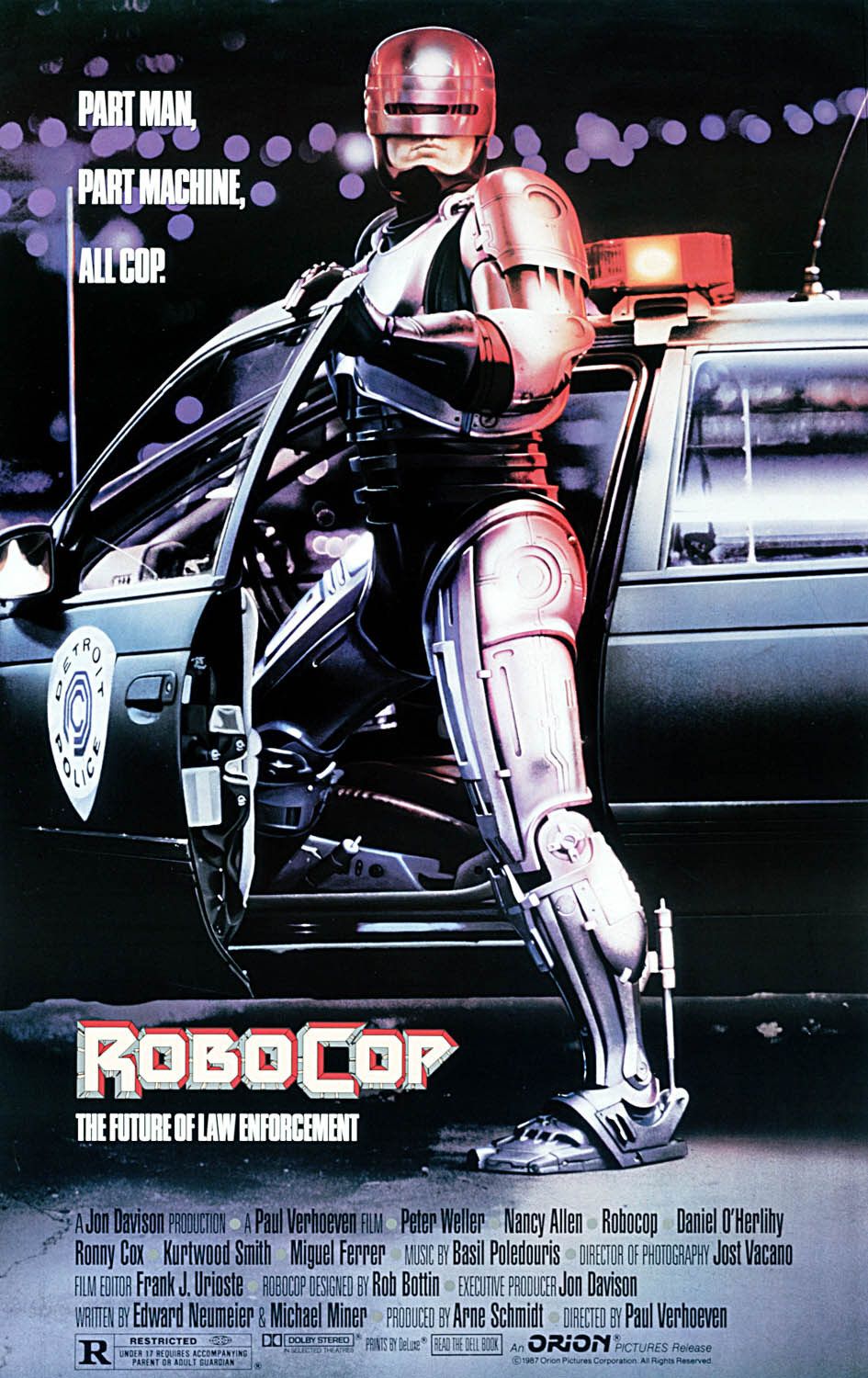
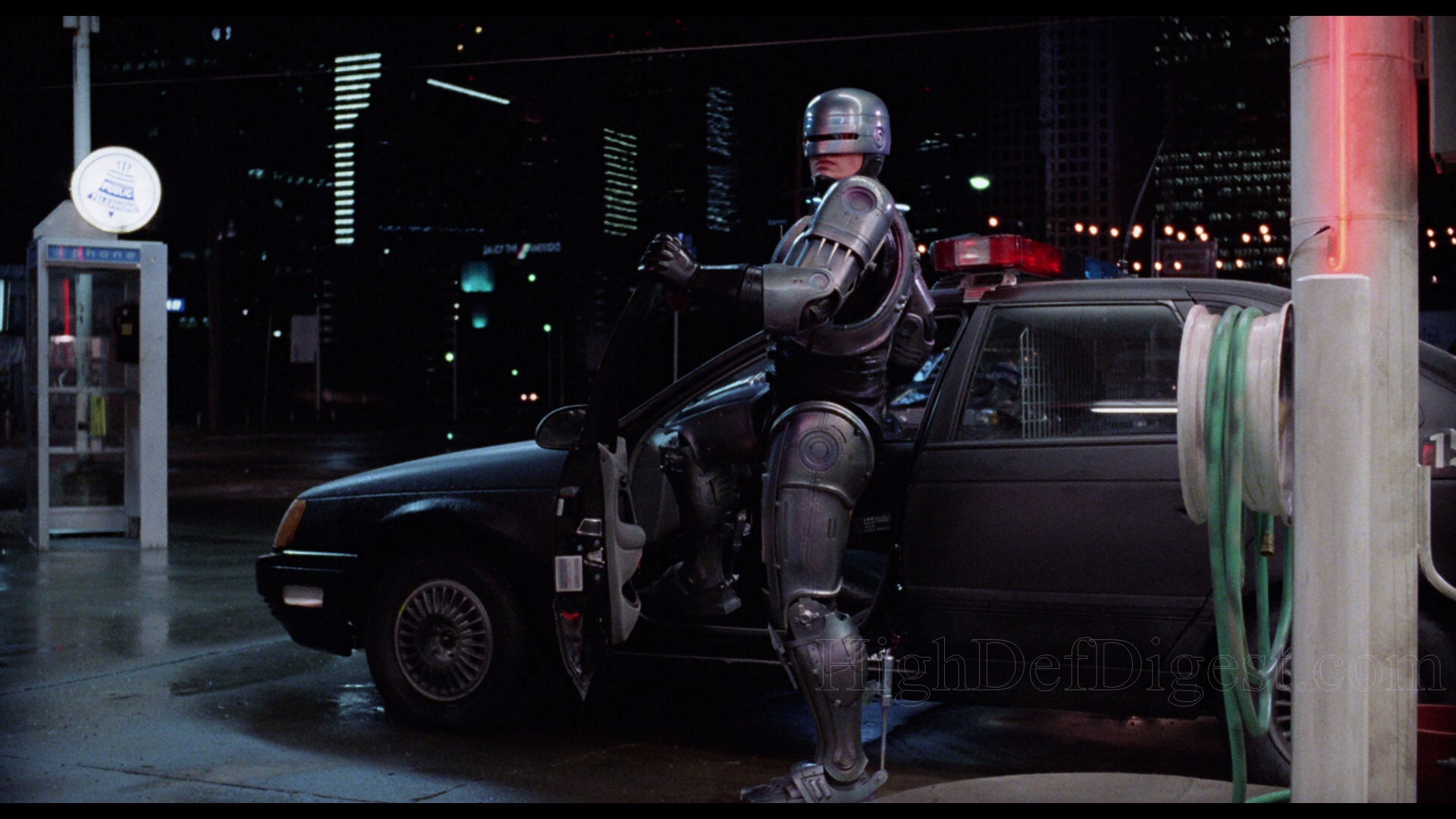
Director John Boorman’s direction is terrific, making the scenery as important as the characters in it. Reynolds, who was not a proven commodity at the time, is terrific as the hunter who desires to leave society, while Voight makes a genuine everyman who is forced to survive in primitive fashion. And the performances by Beatty and Cox (both of who I tend to associate most with later roles-specifically Otis in the Superman films and Dick Jones from Robocop-where Cox was deliciously evil) are standout, heartfelt ones.
The HD DVD contained a four part documentary that was fascinating, especially as it delved into the relationship of author Dickey to the director, cast and crew of the film. The interviews bring back the director and all the primary actors (as well as Dickey’s son) and hearing them discuss the film so much later gives it a more interesting perspective. The one problem with documentaries for newer films on DVD is that the creators are to close to the work. They are far more willing to look at an earlier work with a fairer and more critical eye. That’s what tends to benefit some of the films that are twenty or thirty years old just getting the special edition treatment.
All in all, Deliverance is as strong as it ever was, in spite of the times being more graphic in our movies, this film still keeps you enthralled.


 Tripping Through Gateways