Oh Oh It’s Magic PT 7 uh PT 2 (Harry Potter and the Deathly Hallows: Part 2, 2011)

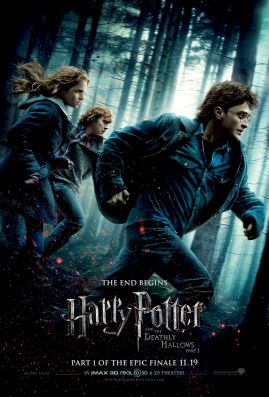
Harry_Potter_008_PosterTen years of film-making culminates with Harry Potter and the Deathly Hallows Part 2.  After managing to destroy a couple of the Horacruxes and escaping the clutches of Bellatrix Lestrange, the trio realizes they need to return to Hogwarts.  But this is not so simple.  Snape is now Headmaster, Dementors patrol the grounds and Death Eaters are on the watch for Harry Potter.

They find themselves seeking the help of Dumbledore’s brother Aberforth. They were never aware of a brother, and he seems embittered towards his brother.  In the Trio’s absence, Neville Longbottom has rallied their fellow students to be ready for war against Voldemort.  Harry realizes what the final Horacruxes are.  He seeks one, while Hermione and Ron work on a plan to destroy the other. There is a large battle at the school, which Voldemort brings a halt to.  He promises to let everyone go if they only turn over Harry Potter.

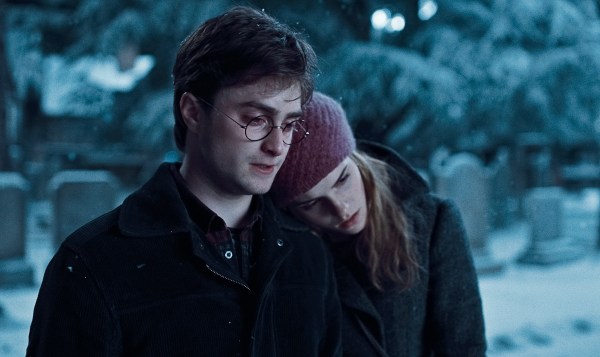
But Harry realizes he must face Voldemort on his own.  This leads to a rather touching moment with our three heroes as it is clear, this may be the last time they ever see each other.

Part two, while a logical progression from the dark part one, is far more exciting and even fun.  The drama is more hopeful. The funny thing is, taken as a whole, both films work quite well. Part one feels less oppressive when directly followed up by part two (as opposed to the theatrical releases which were several months apart).

Part two brings the series to a close with a sense of hope and optimism.  There are many moments that are thoughtful next to the exciting battles. And yet, even split among two films, you feel like we don’t get enough of some of those favorite characters (such as Remus and Tonks). I enjoy the series and feel this film brings it all to a close quite nicely.

Oh Oh It’s Magic! PT7 um PT 1 (Harry Potter and the Deathly Hallows: Part 1, 2010)

225278id1g_HP7_27x40_1Sheet.inddFinding the world becoming more and more dangerous, Harry and his friends leave behind the muggle world.  We see them saying their goodbyes, or in the case of Hermione, tragically causing her non-magical parents to forget she even exists. Several members of the Order of the Phoenix arrive at the now empty Dursley residence for Harry. To protect him, several of the members take the polyjuice potion to assume the likeness of Harry, creating multiple Harrys.

There is an attack by Voldemort and his Death Eaters, but with one exception, all arrive safely at the Weasleys.  There is a wedding for oldest Weasley Percy and Fleur.  The head of the Ministry of Magic arrives to deliver Dumbledore’s last will and testament.  He leaves a gift for Harry, one for Hermione and one for Ron. Harry receives the Golden Snitch he caught in the first film.  Ron receives Dumbledore’s De-lluminator (last seen in the first film)and Hermione is given a storybook.

At the wedding, there is an announcement from the Ministry that it has fallen into the hands of Voldemort.  Harry, Hermione, and Ron flee together. Rather than return to Hogwarts, the three dedicate themselves to tracking down and destroying the remaining Horacruxes. As the Half-Blood Prince explained, these are objects in which a wizard has put a portion of their soul. This involves murder, making it an especially heinous form of magic.  Only by destroying these objects can Voldemort be truly vulnerable.

The Deathly Hallows kicked off a trend in movies adapted from book series.  When it was announced that they were going to split the film into two parts, some felt it was merely a cash grab.  And while I won’t disagree that there was surely an element of that from the studio, I also feel it would have seriously hampered the series to try and force the story into a single film.

There are some notable moments, for instance, there is a terrific animated sequence that tells the story of the “Deathly Hallows”.  Radcliff and Watson are really quite good in this film.  And yet, Part one struggles a bit as an independent film.  It is rather slow at points, focusing on the bleak and hopeless tone.  It is, at times, incredibly oppressive. And while it ends with a somewhat exciting escape, it still is kind of hard to enjoy the film on its own.    But more on this in Part 2.

Oh Oh It’s Magic! PT 5 (Harry Potter and the Order of the Phoenix, 2007)

Harry_Potter_005_PosterThe film opens with a rather heartbroken Harry Potter, haunted by the death of Cedric Diggory and the rise of Voldemort.  The Ministry of Magic has worked very hard to portray Harry and Dumbledore as crackpots. Confronted by cousin Dudley and his friends, Harry becomes angry with Dudley and pulls his wand on him.  This is a nicely acted scene, as the moment Dudley sees the wand, his expression goes from cocky to scared (while his friends all laugh, having no idea Harry is a wizard).

The skies go dark and Harry finds he and Dudley under an attack from Dementors. Harry fights off the Dementors, but this results in his being expelled from Hogwarts for being an underage wizard using spells off campus. Harry must face a brief hearing to address if he will be punished.  Dumbledore prevents this from being permanent.

Harry is also frustrated by the fact that nobody has been in contact with him.  He discovers that Dumbledore has brought together several people to form the Order of the Phoenix.  It includes Lupin, the Weasleys, Sirius Black, Mad-Eye Moody and shockingly to Harry, Professor Snape.

Once back at Hogwarts, the kids are introduced to the new professor of Defense Against the Dark Arts.  Delores Umbridge is really there as an eye for the Ministry of Magic, which does not trust Dumbledore.  She does not teach the children spells. Instead, she focuses on books, arguing the children will never need to put such things into action.

Umbridge slowly takes over the school, enforcing ridiculous and endless rules.  She forces out Dumbledore, inspiring Harry to bring together like-minded students to prepare to fight Voldemort.

this is the heart of the film, as Harry and his friends strive to prepare for the coming battle.  But Harry also struggles with nightmarish visions, some of which turn out to be true. This causes him to believe Sirius is in great danger, causing Harry and a few members of his class to set out to save Sirius by breaking into the Ministry of Magic’s archives department.  This leads to an all-out battle royale.

Order of the Phoenix is notable as being the only Harry Potter Film without a Steve Kloves screenplay. And in some ways, this film feels the least connected.  It also suffers from issues like setups not being addressed.  It never explains the Dementor attack.

Certainly, we can assume it  was due to Voldemort or even the Ministry of Magic…but while the event is questioned, it is never answered.

Still, this is a generally good film within the franchise, even if we only get glimpses of characters like Sirius Black (blunting his overall impact). The introduction of Bellatrix LeStrange (played with gleeful delirium by Helena Bonham Carter) and Luna Lovegood (who, in some ways is a sweetly natured reflection of LeStrange) are welcome.  Imelda Staunton makes Delores Umbridge gloriously hateable.

The film also introduces one of my favorite characters from the books, Tonks.  She is kind of what I figure a young and modern witch or wizard would be like (for example, using magic change hair color and styles).

This film brings on David Yates as director and visionary for the rest of the series (under the watch of Rowling and Kloves). Primarily a television director, Yates acquits himself quite well in this big budget picture.

Culture Wrath (Wrath of the Titans, 2012)

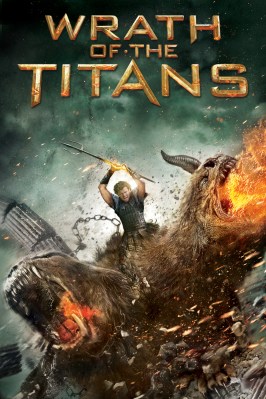
Wrath_of_the_Titans_PosterWrath of the Titans tries to rectify the one thing missing from Clash of the Titans.  Titans.  In the original Clash, the Kraken was a Titan, but in the 2010 film, this was a bit clear.  Wrath opens with the story of how Zeus, Poseidon, and Hades defeated their father Kronos and imprisoned him in the underworld.  It also reminds us that Zeus and Poseidon had conned Hades by binding him to the Underworld.

Perseus and Io were living the quiet life in a fishermans’ village.  Io bore them a son, Helius and then died before the movie started. Gemma Arterton was unable to return to the film and so she was killed off.  This would seem at least understandable until you find that they recast Andromeda with the blonde Rosamund Pike. But anyways, Helius desires to be a warrior, a life which Perseus is aggressively trying to keep him from.

Zeus reveals that he visits Helius in the boy’s dreams, but wishes Perseus would be more open to accepting their status as demigods.  Meanwhile, Hades and Ares are conspiring against the other gods, tempted by Kronos.  They get the jump on Poseidon and Zeus, stealing Zeus’ lightning bolt.  Poseidon is mortally wounded, but escapes and passes his trident to Perseus. He tells Perseus to find his son, the demigod Agenor. He finds Andromeda, who is now a warrior Queen leading her army.  They are aware things are afoot, as monsters have started to burst forth from the ground.  They also have Agenor (who is basically the Greek god equivalent of Russell Brand) as a prisoner.

The three take some warriors with them to go on a mission to rescue Zeus and stop Hades from freeing Kronos. To do this, they travel to find Hephaestus for a way into the underworld. After a fight with Hades, Perseus, Andromeda, and Agenor escape into the ever-shifting labyrinth that will lead to the Underworld.

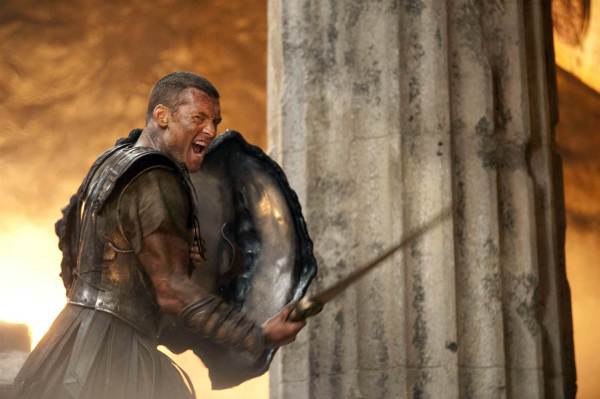
This film muddles it’s the previous stand against the gods, with Perseus having appeared to soften his feelings towards them. The film is full of nods to Greek myths, such as the Minotaur in the Labyrinth, chimera and so on.  It also has easter eggs like the mechanical owl Bubo in a cameo (which occurred in the 2010 film as well) who is quickly laughed off. But everything feels so randomly chosen and leaves out some great character concepts from the original myths. And if the gods were largely missing in the original film, this one makes it all the worse by having the majority of the gods killed off-screen.

In fact, the film seems dedicated to destroying any further franchise potential by basically erasing the gods from existence. I would say this film is not a worthy successor to the 2010 Clash of the Titans, but then, that film was not impressive either.

The truth is, I wanted both of these films to be great, but they are so largely cynical of their source material, they lack the joy a good fantasy film can contain.  They are all about the big effects, leaving little room for actual character.  Sure, they try for heft in the notion of Hades and Zeus mending their relationship.  And then there is Perseus finding love with Andromeda.  Yet, these plotlines feel forced and a bit hollow.

Modern Culture Clash (Clash of the Titans, 2010)

Clash_of_the_Titans_2010_PosterThe new millennium brought a renewed interest in Greek mythology based films.  This, of course, meant that a remake of Clash of the Titans was probably inevitable.

The modern take is…well, different.  Here, Zeus is angered by King Acrisius and to punish him, he seduces and impregnates the king’s wife Danae.  Angry, he seals her in a box with infant Perseus.  The box is found by fisherman Spyros, who raises Perseus with his wife (Unlike the original film, Danae dies).  Zeus is, of course, angered by this move and turns Acrisius into a monster.

Years later, Perseus is out fishing with his adoptive family.  They witness soldiers tearing down a statue of Zeus.  The soldiers are attacked by demons who also destroy Spyros’ fishing boat, resulting in the death of all but Perseus.  He is found by soldiers who bring him to Argos.  There he witnesses King Kephesus and Queen Cassiopeia.  Cassiopeia mocks the gods and declares her daughter Andromeda more beautiful than any of the goddesses. Zeus and the other gods are watching and angered, but Zeus’ hand is staid by his love for man and the need for their prayers.  But Hades demands that they must make men fear the gods again.  He convinces Zeus to allow him to interfere.

Hades greets the King and Queen and demands Andromeda be sacrificed or Argos be destroyed.  Perseus is convinced to go on a mission to find a way to defeat the titan called the Kraken.  Along with several soldiers, Perseus begins his quest.

You may have noticed there are a lot of changes here.  The film is less a remake and more a re-imagining.  There is no love story between Perseus and Andromeda.  His goal is to make a stand against the gods.  Perseus is in denial of his demi-god status, constantly rejecting any help from Zeus in favor of doing everything “as a man”.

The gods themselves are worried about man’s rebellion against the gods and their power is waning as fewer people are praying to them.  The only real example of the pettiness and competition between the gods is how Hades was betrayed by Zeus and Poseidon, which drives Hades’ desire to destroy his fellow gods.  Noticeably missing?

The female gods.  I mean, they are in the background.  You see them, but they are pretty inconsequential.  Unlike the original, Calibos is no longer the son of Thetis, and he is merely a pawn of  Hades.  It is disappointing that they push all other gods to the side beyond Zeus, Poseidon, and Hades.  Making it about sibling rivalry is ignoring the rich history of the Greek gods. I suspect the fact that the original film was written by Beverly Cross, a woman, influenced the 1981 films inclusion of women in more equal standing.

In addition, the original cast women over forty in almost all the major goddess roles.  In this update, most of the female roles prize youth and beauty above all.

Worthington is not nearly as engaging as some of his co-stars, which is a problem.

On the upside, the relationship of Spyro and Perseus is brief but nice.  When his wife is pregnant, young Perseus is worried he will be loved less.  Spyro offers comforting words noting Perseus is no less his son than if they were flesh and blood.

And while Judy Bowker’s Andromeda was a luminous beauty, she was not given a lot of time (though we see her decrying the rules of her curse which resulted in countless deaths).  Here Andromeda is seen as a greatly compassionate woman.  We see her going about the city in disguise to help the poor.  She also refuses to accept the notion that others should die so that she might live.

The creature design is largely quite good (though the demons move so fast so as not to allow much detail to be seen).  But even there, you have flawed concepts at work.  Medusa should not be alluring, and yet, there she is in this film looking beautiful until the moment she turns you to stone.

The re-imagining ends up like a hodgepodge of mythical concepts that are thrown together, almost unrecognizable to their inspiration. In place of a romance with Andromeda, Perseus instead falls for the beautiful immortal Io.  And at times, I found myself getting bored.  This is in spite of the fact that everything tries to be much bigger than the original film.  The scorpions are bigger, the Medusa fight is in a bigger temple, the Kraken is larger.

While Clash of the Titans is louder and slicker, it just feels like a pale imitation of its inspiration.

Bond’s Childhood Issues (Spectre, 2015)

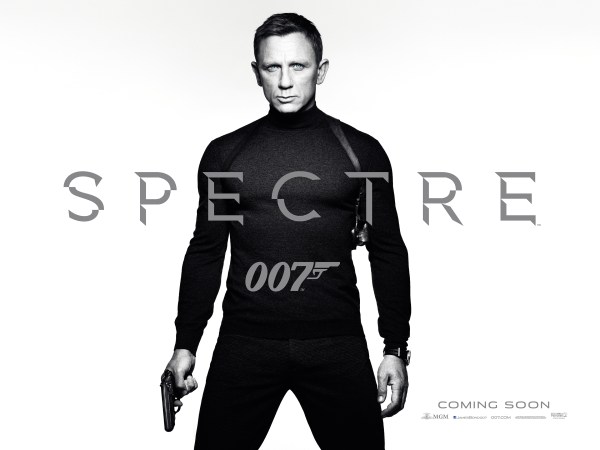
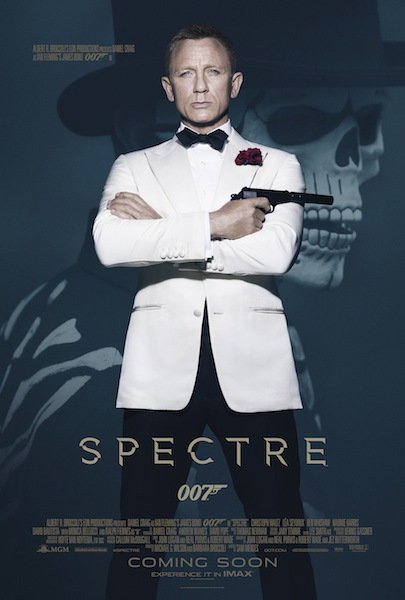
bond_spectre_posterI confess, I was not waiting as anxiously for this film.  Craig has gone out of his way to show a real lack of enthusiasm for the role.  And yeah, some of the criticisms are very accurate, though I felt they were doing a better job as toning those things down and moving towards eliminating them.

Casino Royal was a game changer for the franchise that revitalized the series.  Craig was seen as one of the best Bonds.  Folks were excited for the next film…and then came Quantum of Solace.  And enthusiasm dampened.  Then they announced Sam Mendes as director for Skyfall.  And people started getting excited again.  Javier Bardem was announced as the villain and people got a bit more excited (but nervous when they saw his hairstyle).  And Skyfall came out.  And enthusiasm again dampened.

I did not hate Quantum of Solace or Skyfall.  They were okay, and far from the worst the franchise has offered.  but they focused to much on villains that were never that interesting with back stories so tied to bond, they felt like they lacked the bigger motives.  gone are the notions of Bond discovering a plan and being the fly in the ointment, he became their focus.

Any hope that Spectre would turn things around (and end Craig’s run on a high note) were dashed.  It is simply enjoyable.  It has some great action sequences, and M’s heavier involvement in the resolution of the film (in spite of the film relying yet again on the notion of Bond being cut off and on his own) works well.  Same with making Q and Moneypenny heavier hitters, so to speak.

Yet, often, when the film gets talky, it gets immensely boring and never feels like it advances the story.  Wit and wordplay are part of the history of Bond, yet Spectre lacks any of it.  Craig’s Bond may be less of a misogynist, but he is also plenty dreary.

The film has decided the relationship between Blofeld and Bond needs to be intensely personal.  There is no need for this, and wastes a great actor like Christophe Waltz on a rather uninspired take on the villain.  The organization of Spectre lacks any ominous threat.

That said, the action sequences are solid and exciting.  And I really liked the opening credits sequence.  But if this is Craig’s last outing as Bond?  It does not end on a high note.

Create a free website or blog at WordPress.com.

Up ↑