I Hate Mondays Chapter 3 (John Wick 3: Parabellum, 2019)

John_Wick_3_Parabellum_PosterJohn Wick was one of those suprirse franchises.  I went into the first film with low expectations…and had a great time with a basic revenge action film.  I was sure that John Wick Chapter 2 would be the failed follow up and instead it turned out to be even a little better than the first.

So, does John Wick 3: Parabellum keep the momentum?

For the most part? A big yes.

Picking up directly on the heels of Chapter 2, there is a bounty put on Wick’s head and he is essentially excommunicated from the elite assassin community he had originally sought to get out of in the first place.  But now it is a matter of survival.  And Wick plans to go to the top. But his situation now means he cannot get any help from the support network he has had access to previously.  This puts him in a situation where he spends much of the first act without guns.

But then, this is the trick of John Wick.  Anything is a weapon in the hands of John Wick…anything. Take away the simplest and most obvious weapons?  He will figure it out.

The weakest part of the film is that the film does not expand on the existing mythology in a way that is terribly interesting.  The auditor who arrives to hold everyone who has helped Wick to account is okay, but I found the people above her less impressive.

On the other hand, the assassin fights are a lot of fun.  And Mark Dacascos is highly entertaining as Wick’s direct opponent during the third act. The action choreography is a wild watch, especially some of the earliest confrontations.

The casting of these films is impressive.  Every character, even the most minor, feel like the actor was cast with a serious intent. And the new additions, such as Halle Barry, are great.

One of the things that make the Wick films so enjoyable is that the action is pretty easy to follow.  The fact that all three films were directed by Chad  Stahelski is a strong argument for keeping a single visionary at the helm for a franchise.  While not quite as good as John Wick Chapter 2, this film is a strong follow up that means the franchise has yet to truly falter.

Back to the Future (X-Men: Days of Future Past, 2014)

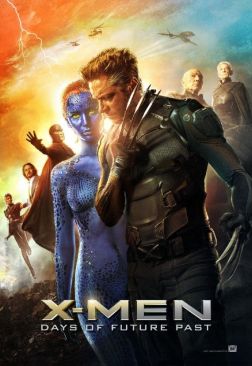
X-Men-Days-of-Future-Past-posterDays of Future Past is a well loved storyline where Kitty Pryde is thrust into a future where Mutants are herded in camps, marked and in some cases killed.  They are hunted by giant robots called Sentinels.  And for the most part, Days of Future Past keeps these ideas.  Except the film begins in the future and instead of Kitty Pryde going to the future, they send Wolverine back in time to stop it from ever happening.  Kitty Pryde is still a part of this, as she can use her phasing ability to phase people through time.  Only to a few days earlier, so they are playing a cat and mouse game with the Sentinels finding their hideout, Kitty sending Bishop back in time to warn them.  They decide they need to go farther back, but it is to taxing on Kitty and the brain of the person she sends back.  Wolverine volunteers to go, arguing his healing factor makes him the best choice.

Wolverine awakes in the 70’s and finds that the School Xavier opened is in shambles…there are no students.  Xavier is addicted to a drug that allows him to walk, but also prevents him from using his powers.  Beast is also there as his aide.  They do not initially buy Wolverines arguments, but he eventually persuades them to the cause.  They are trying to stop Mystique from assassinating Bolivar Trask.  Trask is the creator of the Sentinels and he has been using mutants as part of his R&D.  The research is fatal, and this is actually used to kill several characters from First Class off screen.

This is without a doubt one of the strongest films in the entire X-Men series.  The return of Bryan Singer as director was clearly a smart choice.  There is well timed humor and exciting action.  We see the return of the original (still living cast).  The future sequences are full of cool uses of power and we get new characters like Blink (who creates wormholes characters can escape through-the film is very inventive with these powers) and Warpath (a character from the 1970’s return of the X-Men comics).  We have Storm and Iceman back.  The films have always had a hard time placing Magneto on the side of evil and seeing real life friends Patrick Stewart and Ian McKellan back together again.

And the new characters are pretty memorable.  Quicksilver appears only a short time, but he totally steals every scene.  He is funny and likeable.  Peter Dinklage makes Trask a sympathetic and misguided villain.  He is not simply evil…he is consumed by fear of what mutants mean for the human race.  It does not make his actions acceptable.  His choices are evil, but you can see what takes him there.  William Stryker returns to the series and is trying to weaponize mutants, treating them as less than human already.  The film is, of course, very Wolverine-centric.

There are two cuts of the film out on Blu-Ray.  The theatrical cut eliminated Rogue entirely with the exception of the film’s final scene, even though they filmed several scenes focused on Rogue.  The second is not a directors cut, it is the Rogue Cut and restores Rogue to the story.  Both versions are good, but it is nice seeing the inclusion of Rogue and the important part she plays.  It also brings things back to the first film and Rogue’s relationship to Wolverine.

The film has continuity issues in regards to the film series.  One being how Patrick Stewart is back…it is a bit more focused on undoing X3 and “fixing a timeline”…which results in questions.  Like First Class, Days of Future Past overcomes a lot of these questions while watching it.  This film feels like the passing of the baton to the new cast (much in the way Star Trek Generations tried to do…but this does it oh so much better). It is, like X2, a film that has a strong identity that is built on strong performances.

First Mutations (X-Men, 2000)

x-men-2000-PosterX-Men kind of set a template for Marvel films that they have stayed fairly close to and it has served them well.   Get a director with some real film cred, and the rest will follow.  X-Men is certainly proof that it is an effective approach.

Really, it was the hiring of Bryan Singer (then most recognized for the Usual Suspects) that got actors to take notice.  Most of the actors admitted no familiarity with the comics, and Bryan was not a fan of the series when he came on board.  While having a non-fanboy running the show ruffled some feathers (especially when it was revealed that none of the X-Men would be wearing costumes), it really seemed to miss the point.

A good storyteller need not be a fan to tell a great tale about these characters.  Patrick Stewart’s lack of interest in Sci-Fi did not stop him from becoming a beloved Star Trek Captain or Professor X.  And many of the actors opted to research their characters by reading the comics.  Sir Ian McKellan devoted an extensive section of his website to Magneto, he found simple ways to connect the characters to real life.

Of course, the big issue was Wolverine.  Hugh Jackman was way to tall to play the runt.  Oh, the frustrations comic fans are forced to deal with.  Along with the previously mentioned news that Singer was ditching the costumes in favor of leather uniforms.  So, things were stacking up against it in the eyes of fans and creators.

The film begins in the early 1940’s.  A concentration camp to be specific.  Weakened and fearful Jewish families are herded through an iron gate.  The Nazi soldiers begin to separate out children. One young boy and his parents reach for each other, and as the young boy becomes more frantic, we notice little things.  The metal in the gates starts to reach back towards the boy-and he and the soldiers holding on to him are dragged towards the warping gates.  After knocking the boy out, the soldiers stare in confusion at the mangled gates before them.  Next is an introduction to Rogue (Anna Paquin).  She is in her room with a young man and they start to kiss…suddenly, he starts to appear sickly, veins seeming to grow across his face.  She starts screaming as the boy convulses before her.  These are dramatic starts for a very ambitious film.  A few years earlier Batman and Robin crashed the comic book movie boom.  And yet, Singer was taking the X-men seriously.

The film quickly works to bring all the characters together.  and there is little time wasted in creating the team, tying it around Wolverine and Rogue.

The film, despise an easy premise, suffers from the problem from so many first films for a franchise…”Introductoritus”.  It is a large ensemble, and I get wanting to put in all sorts of stuff for the die hard fan to get excited over.  But it is a big cast and that means some folks will get glossed over.  Halle Berry’s Storm is flat and pretty lifeless.  Some of it is the writing, some is the performance.  Hugh Jackman does a terrific job as Wolverine.  He is convincing as a loner, yet the (sibling like) bond with Rogue is believable.  As his his friction with Cyclops and the magnetism with Jean Grey.  Unfortunately, Marsten’s Cyclops is often kind of boring when not interacting with Wolverine.  Their verbal sparring is definitely a highlight of the film.  It often feels like the film really is not sure how they want to portray Storm and Cyclops.

But in the end, Storm gets the biggest shaft in character development.  Some of the film’s worst lines come from Storm.  There is the scene where she and Wolverine are discussing the coming war between mutants-those who wish to peacefully co-exist with homo sapiens and those who wish to rule as homo-superior.  She tells Wolverine at least she has chosen aside.  As if merely choosing a side gives you some nobility (hint-it does not).  I mean, yeah, she chose Professor X’s side…but what if she had chosen Magneto’s side?  There is also the infamous “what happens to a toad when struck by lightning” gag.  It falls flat.  It was a contribution of Joss Whedon, who swears that it was all Halle Berry’s delivery that resulted in it being so ridiculed.

Both Patrick Stewart and McKellan give rousing performances, while Hugh Jackman proved that he could embody Wolverine even though he was of average height.  Stewart and McKellan really provide a sense of a longstanding friendship that is needed as the foundation of the story.  The effects were solid for the time, many mutant powers from the comics really came to life.

On the other hand, the film is so busy introducing the concept and the characters, the plot seems under developed.  It is a pretty herculean task to try and bring a single character with over forty years of backstory to a finite two hour movie.  Trying to bring the X-Men-full of hundreds of characters together cohesively?  You have to choose who you want to focus on, knowing you will deal with complaints either way.  Singer, Tom Desanto and David Hayter struggle valiantly to bring together character and story, but really, it fell mostly on the side of character development.  Understandable, as the X-Men have a rich cast to choose from.

Toad and Sabertooth come off as pretty bland and one dimensional for most of the film, not contributing much until the end.

For Singer, this was easily his most ambitious film to date.  Not so much in story, but in cast size, and general scale.  But he does a pretty solid job with the film overall.  He seems to understand the sense of scope a film like this needed-in spite of his background in smaller films, he seemed to transition quite well to the grand scale needed for the X-Men.

The film’s overall plot is probably less memorable than it’s various character moments, and in that sense, the movie is hurt.  What could have been a terrific film is simply a good start…it is just a set up.

Diversify

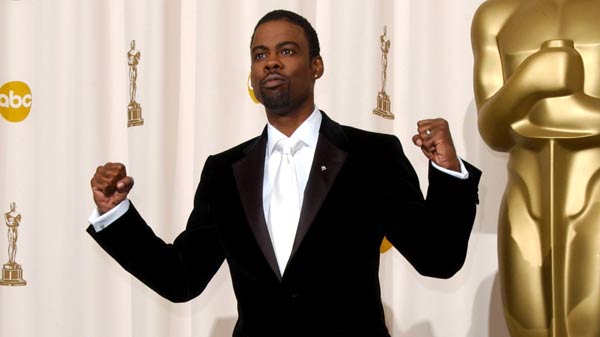
So, last Sunday’s Oscars happened.  There was much questioning in advance of how Chris Rock would address the #OscarsSoWhite controversies.  Some felt he should drop out.  Some felt he should use the the night to stick it to Hollywood racism.  And, he did pretty good.  Rock had some good jokes that called out the racism at play…Hollywood’s “Sorority style Racism” as Rock noted.  But Rock’s bits could have been better.

It started to become apparent that Rock’s calls to diversity were somewhat single dimensional.  In fact people on twitter started noting that Diversity is a bit bigger than Rock’s focus.  Aasif Mandvi tweeted:

hey , diversity is not just and .

He was met with a response that stated that because Chris Rock is black, he was focusing on black performers.  Which, to be frank, is a pretty bullshit excuse.  Rock was hosting the Oscars to a broader public.  Asians and Latinos (just to name two groups left out) had every right to be frustrated by Rock’s extraordinarily narrow observations.

In a bit of irony, Rock’s race themed bits all highlighted white versus black.  He only spoke of black actors vs white actors.  There was a distinct lack of diversity.  Heck, it even looked as if he  and his writers lifted the Martian Gag from the Nightly Show.*

All of Rock’s bits would have been funnier with an expanded racial scope.  Of course, pointing this out has gotten some hit with accusations of saying the same thing as “All Lives Matter”.  Which is absolutely false.  Let me cut folks off at the pass.  This is false.  Period.  There is no discussion to be had.  Pointing out that other races were not recognized by Rock is not the equivalent of saying all lives matter.  Why don’t we look at some facts  about Oscar Diversity.  It is not a pretty picture.

There has not been an Asian Best Actor nomination since Ben Kingsly in 2003.  There has not been an Asian Winner since 1982, which was also Ben Kingsly.  It was 26 years earlier that there was another Asian nominated.  That was Yul Brenner in 1956.  And he won.  You have two Asian winners in the Best Actor category.  There was one Asian woman nominated for Best Actress.  Merle Oberon in 1935. Not a single Asian Actress has been nominated since.  Not even from the Joy Luck Club, which got no nominations for it’s actors.

Surely it is better for the supporting roles, right?  Between 1957 and now?  Best Supporting actor has nominated Asian Actors six times.  Of those six?  Two are Ben Kingsly.  The only win was Haing S. Ngor for the Killing Fields in 1984.  The last nomination was Ken Watanabe in 2003.

Supporting Actress?  Since 1957? Again, six.  The last being Hailee Standfield in 2010’s True Grit.  Only one win, that was to Miyoshi Umeki in 1957.

So, what about Latinos?  Surely, they fared way better in acting nominations and wins, right?

Well, for best actor?  Five since 1950.  Last nomination was Demián Bichir in 2011.  Last win? 1950’s José Ferrer for Cyrano de Bergerac.  For supporting role, there six nominations. One was for José Ferrer in 1948.  Anthony Quinn was nominated and won twice.  Andy Garcia and the other two went to Benicio del Toro, who won in 2000 for Traffic.

Best Actress had three nominations between 1998 and 2004.  That is all, no wins.  Just three nominations in the history of the Oscars.  Supporting Actress?  Six nominations between 1954 and 2013.  And I bet that 2013 nomination would catch people off guard, because it is Lupita Nyong’o.  She and Rita Moreno are the only wins.

Native Americans have three nominations in the history of the Oscars.  Three.

While looking for that last one I found this article which sums all the information up nicely.

Chris Rock focused heavily on the lack of Black actors.  Since 1958, there has been 18 nominations.  This includes Will Smith (Twice), by the way.    Morgan Freeman was nominated three times.  Denzel Washington four times.  There have been four wins (Sidney Poitier, Washington, Jamie Fox and Forrest Whitaker).  Best actress has only had ten nominations since 1954 and only a single win (Halle Berry for Monster’s Ball in 2001).

Best supporting actor has seen sixteen nominations and four wins since 1969.  The wins were Louis Gossett Jr., Denzel Washington, Cuba Gooding Jr and Morgan Freeman.  Best supporting actress?  Eighteen nominations with six wins (Hattie McDaniel, Whoopie Goldberg, Jennifer Hudson, Mo’Nique, Octavia Spencer and Lupita Nyong’o) between 1939 and 2013.

Going by the actual numbers, those individuals who were telling Asians, Native Americans, Latinos and other minority groups to just accept that they were being ignored?  They have the bigger gripe.  Asians, Latinos, Native American performances are far less recognized.  In comparison, black performers are getting more of the opportunities.

Hollywood needs more diversity.  Hollywood needs to expand it’s recognition.  But Rock made his bits all about black actors, every single bit featured only black actors (or in one case Black “Man on the Street” interviewees), and Rock gave no recognition to the lack of diversity other races (who have had even less recognition in Oscar History).  But he did manage a racist Asian joke.  Way to go with the appeal to diversity.

*The Nightly show did the “What if Mark Watney Was Black” gag a few weeks back.  It is entirely possible that the Oscar version was recorded in “competition” and it was coincidence…but it was the exact same joke, just the Oscar version got the original white actors.
Blog at WordPress.com.

Up ↑