Overwatch (The Sentinel, 1977)

The_Sentinel_PosterModel Alison Parker is looking to get a bit of space in her relationship with lawyer Michael. Her apartment search leads to an old building with furnished apartments that affordable.

After moving in she starts to have fainting spells while on photo shoots. She is also getting to know her rather eccentric neighbors. There is Charles, who tells her about the other tenants, Gerde and Sandra and the old priest they never see who lives upstairs.

In one very uncomfortable scene, Sandra starts masturbating as Alison tries to avoid watching. This scene is as awkward for the viewer as much as Alison. The police are investigating Alison’s situation, with an eye on her boyfriend, who they suspect may have killed his wife. MeanwhileMichael is looking into her neighbors and makes a disturbing discovery…but not quite as disturbing as the one Alison makes when speaking with the woman who showed her the apartment. She and the priest are the only two occupants.

Michael Winner, director of several Charles Bronson films (including the first three Death Wish movies) both wrote and directed this supernatural thriller. And it is pretty good.  The film has some genuinely solid scares. In one scene, Christina is walking through her building in the dark when suddenly a creepy pale and neatly naked figure walks past her unexpectedly.  She is horrified to realize it is her abusive father, who is recently deceased.

The film is a bit infamous for using people with very real deformities in the grand finale, and while it is startling, it also feels incredibly exploitive. Burgess Meredith make a fine creepy old guy who seems harmless and kind (if odd) when we first meet, only to discover he had sinister and cruel motives all along.

The film is also kind of notable for early film roles for Jeff Goldblum and Christopher Walken.

Winner has created a (very) minor horror classic in the vein of an old haunted house movie. It has some real chills and has a rather interesting ending.
All Stand Together pt 1 (The Magnificent Seven, 1960)

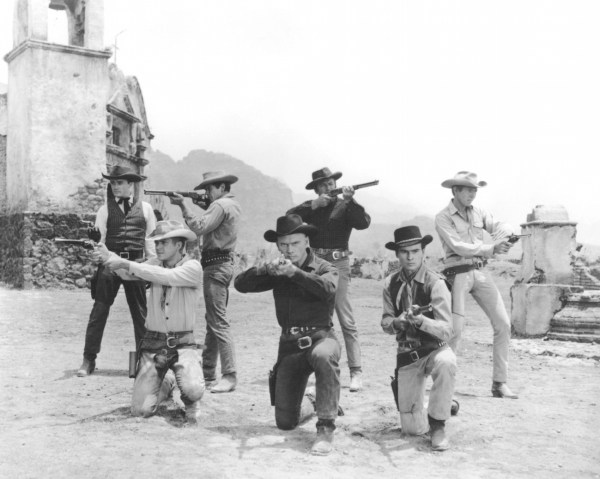
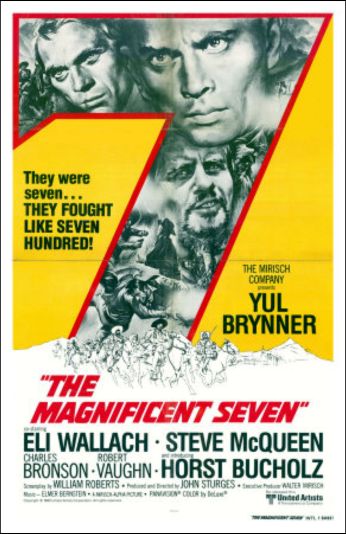
Magnificant_Seven_PosterBandit Calvera and his gang are terrorizing the people of a small Mexican town. After one raid, he promises to return to steal more from the people. The leaders of the village put together what they have to invest in weapons.
Chris Adams steps in suggesting hiring gunfighters.  While reluctant, after helping select the other gunfighters, Chris agrees to help defend the town.

The Magnificent Seven cleverly sets up it’s two main leads Chris  and Vin (Yul Brynner and Steve McQueen) as decent tough guys.  They discover the local coroner has an issue.  There is a body that needs transporting.  But the deceased is Native American and the white locals are refusing access to the cemetery. The two volunteer to take the hearse to the cemetery.  This seen is really full of charm and gets you pumped to follow these two. And they manage to succeed in their mission with only a couple of flesh wounds.  These men are not cold blooded killers.  They are willing to do as little harm as possible.

This is a stellar cast of tough guys, but not in some cheap sense.  They are mostly good and decent (Harry Luck is a bit mercenary, joining up because he believes there must be treasure if Chris is involved, but even he ends up willing t risk his life for the town). Eli Wallach, of course, makes for a great villain.

The music is energetic and fun, especially the heroic theme song.

The Magnificent Seven is a truly great and fun western.

Cold Hard Spaghetti Pt 3 (The Good, the Bad & the Ugly, 1966)

good_bad_ugly_poster.jpgThe third film in the Man With No Name trilogy finds Clint Eastwood and Lee Van Cleef returning.  Interestingly, Van Cleef is playing a different character in this film. This time around he is the untrustworthy villain Angel Eyes.

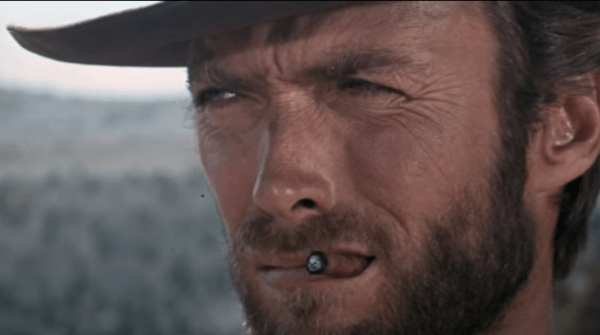
Eastwood’s Blondie (the film’s “Good”) is introduced as a bounty hunter who captures the violent criminal Tuco (the titular “Ugly”).  He turns him in to the authorities and collects the bounty.

But the film then takes a twist when we see Blondie save Tuco from a hanging.  They meet up and we discover they are in cahoots.  Blondie catches Tuco, collects the money and helps him escape so that the bounty on his head increases and they can do the whole act over again in a new town.

The two run across a carriage of dead people.  They discover a lone survivor who provides information about a huge stash of gold hidden in a cemetery. Tuco finds out the name of the cemetery, while Blondie finds the name on the grave that holds the gold. The man dies shortly after.  It turns out there was another man after him, the film’s “Bad”, nicknamed Angel Eyes.

The three form an uneasy alliance to find the gold and split it three ways.  Of course, greed interferes with their teamwork.

Ennio Morricone scored all three of the Man with No Name films, as well and a seemingly endless list of films.  His musical choices are beautifully sparse.  He is not afraid of quiet or “solitary sounds”.  The fact is, when you think of classic western soundtracks, you are most likely hearing Morricone in your head. And rightly so.

One of the things that stand out about Sergio Leone’s films is the wonderful talent he has for framing faces. In the Mexican Standoff between the three leads, it is a combination of extreme close-ups and distant wide shots that increase the intensity.

I noted the fact that Van Cleef plays a totally different character in this film.  But the truth is, I am not entirely sure that Eastwood’s Man With No Name is the same character in each film. The character of Blondie feels a bit different from the prior films in his coldness.

If there was one criticism I could offer, it is the length of the film.  Clocking in at three hours, The Good, the Bad and the Ugly can feel to drawn out.  It could have benefited from a bit of editing to make the film tighter and allow it to move a bit faster.

One of the more interesting little bits of trivia is that there is a sequence where Van Cleef slaps a woman.  They actually used a stunt double because Van Cleef stated his personal philosophy is that he doesn’t kick dogs and will not slap a woman on screen.

Blog at WordPress.com.

Up ↑