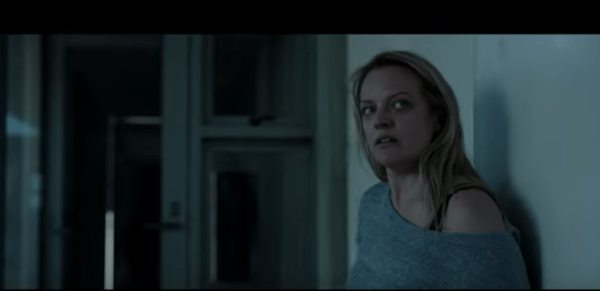
 When the Tom Cruise update of the Mummy crumbled, so did the planned Dark Universe that Universal was placing hopes on. Instead, Universal penned a deal with low budget horror production studio Blumhouse. They brought in director Leigh Whannell to make a lower budget re-imagination of the character.
Whannell moves the focus to Cecilia Kass who is trying to escape an abusive relationship with a famous optics tech scientist. She tries to hide from him until she is informed that he has committed suicide. At first, things start to look up and improve…but suddenly, mysterious occurrences begin to occur that slowly cause Cecilia to unravel…she is convinced that her ex Adrian is still alive (the film does not hide this, both the trailers and film make it clear that Adrian is messing with Cecilia). However, she cannot convince anyone of this. Adrian starts to escalate things, severing her relationships and interfering with all attempts to move forward.
Moving the focus from a mad scientist to the victim of an obsessed stalker is highly effective. Whannell constructs an incredibly intense opening sequence, with no effects beyond the use of sound and the motion of the camera.
The whole film uses angles, shots and general camera movement that causes you to distrust your eyes. And it is incredibly impactful for the viewer as we search the screen for what is…wrong.
Moss gives a terrific performance. We know she is not crazy, but her descent into obsession with proving Adrian is still alive is visceral and shocking.
I also really liked Aldus Hodge who is a police detective friend allowing Cecilia a home in which to stay.
The Invisible Man is an excellent thriller and I highly recommend it.

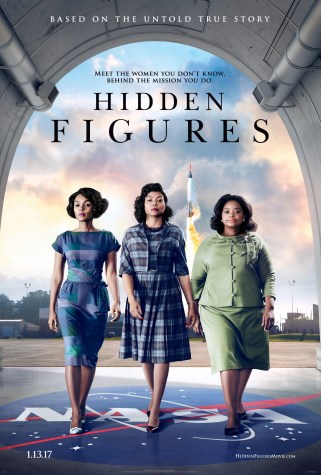 Hidden Figures tells a story I suspect few Americans were aware of. The women of NASA in the sixties. Or to be more precise, the black women of NASA. Hidden Figures explores the real story of three NASA “Computers”. In the sixties, people were doing all the calculating that would eventually be taken over by computers. And this film brings to light Katherine Johnson, Dorothy Vaughan and Mary Jackson. All three were firsts in their field.
 Tripping Through Gateways