Science Gone Mad Part 2 (Wierd Science, 1985)

weird_science_posterJohn Hughes’ juvenile take on Mary Poppins and genies should really be more problematic than it often is.

Released in 1985, the film pandered to boyish nerd fantasies.  It focuses on downtrodden super nerds Wyatt and Gary.  Both are obsessed with girls while being relentless humiliated by bullies.  It is, of course a common trope meant to garner sympathy.  Anthony Michael Hall had not yet broken free of the nerd role established in Sixteen Candles.  The same year Weird Science was released, Hall was in Hughes’ the Breakfast Club with a bit more thoughtful approach to this type of character.  But his Gary is in the Nerd Who Wants to Be Popular vein.

So when so when his best friend Wyatt’s family is out of town for a weekend, the hijinks begin.  Truthfully, Ilan Mitchell-Smith’s Wyatt is more sympathetic.  He is steamrolled by everyone.  He is less concerned about being popular than just succeeding and getting the girl.

To try and figure out their problems with girls, they decide to put their genius to use and create a girl to question on their computer.  It all gets out of hand and somehow they manage to create a real woman.  Kind of.  Kelly LeBrock’s Lisa is a teen boy’s fantasy woman in every sense.  Forward, sexy and she has magic powers.  Somehow, they created a genie.  And she is eager to please her masters.  And this is where it should get tremendously troubling.  Except, they are not confident of their role.  Instead, Lisa takes over and starts making their decisions for them.  She takes the stands they are scared to take.  She takes them out on the town.  She throws a party.  She is protective of Gary and Wyatt, but wants to push them to be more assertive and not run away from adversity to cower in the bathroom.

The film certainly has it’s fun moments, and it has a good cast that help make it easier to ignore just how absurd the plot is.  Bill Paxton as Wyatt’s jerk big brother Chet is especially memorable, including his comeuppance.  But it also has some dull stretches.  The jokes are often hit or miss.  The party sequence is just bizarre, with an endless parade of absurd ideas for showing off effects.

All in all, this one of Hughes weaker efforts.  It is mindless fun, but the heart that should be there is missing.

Science Gone Mad Part 1 (My Science Project, 1985)

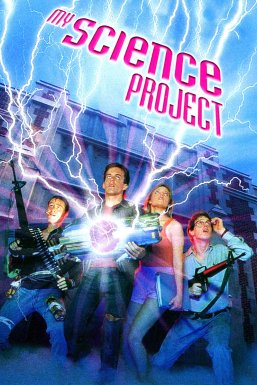
My_Science_Project_Poster1985 was a big year for Teen Science Nerd films.  I will be reviewing the three films over the next three days.  Today, we start with director John Betuel’s My Science Project.  Betuel wrote the classic Sci-Fi film the Last Starfighter and he wrote this film, which would give one real hope.

The cast is a combination of well known (Dennis Hopper, Richard Masur and Barry Corbin) combined with “up and Comers” (Danielle Von Zerneck, John Stockwell and Fisher Stevens).  The plot is simple.  The film opens a few decades before the film actually takes place.  An alien ship is shot down.  The military opts to have everything destroyed.  Jump ahead to 1985 and we meet high school student Michael Harlan (who has gone on to direct films such as Blue Crush, Into the Blue and Turistas) and his buddy Vince (Played by Fake Indian Fisher Stevens).  His science teacher Bob, an aging hippie pining for the 60’s played appropriately by Dennis Hopper, is after him about his science project.  He needs to pass science class.  He is not scientifically inclined, rather more mechanical.  He is a car guy.  After his girlfriend and he break up over an article in Cosmo, he is asked out by nerd Ellie (Danielle von Zerneck).  Begged, really.

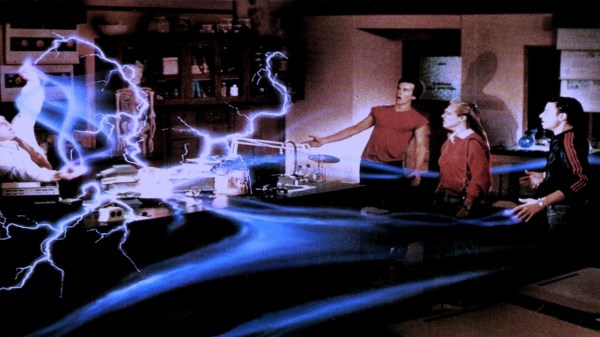
Michael takes her on a date, but it is really a cover so he can go through a military junkyard for a makeshift science project.  He finds a glowing orb that he takes with him.  Long story short, it is a battery that bends time and space.  It starts to suck power, reaching out for more and more powerful sources.

John, Ellie, Vince and additional nerd Sherman (Raphael Sbarge) try and stop the orb from ultimately destroying space and time as we know it.  The film is pretty messy, and it does not make a whole lot of sense.  Unlike the tightly scripted The Last Starfighter, My Science Project seems to be wandering around trying to figure out where it is going.  Dennis Hopper’s Bob is fairly entertaining, but he gets removed from the story about a third of the way in and does not reappear until the end of the story.

The film has big ideas, but nothing solid really materializes, making the film largely average and forgettable.


Four or Five Moments (Deadpool, 2016)

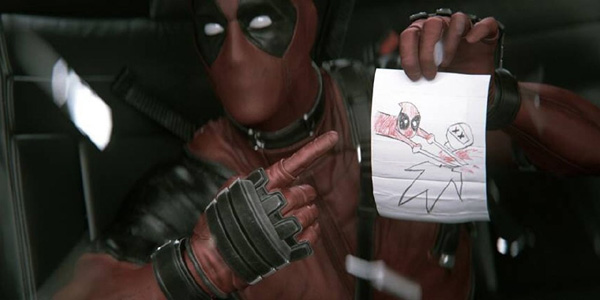
deadpool_imax_posterTim Miller’s Deadpool is hilarious and fun.  A darkly comic take that brings the pages to life by simply understanding the character.  The movie is also extremely crass, full of over the top cartoonish violence, raunchy humor, some nudity and plenty of profanity.  This is not for everyone, and if you find those things hard to get past, I would recommend skipping this one.  It is also not for your kids.  This film earns it’s ‘R’ rating.

Honestly, it is a bit amazing this film got made.  While attempt to parody and mock super-hero film have been attempted, they are really never successful.  They never seem to understand the thing they are lampooning.  Miller, Ryan Reynolds and the writers Rhett Reese and Paul Wernick have given us a surprisingly clever film.  It is a bit amazing that they even got the opportunity to make it.  After the disaster of X-Men Origins: Wolverine (The first attempt at playing the character by Reynolds), the idea of a Deadpool movie was shelved by the studio.

Then, somebody leaked test footage of a sequence that was created to pitch the shelved film.  The response was so overwhelmingly positive the film got greenlit and Miller and Reynolds went to work.

And what they gave us is one of the most unique super-hero movies we have seen, while still fitting into that world.  Reynolds bring snarky charm to Deadpool, also known as Wade Wilson.  Wilson has been experimented on and his latent mutant genes activated.  He takes damage, but due to a healing factor, all his wounds fix themselves.  So, like a real life Wile E. Coyote, he gets abused relentlessly, but keeps coming back.  A lot of the film’s humor comes from this.

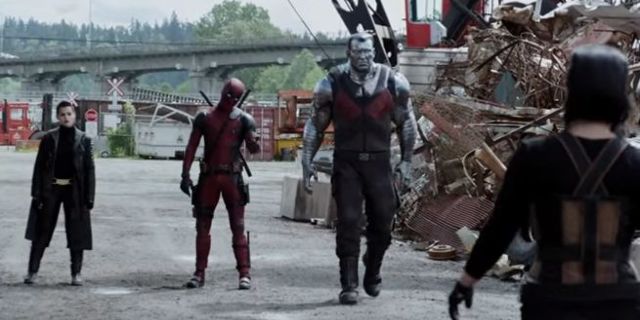
There is a running gag that Colossus is always trying to get Deadpool to change his ways and join the X-Men.  And along with the sullen Teenage Negasonic Warhead, he spends the film trying to get Deadpool on that path.  And these two characters are great additions.  They fit into the world well.

Deadpool_trio

The real success is pulling off the character of Deadpool.  Constantly cracking wise, he spends the film talking to the audience.  In one scene Colossus is startled by a comment from Deadpool, not understand why he made his comment.  Deadpool explains that he is not talking to Colossus…he is talking to “Them”.  Them is the audience.  Wilson is constantly breaking the fourth wall.  Instead of narrating the film, he just turns and talks to the audience.  He is fully aware he is in a movie universe.

One of the other fun aspects is that Reynolds is merciless to himself.  There are numerous slams of his previous film outings and even a slam on himself as a talent.  And the film’s opening credits (which kept me laughing even after I got the gag, it just stayed funny) effectively let you know the film’s sarcastic attitude.  This is not your regular X-Men movie.

Of course, the movie is definitely set in the Fox Marvel X-Men Universe.  This has caused some consternation among some geek sites, as they cannot reconcile the difference between Daniel Cudmore’s Colossus in the previous X-Men films and the version we see in this film, who appears older and is voiced by Stefan Kapicic with a thick Russian accent.  This is pretty easy to reconcile, as the Days of Future past altered the timeline.  It is entirely possible Colossus came from Russia when he was older.

I found myself liking all the characters in Wilson’s circle.  There was an oddball charm in his relationship with Vanessa (Morena Baccarin).  His roomate Blind Al (Leslie Uggams) is a riot.  T.J. Miller’s bartender (he runs a bar for mercenaries) Weasel is a fun character (his best line comes right before Deadpool goes to take out his villain, Francis (Ed Skrein).  Francis really hates Deadpool because he is so mouthy…and Deadpool refuses to call him by his chosen villain codename… Ajax.

Anyways, while I have repeatedly expressed concern that the film will not be successful for precisely the reasons I enjoyed it, I am more than pleased if it succeeds, as it could open the doors to more creative takes in superhero films.  There are a lot of them on the slate, and it would be great if they all sought to set themselves apart from the crowd.

What a Scrooge Part 8 (Scrooged, 1988)

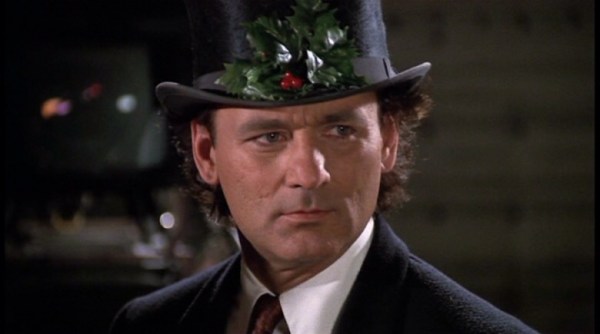
 In 1988, Richard Donner and Bill Murray brought us a totally reinvented the tale in a modern setting. They kept the main idea, but found a new way to express it. Scrooged focuses on Frank Cross, a self centered, egotistical, power hungry uh…narcissist. He has no concern for his hard working assistant, his long suffering but loving brother or his earnest employees. It’s all about power and ratings. When he airs a dark add to promote his network’s live presentation of “Scrooge”, one employee (a surprisingly sympathetic Bobcat Goldthwait) suggests he should not air it. Frank plays sympathetic, but as Eliot leaves, Frank calls security and has him fired (the film heaps tragedy on Eliot something fierce).

While going through a gift list, he has his assistant send his brother a towel (the other option is a VCR-which goes to the “important” people on the list). That night Frank is stunned by a visit from his old boss who died seven years before, Lew Hayward (Played by John Forsythe). Lew is a big departure from Marley, oh, he’s tortured with a wicked streak, but there are no chains, rather a decayed body (with a mouse!).

He warns Frank of a visit from three ghosts. Unlike the traditional tale we know so well, this story takes place in the waking hours, causing Frank all sorts of embarrassment navigating from his adventures with the ghosts to the real world.

Add the stress of a younger power hungry narcissist (Brice Cummings, played by one of my favorite actors, John Glover) and pressure of a live show, and that puts Cross near the edge. The real brilliance of Scrooge is the three Ghosts.

Former New York Doll member David Johansen plays the Ghost of Christmas Past. He is a witty, sarcastic cigar chomping elfin cabbie. He loves to trip up Frank and clearly thinks Cross is to undeserving of the good things from his past. We see that as a child, Frank’s home was a bleak one. On Christmas Eve, the Cross household is the only one lacking a Christmas theme. Frank’s Father (played by Bill’s brother Brian) is bitter and cold towards his family. A butcher, he gives his son some veal, and heartlessly ridicules four year old Frankie who had hoped for a “choo choo”. They jump ahead to Frank’s early career and also his intro to the love of his life, Claire (Karen Allen) in a cute little sequence, and then we get to see a year later, another Christmas which shows how happy Frank was with Claire. And then we see his misstep. He is so determined to further his career, he pushes Claire away. When invited to dinner with the president of the network (Lew) he is ready to brush off plans he and Claire have. When the Ghost points out that he was crazy, of course, Frank gets defensive, noting that sure, maybe he has made a mistake or two. But he’s not as clueless as the Ghost believes.

Frank goes to locate Claire for emotional support/help. He finds her running a homeless shelter/soup kitchen. Three homeless people join him, and all seem short a few pennies. They believe Cross to be Richard Burton. After pretending to be Burton, he is found by Claire, who offers help, but also has to take care of some things at the shelter. Frustrated, Frank tells Claire to not bother, and offers the advice to get rid of the freeloaders. Scrape em’ off. It a nice echo of the original story when Scrooge is approached by men seeking help for charity.

The pixie like Carol Kane gleefully plays the Ghost of Christmas Present…and she’s quite a little sadist, getting Frank from location to location with copious amounts of physical abuse. She takes him to his assistant’s house (played by Alfre Woodard) where he discovers minor facts like her youngest son doesn’t speak and it’s due to seeing his father killed. This comes as a shock to Frank. “Grace’s husband died?” He believed the year she was wearing black was just a fashion thing. They visit his brother (Played by Real life brother John Murray) and his wife (Wendy Malick), allowing Frank to see how much his brother cares for him.

While one might doubt the love of Frank’s father, the love and adoration of his brother is never in doubt. In a nice play off of the original Dickens story, Frank gets to eves drop on a TV Trivia game (which has a cute payoff in the end). Frank is left by the Ghost in the sewers of New York. There he discovers one of the homeless bums he brushed off, Herman. Frank finds himself frustrated by Herman’s death…angry at himself, at Herman…

Frank once again finds himself stumbling through his set, disrupting things once again. Frank is shuffled off by Brice to his office, under the guise of concern from Frank’s mental well being (it becomes increasingly clear that Brice is after Cross’ job). While resting at his desk, we see the immense Ghost of Christmas Future appearing on the bank of TV screens behind him. Suddenly, in bursts Eliot, who is clearly drunk and has a shotgun in hand, interrupting the Ghost, who backs off. After being chased through the office by Eliot, Cross attempts to get away by ducking into an elevator. There he finds himself face to face with the Ghost. I should note, of all the presentations of the Ghost of Christmas Future, this is my favorite. The Ghost is already haunting because you see little of its face. And it never utters a word (In any variation of the story). But Donner and his team create a unique look, built on the classic “Hooded Ghost”.

You see inside the cloak, but the head is a TV screen. And it has jarring images, jumping images. Often you see flashes of Frank in the screen. In one neat moment, Frank is looking up at the Ghost and you see Frank from the Ghost’s perspective. The images are, again mirrors of the original Dickens’s tale. In one genius moment however, Frank’s words are harshly thrown back at him by, not one of the Ghosts, but rather a future vision of Claire. She has some hungry kids chased away. She is clearly upper crust now. When her friends suggest she is being too harsh, she boldly proclaims that she wasted years on people like those children. “Thankfully” a friend set her straight. Cross becomes very sullen, seeing what his words have done.

He quietly turns to the Ghost, commenting “That was a lousy thing to do” (There are moments in the film that seem to foreshadow Murray’s later roles from films like Broken Flowers or Lost In Translation). Of course, the Ghost shows him his inevitable fate. Frank sees the only people to show were his younger brother and his wife. In a rather frightening sequence, Frank finds himself trapped in his coffin, being sent to cremation.

Frank comes to back in the office. He joyfully overpowers Eliot, and starts to apologize and offers a better pay and a nicer office. And he needs Eliot’s help. This leads to a lengthy speech from Cross on National TV, in which he confesses his failures and screams to the heavens of his newfound spirit. This also opens the door to reconciliation for him as people stare in stunned awe as a Frank they have never seen apologizes to friends, family and co-workers and makes promises of a newfound hope. It’s a sequence that skirts the fine lines of schmaltz and touching.

Murray as the stand in for Ebenezer brings that dry wit that only he has. Frankly, I can’t think of many actors who could have played this role with out leaning either to much into the comedy or being over dramatic. As I mentioned, there are hints of the quieter, more sublime Bill Murray we’ve seen in more recent years, though clearly still the Bill Murray of Ghostbusters. The Ghosts are clever and fresh takes on the original classic motif. In fact, Past and Present are pretty much complete revisionist ideas. I found the use of “Put a Little Love In Your Heart” as an interesting switch from relying on a holiday standard.

What a Scrooge Part 7 (A Muppet Christmas Carol, 1992)

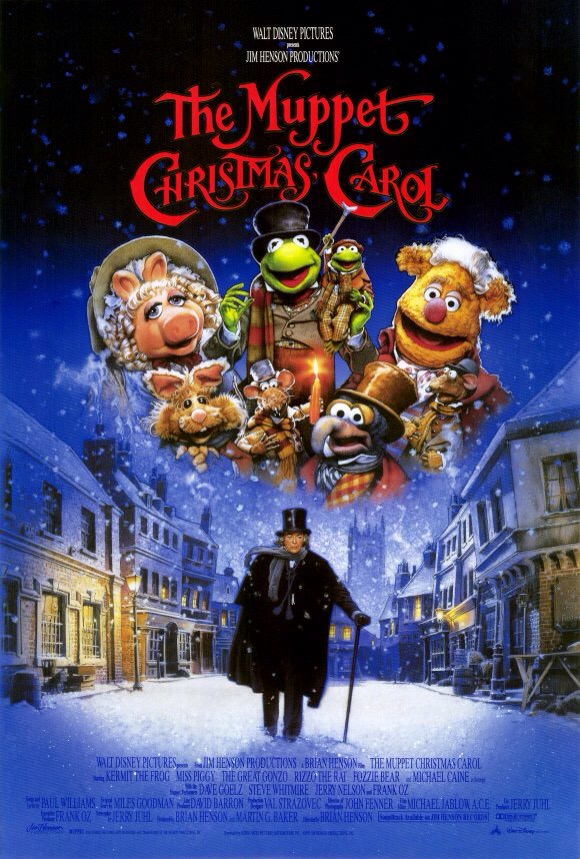
 In 1992, the Muppet team took a crack at the classic tale. With out a doubt, they did a strong job, making this one of the best of the Muppet films and a nice addition to the collection of films based on Dickens’s great tale.

Obviously, being for children, the themes are greatly simplified, though the song lyrics still reference the core ideas of A Christmas Carol. The story opens with The Great Gonz-uh-Charles Dickens and his friend Rizzo the Rat amid the busy streets of England. It’s a charming and romanticized look that is very effective for the Muppet world. I presume that the central reason for a narrator is to help younger viewers follow the story (plus, they get numerous laughs).

And then we meet Scrooge, played by the talented Michael Caine. Caine actually takes a bit more subtle approach than those who came before him in the role. Oh, he’s mean, but it’s in a more subdued fashion, and his outbursts of anger are limited. This is effective, especially since this version is aimed at families, presumably with young children.

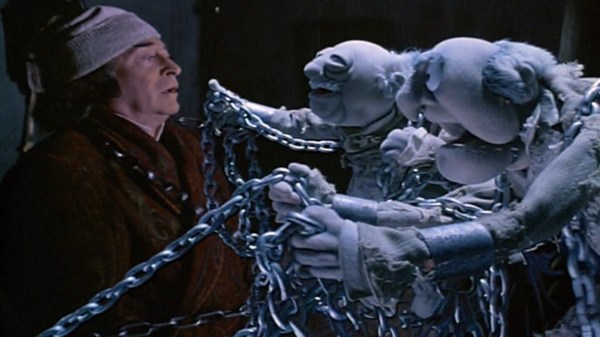
While the scares of the story are toned down, they are certainly hinted at. The film takes obvious liberties you would expect in updating for a family viewing experience with the Muppets. For instance, there is both Jacob and Robert Marley, portrayed by the cantankerous heckling duo that we all love Waldorf and Statler. And they are no less entertaining in chains. There is a nice effect as the door knocker turns into one of the Marleys that is particularly strong. In most versions it is a ghostly apparition, but it’s a physical change here.

In the Muppet version, we see an indication that the Marley Brothers were not good friends to Scrooge when partners, rather they were even a bit unkind. I cringe in the moment when Scrooge whines about how mean they were to him, because it is a rare misstep in Caine’s performance. Scrooge isn’t that kind of whiner. This also creates a problem, they don’t seem to care about Scrooge at all. In the previous incarnations of the story, Marley comes across as wanting to bring Scrooge this opportunity for Redemption, these Marley’s seem rather indifferent to Scrooge’s fate. So as we have seen, he is warned of a visit from three ghosts.

In between, we have visits from “Dickens” and Rizzo the Rat. Much of this is comic relief, and very entertaining. But I will gloss over it, because it is far funnier to actually just watch it.

The first Ghost is a rather interesting and unique take. When the Spirit of Christmas Past appears before Scrooge, she is soft spoken and child like. She floats, with her robes swirling and dancing through shards of light. Ebenezer takes her hand and they fly above the streets. The transitions in time and place are nicely done, though clearly enamored with the early digital technology. We go to the school, where we see young Scrooge. The scene rapidly passes time until we see young Scrooge, around may 13. There the headmaster preaches the greatness of capitalism. Interestingly, this version both glosses over his relationship to both his father and sister, to the point they are never mentioned (in spite of the fact that we have, at this point, met his nephew Fred). They quickly zip to the home of Fozziwig (played by, uh, Fozzie the Bear). There we are briefly introduced to Belle, in which a future relationship is implied. In all previous versions, this is expanded on more, but such is the nature of family films-keep it brief and simple. They jump to the day his relationship with Belle ends.

Soon, Scrooge finds himself visited by the Ghost of Christmas Present. He is portrayed as more absent minded and jovial than other incarnations. The Ghost shows Scrooge the city, all while singing about how wonderful Christmas time is. He brings him to see his nephew’s party. I found myself a bit put off by Fred. In all previous versions, Fred is a kind and loving person, like his mother. He speaks lovingly of his Uncle at all times no matter how Scrooge treats him. But here, Fred is cruel and mocking of his uncle. It generates justified pity for Scrooge. Your pity for Scrooge should never be easily justified. He may deserve the ridicule, but to this extreme? It makes Fred less of the man he is. Then the Ghost brings him to Bob Cratchit’s home. There he witnesses the family’s boisterous celebration. He is, of course moved by the plight of Tiny Tim, and asks that fated question. However, due to his rather forgetful nature, the Ghost’s words lack Oomph. He doesn’t have the passionate anger of Edward Woodward(The Ghost of Christmas Present in the George C. Scott version), and honestly, his harsh throwing back of Scrooge’s words in his own face…falls flat. The Ghost leaves him in a graveyard, all alone.

Suddenly, mist floods the cemetery, and we meet the final Ghost. The Ghost of Christmas Yet to Come has arrived. The Ghost walks Scrooge to those familiar haunts…the men laughing and joking about attending a funeral only if a meal is provided. A visit to a pawn shop where people are selling the dead man’s property. And finally, he sees his own demise. Scrooge realizes that the dead man is him. Scrooge begs the spirit for mercy, only to find himself back in his bed. As relief spreads through Ebenezer, he starts to dance and become excited. He looks out the window, calling a young muppet. He asks the young muppet to run and get the prize Turkey. Then he steps out and begins to wish people a Merry Christmas, before he breaks out into song.

He leads the singing crowd that gathers behind him to the Cratchit Home, where he promises a raise to Bob and asks that his family join Scrooge (and the whole town) in a Christmas meal. It’s a very sweet ending featuring a pleasant little song.

It might appear if I don’t like this one as much as other renditions of the tale, but that is not true. The Muppets are full of fun and whimsy, and a Christmas without whimsy is not Christmas at all. It’s a fun film, with clever jokes and images. For instance, before the Ghost of Christmas Present is gone, he is starting to age, or at least his fluffy beard begins to gray. Michael Cain brings us a slightly gentler, more quick to sentimentality Scrooge than other actors, but he still does a terrific job (how often does he not, anyways?). The puppets are grand. The songs are not quite up to par as earlier Muppet efforts, but the closing tracks are great.

Oh Fuuuuuuuuuuuuudge (A Christmas Story, 1983)

A_Christmas_Story_PosterIn 1983, filmmaker Bob Clark adapted the book In God We Trust: All Others Pay Cash by Jean Shepherd.  The book was actually a compilation of columns Shepherd had written for Playboy.  Clark and Shepherd used the various stories to build the tale of Ralphie, a boy who dreams of getting the ultimate gift.  A Red Ryder BB Gun.

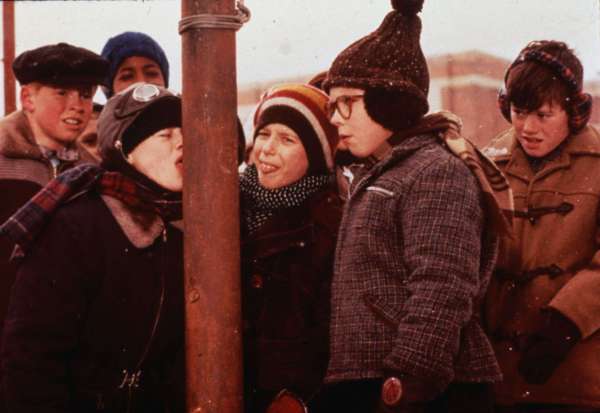
The film has a truly timeless feel.  I think many of us have had dads who cursed up a storm when frustrated, mothers who tried to smooth it all over, bullies who made our lives miserable.  If you grew up in a place where winter meant cold and snow?  That tongue stuck to a flag pole is a little to close for comfort.

The cast is enjoyable, all mining laughs no matter the size of the role.  The kids are fun and likable, the parents have there own quirks and lovable qualities.

I suspect most anyone reading this is familiar with the film, as much like It’s a Wonderful Life it has gotten regular airplay every Christmas for decades.

The film is warm, hilarious and deserving of it’s status.  If you have not seen it? Find an opportunity to sit down and watch.

The Wondrous Life (It’s a Wonderful Life, 1946)

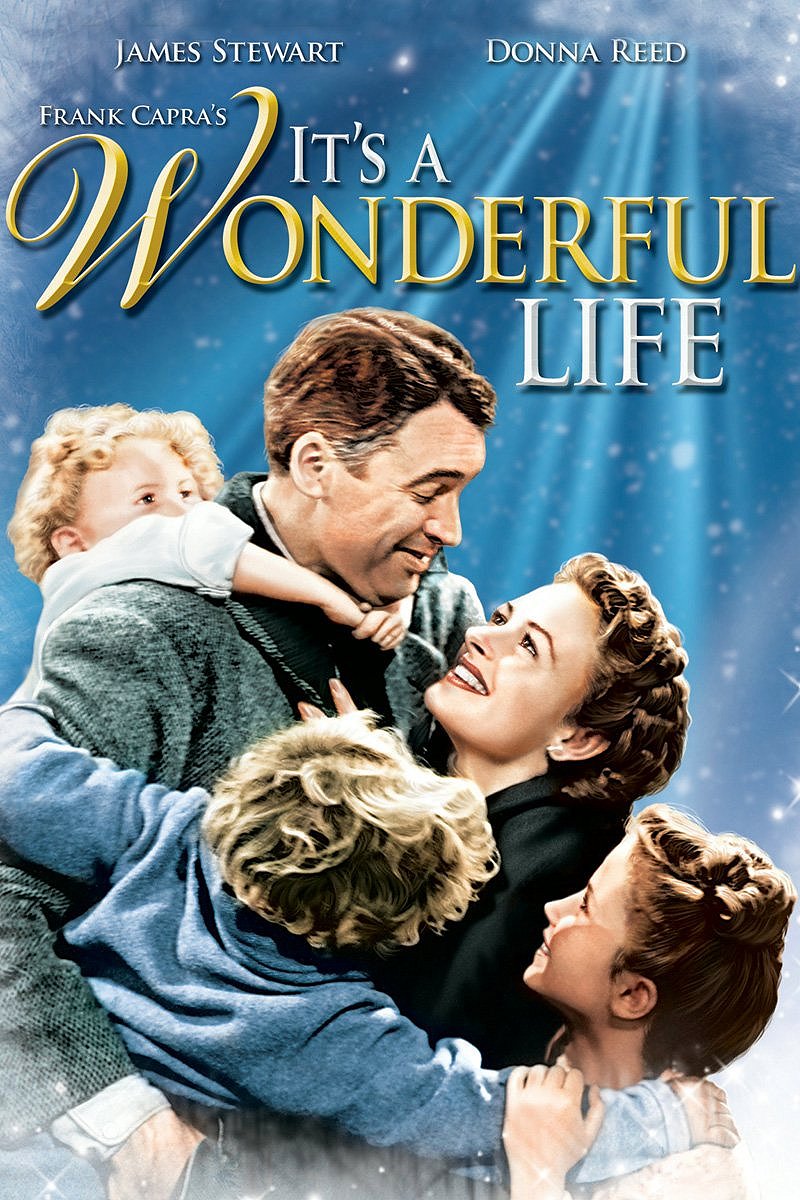
its_a_wonderful_life_posterFrank Capra’s It’s a Wonderful Life was not a hit when released, yet it managed to become a classic.  Due to copyright errors the film became a Christmas mainstay, cementing it as a Christmas Classic.  And that is alright by me.

It’s a Wonderful Life is a wonderful dark fairy-tale.  It focuses on George Bailey, a guy full of big hopes and dreams, for whom none get realized.  There is always something that stands in the way.  And now, married with children, George finds himself in a bind.  It looks like he might lose everything.  Despondent and prepared to commit suicide, even then he is interrupted by goofy angel in training Clarence.

What follows is Clarence walking George through his town, except, it is a town that never had a George Bailey.  And what he finds is that as miserable as he thinks his situation is?  His friends and family were worse off without him.

George is kind and constantly self sacrificing.  Probably the closest he comes to selfishness in his pursuit of Mary (Donna Reed).  He knows his friend Sam has been pursuing Mary, but he is drawn to her, and she has always wanted George.  George fights his feelings for Mary, seeing her as someone who will tie him to the town of Bedford Falls, which he desires to leave ever so badly.

In a way, he is correct.  His marriage to Mary is another nail in the coffin of his dream to travel the world.  Yet, when he sees a world without him, George realizes how much is lost.  There are people who never have homes, because he was not there to run his Father’s Saving and Loan.  The cruel Mr. Potter (in the Scrooge model) is never obstructed by George Bailey.  His mother is bitter, his brother is dead and his Uncle is the local town lunatic.

This is a classic because it strikes at the heart.  We have all felt that lack of connection to our lives, when things get dark, it is easy to wonder why we might matter.  And the film challenges that in it’s special and whimsical way.

This is a superb work from Capra and company, worthy of it’s status of “Holiday Classic”.


Family Road Trip (Vacation, 2015)

vacation_posterThe National Lampoon’s Vacation franchise is an uneven one.  The original is a quotable classic, as is Christmas Vacation.  European Vacation has it’s moments and Vegas Vacation?  Well, it is Vegas Vacation.

National Lampoon has been dropped from the title for this updated tale of a Griswold Family Vacation.  This time around it focuses on Rusty Griswold (Ed Helms) and his wife Debbie (Christina Applegate).  Pilot Rusty is inspired to take his wife and two sons on the very same road trip to Wally World as his father took him on.  In one of the more clever sequences of the film Rusty and Debbie argue whether a new Vacation is a good idea.  The whole discussion is a veiled defense of this fourth sequel.  Who remembers the Vacation from thirty years ago?  Why take the same trip? How is it any different?

Alas, most of the film is not quite as clever.  Don’t get me wrong, I did laugh.  But the film just never quite reaches the heights of either the original or Christmas Vacation.  It tries, mostly through rude and gross-out humor, but really, the truth is? Chase just brought a level of heart to the character of Clark Griswold that Helms never seems to have here.

Clark’s failures were a byproduct of major devotion to what he believed family should be.  His awkwardness was his belief in how he should be as a father and husband.  And while Helms’ Rusty pays words to this…it just feels less…real.

The film has a good cast, but the film itself never gels as well as the best of the Vacation films.  The writing never gives the cast any real heart to work with.

The Animals Went In Two by Two (Evan Almighty, 2007)

imageBruce Almighty was a hit, and the studio wanted a  sequel.  The most admirable thing Tom Shadyac and his crew did?  They avoided doing a total retread.  They told Bruce’s story, and they did not want to just make a total formula sequel.

In some ways, this film owes more to the Oh God Franchise than the first film.  This one has a focus set on Evan getting a mission from God.  And it borrows heavily from movies like the Santa Clause.  Evan does not just get a Noah-like mission, he grows instant beards.  Animals flock to him. He has to build a really big boat.

Carrell was a standout performer by then, and they opted to follow Evan Baxter and his family.  While Freeman is back in the Mercy Seat, the film’s option to look at how the personal can impact the bigger picture never quite comes together as effectively as the first film.

In addition, the original story of Noah is one of judgement and punishment on a grand scale.  But while I appreciate the environmental conservation message the film tries to convey, Evan is not trying to stop an immediate extinction level threat, and the stakes that should be there simply are not.  By being a bit more bigger picture, the film fails to hold up as effectively as the previous film which stayed local and personal.

Hail to the King (Bruce Almighty, 2003)

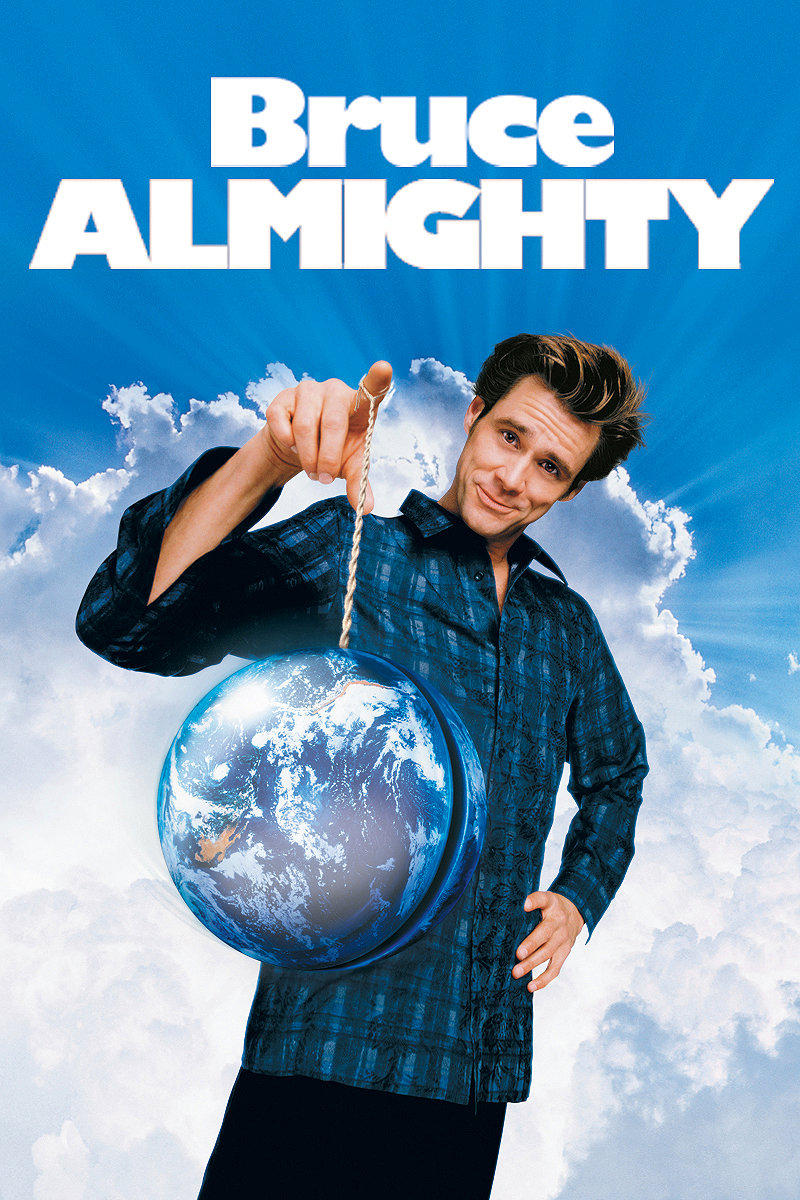
imageAfter lukewarm receptions to How the Grinch Stole Christmas, Carrey went back to where his bigger successes occured.  High concept comedies.  And you do not get more high concept than Bruce Almighty.

A couple decades after the Oh God series, we see George Burns replaced by Morgan Freeman in the role of God.  Carrey plays Bruce Nolan, a sad sack who does not appreciate what he has, rather wanting more, believing he will be happy once he achieves his goals.  And his biggest goal?  To try and move from doing puff pieces for the local news station to the anchor desk.  He tries to be positive, but is dealt a crushing blow when the job goes to his rival Evan Baxter (Steve Carrell).

Angry and at the end of his rope, he ends up getting a meeting with God.  God is not really impressed with Bruce’s complaints and makes him a deal.  Bruce has the omnipotent power of God for a week.  Bruce agrees, and initially relishes the power.

This is a fairly entertaining bit, as we see Bruce experiment with what he can do.  And at first it seems awesome…until he starts discovering some of the drawbacks…like hearing everyone’s prayers.  Bruce starts to find things getting harder, and he is chasing away his girlfriend Grace, who is tired of Bruce being so focused on himself and his unwillingness to see what he has as enough.  Bruce tries to use his powers to fix his personal problem, and quickly tries to find shortcuts for the responsibility stuff (like prayers from people).  Of course, it ends up only being made worse.

Even with the powers of a supreme being, Bruce’s life is more messed up than ever.  Bruce hits bottom, even though he can move the moon.

And this is where the film works so well.  It is very focused, with a very simple point.  Don’t be a self centered jerk.  Bruce begins to look outside himself…he starts to help people in regular human ways.  Rather than worrying about what is just out of his grasp, Bruce focuses on what is right there in front of him.

Freeman makes a pretty nice avatar for God.  He is kind, gentle, loving and patient.  He is not there to accuse Bruce, he is there to open Bruce’s eyes.  Like Oh God before it, Bruce Almighty’s God does try and tackle some of the tough questions about existence.  They do it best when they keep it simple.

While you can predict the happy ending on it’s way, the film manages to earn it’s happy ending.  It does not cheat.  Bruce does not have to just say he is sorry and everything is awesome.  No, he has to work to get there.  He has to give up dreams and find a new path.

Create a free website or blog at WordPress.com.

Up ↑