Vulgar Display of Power Pt 3 (The Exorcist III, 1990)

the_Exorcist_3_PosterThe Exorcist III (originally titled the Exorcist III: Legion) came thirteen years after the Heretic.  It may have seemed like a pointless act to revisit the long dormant franchise. But the screenwriter of the first film (and author of the book upon which it was based) William Peter Blatty believed he had something to say.

Picking up seventeen years later, the film simply ignore the second film.  Maybe it happened…but it has no bearing here.  Lt Kinderman is older and wearier.  His work has devastated hope within him.

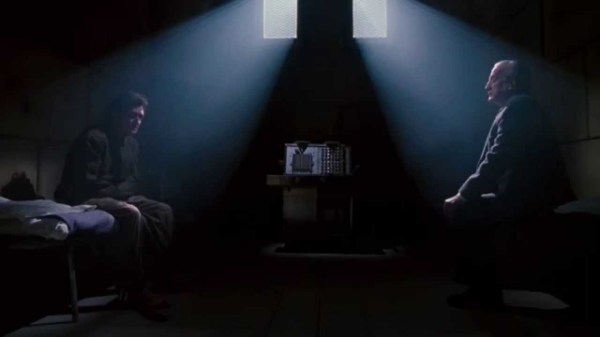
When a young boy is murdered in a fashion related to a case from about the same time as the first film, he becomes convinced dark works of the Gemini killer have resumed.  However, the one problem there is that the Gemini Killer has been dead for about 17 years. In spite of his lack of belief in any supernatural force for good, he starts to become desperate for answers, including talking to a mysterious patient that looks a lot like the late Father Karras.

Where as the second film veered off into insanity, Blatty seems far more determined to explore the questions of how can there be a good God in the face of all our depravity.  Kinderman has looked at the face of man and found it wanting.  He sees only the ugliness…the unworthiness.  And this is what makes the film so compelling.

The sincerity that was the undercurrent of the first film is back.  And for much of the film, Blatty is content to avoid the sensational, saving it for a dramatic confrontation with the Gemini Killer and the host of demons inhabiting the body of Father Karras.

George C. Scott takes over the role of Kinderman from the late Lee Cobb. He brings a wonderful gruff and tired feel.  Brad Dourif brings his skills as a character actor portraying the face of the Gemini Killer.  It is terrifically confident and angry.  The Gemini Killer and the demons housed with him mock faith, they see his mission as a dark and unholy one to spread despair through violence and carnage.

My one criticism is the final resolution. In some ways it is reflective of the first film, but at the same time it chooses murder over sacrifice. It undermines the whole idea of Kinderman accepting a larger world. The film does not give many other options, and you can argue the spiritual forces of good intervene so that Kinderman can act…but still, I kind of wish Blatty would have chosen a different option.

The Exorcist III is a powerful watch and a definite gem.

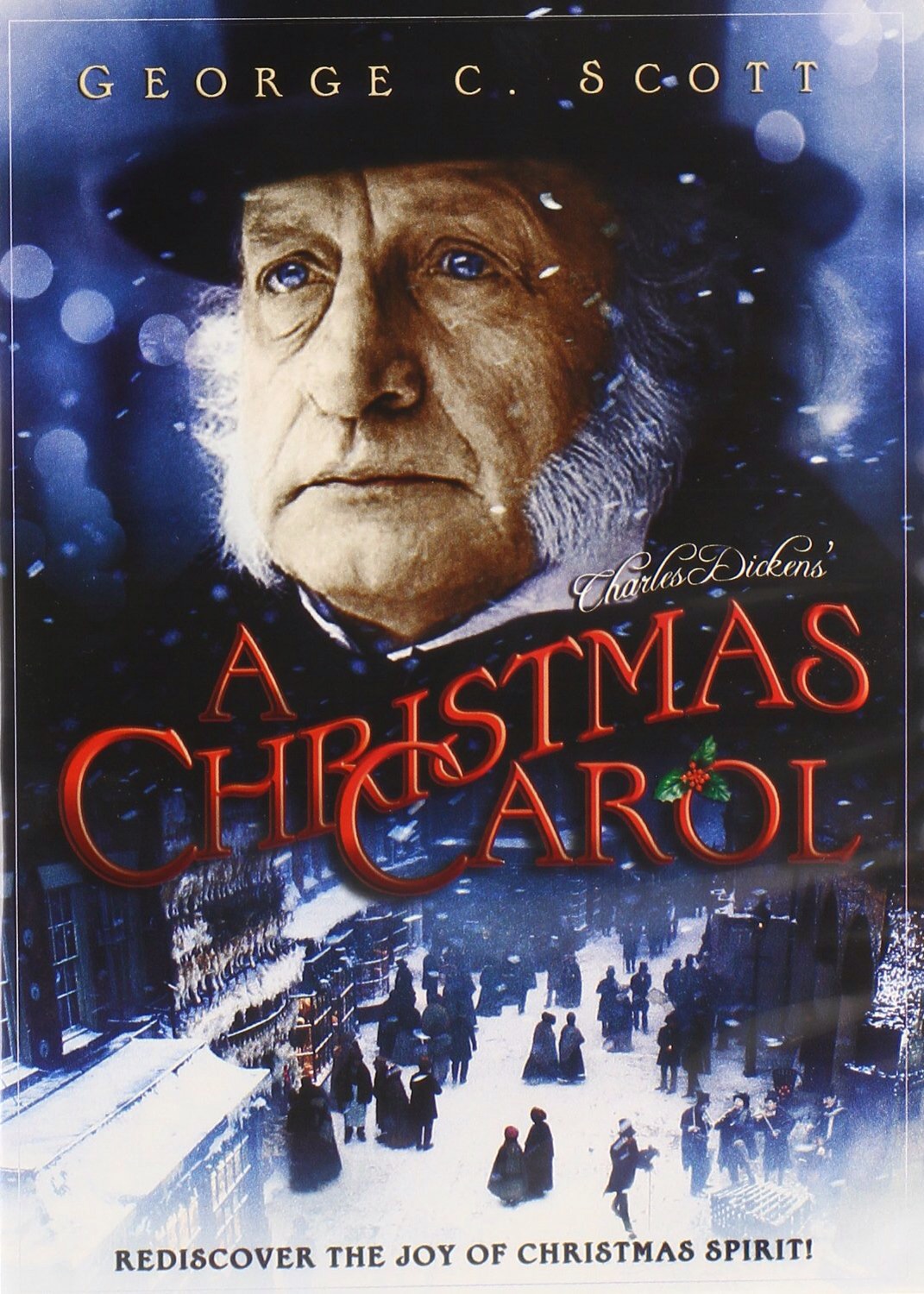
What a Scrooge Part 9 (A Christmas Carol, 1984)

 For some reason, the definitive version for me as a child was the 1984 George C. Scott version. Scott plays Scrooge as someone who seems to enjoy being mean to people. He likes dancing on other people’s joy and belittling their situations. Scott’s Scrooge is bitter and proud, and a bit spiteful. But I think what always made the movie for me was the Marley sequence. It was terrifying.

It still is. Scott sits in the corner, huddled by a small fire. Above the flames, Marley’s tormented visage starts to fade in and out. Then, the bells start to ring. And Scott turns towards a loud thump at the bedroom door. Slowly, the locks come undone and the door swings open. Marley (Frank Finlay) fades in as he marches into Scrooge’s room. He faces Scrooge, unties a bit of cloth around his head and his jaw falls to his chest. Marley is horrifying as he stands there, mouth agape and covered in chains. And his voice is loud and tortured. Every word seems labored. Marley is walking sorrow and regret. And he convinces you that this is no mere figment.

The first ghost is oddly youthful, yet ageless (Angela Pleasence). She takes Ebenezer from past Christmas to past Christmas. Scrooge is defensive at these moments. The Ghost even mocks him a bit cruelly. When she denounces Fezziwig as a silly man, Scrooge (who is caught up in fond memories) defends him to her. You begin to see the cracks in Scrooge’s armor as he goes through each moment. Finally, he can take no more and tries to snuff out the light of the Ghost’s truth. Scrooge is visited next by the host of Christmas Present (of course).

This incarnation (played by Edward Woodward) is boisterous, yet hides an ominous side. He seems to relish every opportunity to use Scrooge’s own words against him. At one point he angrily (yet with a hint of a smile) tells Scrooge that it may be that in Heaven’s eyes he is worth far less than the people who he has no time to help. His words sting both viewer and Ebenezer. Then he leaves Scrooge to wander a lonely part of town.

Then Ebenezer sees the final Ghost. What I find so interesting is that we only get little glimpses of the Ghost of Christmas Future. We see it at a distance (with waves of fine fog cascading across the ground.

The few close ups are from behind or of the Ghost’s almost crippled and deformed hand. Mostly, though, we see the long shadow it casts into the street and doorways. It’s all used to powerful effect. Scott again shows a new side of Scrooge, this time terror and desperation. And even though it never speaks, this ghost has its own moments of cruel mockery. When Scrooge demands to be shown some human emotion in regards to the death of a man (unwilling to accept the truth of who the dead man is), he is brought to a seedy part of town where people jovially mock the deceased why going over goods stolen from the deceased’s home. Even upon seeing his own watch, Scrooge refuses to accept the reality. Only when forced to look upon his own grave does he accept the inevitable. And that’s when Scott’s Scrooge loses it. There is no doubt that he fears all is lost, and the night is a waste. He finds himself at his bedside, praying out loud, begging in tears for another chance. And then morning comes to find Ebenezer still on his knees, but having fallen asleep from exhaustion. Scott is very convincing in his turn to a man of generosity.

He comes across as a man excited to repent of his past and to make up for lost time. His excitement is infectious. One interesting note is that Scott is a departure from the typical Scrooge. Often Scrooge is a frail looking slender man. Scott, on the other hand, is more stout and robust. It’s very effective with his gruff demeanor and slightly gravelly voice.

Throughout the film, Scott bounds between arrogant pride and a fear of the reality that beats back against his coldness.  It is a wonderful performance, and a large reason in the end why this remains my favorite and most recommended version of a Christmas Carol.

Blog at WordPress.com.

Up ↑