Poisoned Earth pt 1 (Die, Monster, Die!, 1965)

Die_Monster_Die_PosterLovecraft is a writer that, in spite of his personal failings (you know…racism), inspires creative people. His stories are creepy cosmic and occult based horror. Die, Monster, Die! adapts the memorable the Color Out of Space.

Stephen Reinhart has been requested by his girlfriend Susan to come to her parent’s remote home.  When he tries to find transportation from the nearby town, nobody will take him out there, refusing to explain why they seem so fearful of the Whitley Estate.

On his way he finds a decaying forest and when he arrives at the Whitley home, he finds that Susan’s mother has taken ill and her father is behaving very mysteriously.

What he discovers could doom the world and Susan’s mother begs Stephen to take Susan far from their estate before what has befallen her starts to consume Susan as well.

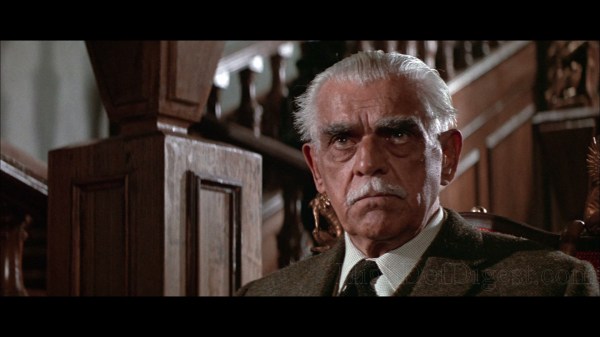
Die, Monster, Die follows the core idea of a meteorite that mutates the world around it…giant plants, mutant farm animals, people deteriorating monstrously. But it abandons the setting of a farm house for more of a gothic stately mansion.  The film is colorful, especially the greens.  The visuals still hold up and Karloff gives a nice menacing performance throughout the film, without being so far that he cannot also be sympathetic.

This is an entertaining adaption that is definitely a product of it’s time without not being to corny. Instead, it has a nice Hammer film feel to it.


Culture Clash (Clash of the Titans, 1981)

Clash_Of_The_Titans_1981_PosterGreek myths are some of the original action stories.  Filled with god, heroes, and monsters, they still capture the imagination thousands of years after their originators have passed.

In 1981 we got one of the most memorable of the “recent” forays into Greek storytelling.

The king of Argos has locked away his daughter in fear of a prophecy that if she bore a son, that son would kill him.  But Zeus falls in love with the lovely Danae and impregnates her. He has Danae and her son Perseus entombed and thrown into the sea.  But Zeus is angered and has Poseidon release the remaining Titan the Kraken upon Argos, destroying it. Instead of dying, Danae and Perseus wash ashore.

Zeus watches over Perseus, causing strife with his wife Hera and Thetic, a sea goddess.  This comes to a head when Zeus becomes angry with her son Calibos.  He is a handsome young man destined to marry the beautiful Princess Andromeda, daughter of Queen Cassiopeia. Zeus is angered by Calibos’ cruelty and disrespect, citing his having hunted and killed all but one of the winged horses Zeus had created.  He turns Calibos into a misshapen cloven-hoofed monster, left to rule in a swamp.  Thetis curses Andromeda, requiring that each man who comes to pursue her must answer a riddle.  If they fail, they are put to death.

Hero help Thetis set in motion a revenge plan, in which Calibos might end the life of Perseus.  But Zeus provides him with special weapons that allow him to best Calibos and find the answer to the riddle.  Perseus and Andromeda are to be wed, but when Cassiopeia oversteps and proclaims Andromeda more beautiful than Thetis herself, Thetis demands that Andromeda is to be given as a virgin sacrifice to the Kraken.  Zeus reluctantly agrees, but Perseus is determined to save her and seeks to find something that will allow him to stop the sacrifice.

The final film to feature the stop-motion grandeur of Ray Harryhausen, Clash of the Titans is an exciting adventure.  While there is no reality to them in comparison to modern model and cgi work, they have a unique and enjoyable charm to watch.  There is a physicality to the visuals.

Medusa is the true highlight of the monsters in the film, her scary visage and every movement to inspire fear.

While the characterization of Zeus is a bit kinder than the actual myths, the overall pettiness of the gods is still at play. The actors also bring a regalness, from Laurence Olivier to Maggie Smith.Harry Hamlin has a chiseled from clay look (and super pouty lips) and Judi Bowker is luminous as Andromeda.

Clash of the Titans was not the last of these types of films (There were two Lou Ferrigno Hercules films), but it feels like it closes an era.  But Clash of the Titans is a minor classic of fantasy films.

Create a free website or blog at WordPress.com.

Up ↑