 Netflix has been focusing hard on original material over the past few years, especially now as they face the future of no Disney films. Bright is their first foray into high concept, high budget action fantasy.
They brought together notorious Internet personality Max Landis (Screenwriting son of John Landis) and David Ayers (director of End of Watch and Suicide Squad) to present us with Bright. Bright is a genre mashup, best described as a combination of Ayer’s own End of Watch and the 1988 sci-fi film Alien Nation*. Except, instead of aliens, it involves fantasy creatures.
Set in a version of our world in which elves, orcs, fairies and so on all exist and interacted with humanity for thousands of years, Will Smith plays the human cop Daryl Ward. His partner is the first Orc police officer, Nick Jakoby. Due to an incident where Ward was shot and Nick appeared to have let the perp get away, there is tension. Nick pays lip service to the equality of the races when talking to his daughter, but he seems to struggle with it himself.
When the two stumble upon a young Elven Bright (a user of magic), they find themselves on the wrong end of gangs (both human and orc), evil elves and corrupt cops. It is a chase through the city as they try and determine who they can trust and how they can stop the impending threat to the world.
Bright is not a terrible idea. The film works hard to establish an existing racial hierarchy with it appearing to be Elves and Humans at the top, while Orcs face a lot of discrimination. The film hints that the Orcs once threw their lot in with a dark lord, and so people generally do not trust them.
But this is also where the film falters. While it is a decent concept, some of the execution just feels lazy. Smith has a throw away line about an orc being a “Shrek-Looking” thing. Would Shrek exist in a world like this? Would pop culture develop in the same trajectory? Orc music is literally just death metal. Orc culture is basically “L.A. Gang Culture” stereotypes. Sure, one character refers to having been a bus driver before moving to L.A., but we see no real examples of Orcs in any other life than gangs.
And to make things more frustrating, we never observe what kind of life Jakoby lives outside of being on the police force. Oh, sure, he talks about how he has wanted to be a police officer since he was a child, and how he files down his tusks to appear less threatening. But we are told this. And we know nothing beyond what he tells Ward. We see Ward’s home life. We even know he is trying to sell his home. We meet his wife and daughter. Nick is likable in his somewhat teenage-ish exuberance and well intentioned demeanor. Yet we never experience his life as an audience. And the film really needs that. This is where that Alien Nation comparison leaves Bright wanting. Alien Nation creates a real feel of the Newcomers trying to assimilate into the world around them. There are rich businessmen, street punks, teachers, prostitutes and most any profession out there. We are given important information through both show and tell. And it feels organic. In Bright, it is all given through dialog. There is some attempts to give us visual queue, mostly in the beginning where Ward and Jakoby are driving to work. This is mostly done through graffiti and Smith getting upset when they cut through Elven territory.
The villains are either stock characters (the humans and the orcs) or severely undefined. While the film references the Dark Lord, the evil magic using elves seem to have very vague notions other than service to this Dark Lord.
This is not to say it is all bad. I mean, the visual effects are nice. The Orcs are appropriately brutish looking and the elves are both creepy and ethereal. The action sequences are exciting to watch. But as much as I wanted to like this film, it just does not live up to it’s potential, especially when similar territory has done it so much better.
*I cannot take credit for this, the first person I saw make the reference was the talented comic book artist Jamal Igle. But this is by far the most accurate comparison.

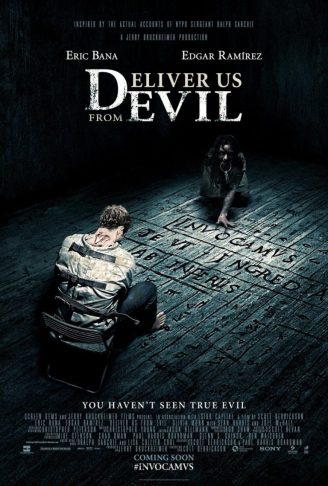 Opening in Iraq, some soldiers discover a strange cave. Inside they encounter something unnatural. The film then picks up with Ralph Sarchie a few years later. He is giving mouth to mouth to what is revealed to be an infant…unsuccessfully.

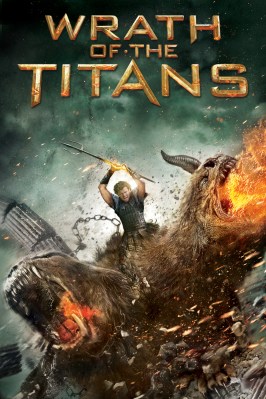 Wrath of the Titans tries to rectify the one thing missing from Clash of the Titans. Titans. In the original Clash, the Kraken was a Titan, but in the 2010 film, this was a bit clear. Wrath opens with the story of how Zeus, Poseidon, and Hades defeated their father Kronos and imprisoned him in the underworld. It also reminds us that Zeus and Poseidon had conned Hades by binding him to the Underworld.
 Tripping Through Gateways