Prologue to What a Scrooge

I have always had a soft spot for Charles Dickens’ A Christmas Carol.Oh, that is underselling it.  It is my favorite Christmas tale.  I like it more than the Christmas Story from the Bible.  I can watch endless attempts to tell the tale.

I like the whole idea behind it. The ghosts, the memories, the redemptive nature of the story, the hope it tells of in our choices. It fills me with a certain joy and hope for what can be. I also think it is a “pure” horror story. Strong horror often can have a moral center, as opposed to the diluted in the modern world which often means “gory”. But A Christmas Carol is a true horror story.

Marley returns from the grave, given an opportunity to help one of his only friends from suffering his miserable fate.  The ghosts are going to torment Scrooge with what could have been, what is and what might be.  And Ebeneezer Scrooge?  He is timeless.  We see him today, unwilling to share, hoarding wealth, justifying his miserly ways.

“Are there no prisons?”

“And the Union workhouses. Are they still in operation?”

“If they would rather die, they had better do it, and decrease the surplus population.”

“I haven’t SQUANDERED it, if that’s what you mean by “making myself comfortable!”

We justify greed and miserly ways.  We call it good business sense.  It is a powerful tale, one to be reminded of every year…

So I thought I would look at nine different versions of the film. It’s fascinating to see the variety of ways the filmmakers have sought to portray Marley and the Ghosts.  I hope to keep adding to this list each year…focusing on the good, the bad…but we will coubntdown to Christmas day starting tomorrow.

(The featured image is actor Tom Atkins as Scrooge.  I would love to see his stage performance of this wonderful story.  But that would involve a road trip to Pittsburgh)

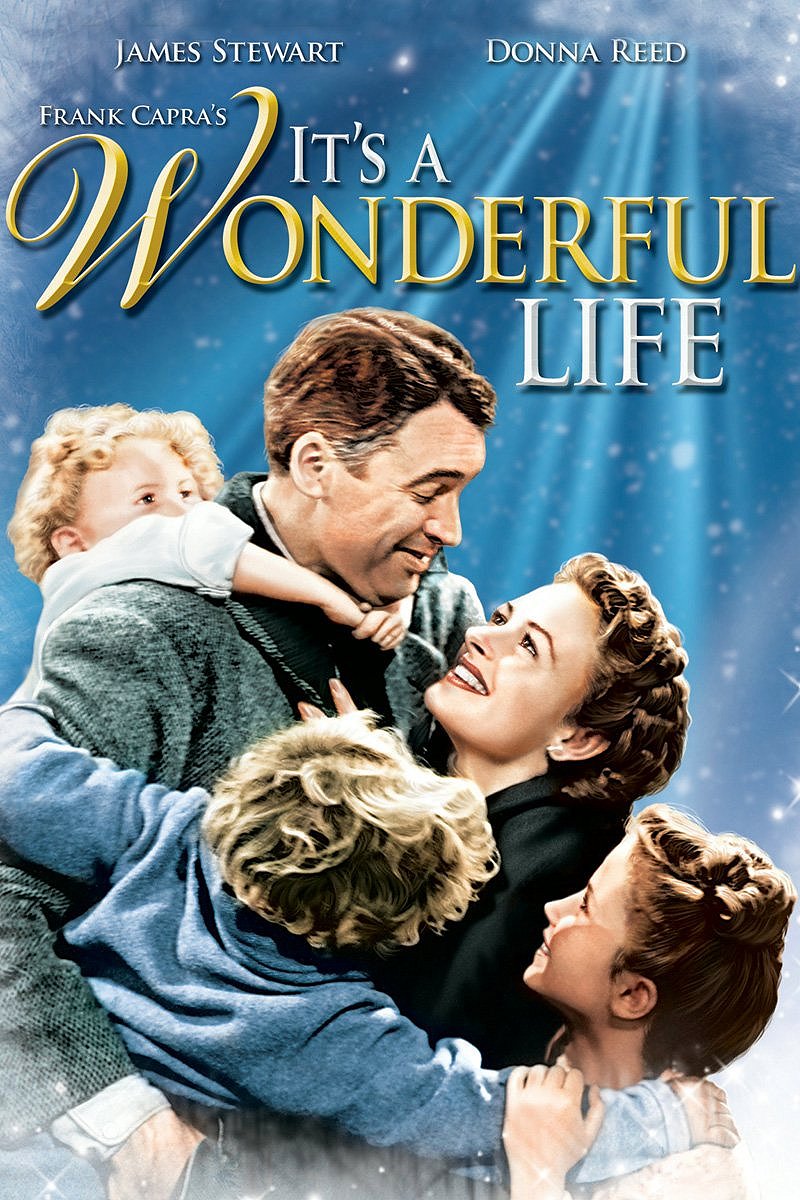
The Wondrous Life (It’s a Wonderful Life, 1946)

its_a_wonderful_life_posterFrank Capra’s It’s a Wonderful Life was not a hit when released, yet it managed to become a classic.  Due to copyright errors the film became a Christmas mainstay, cementing it as a Christmas Classic.  And that is alright by me.

It’s a Wonderful Life is a wonderful dark fairy-tale.  It focuses on George Bailey, a guy full of big hopes and dreams, for whom none get realized.  There is always something that stands in the way.  And now, married with children, George finds himself in a bind.  It looks like he might lose everything.  Despondent and prepared to commit suicide, even then he is interrupted by goofy angel in training Clarence.

What follows is Clarence walking George through his town, except, it is a town that never had a George Bailey.  And what he finds is that as miserable as he thinks his situation is?  His friends and family were worse off without him.

George is kind and constantly self sacrificing.  Probably the closest he comes to selfishness in his pursuit of Mary (Donna Reed).  He knows his friend Sam has been pursuing Mary, but he is drawn to her, and she has always wanted George.  George fights his feelings for Mary, seeing her as someone who will tie him to the town of Bedford Falls, which he desires to leave ever so badly.

In a way, he is correct.  His marriage to Mary is another nail in the coffin of his dream to travel the world.  Yet, when he sees a world without him, George realizes how much is lost.  There are people who never have homes, because he was not there to run his Father’s Saving and Loan.  The cruel Mr. Potter (in the Scrooge model) is never obstructed by George Bailey.  His mother is bitter, his brother is dead and his Uncle is the local town lunatic.

This is a classic because it strikes at the heart.  We have all felt that lack of connection to our lives, when things get dark, it is easy to wonder why we might matter.  And the film challenges that in it’s special and whimsical way.

This is a superb work from Capra and company, worthy of it’s status of “Holiday Classic”.


The Next Generation (Creed, 2015)

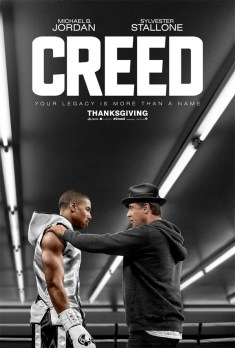
creed-movie-posterAwhile back, when I first heard about Creed, I thought I was hearing a desperate idea of continuing a franchise that had run it’s course and closed out nicely with 2006’s Rocky Balboa.

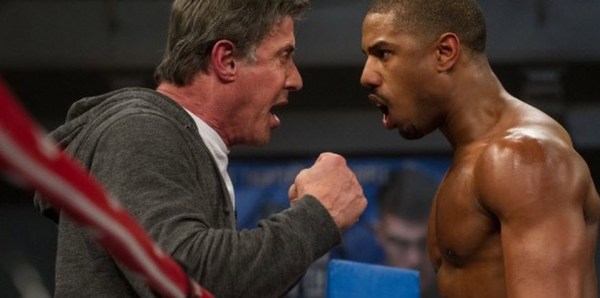
And yet, it turns out that it was the smartest move they could have made.  Creed opts to focus on the son of the late Apollo Creed, Adonis Johnson (Michael B. Jordan).  Born of an affair, Adonis is taken in by Creed’s widow Mary Anne (Phylicia Rashad).  He desires to be a boxer, but is blocked from every direction.  His only outlet is underground Mexican boxing matches.

Ultimately, he moves to Philadelphia and seeks help from a reluctant Rocky Balboa (Sylvester Stallone).

The film is a reflection of the original Rocky, and driven heavily by the characters.  The chemistry between Adonis and Bianca (Tessa Thompson) is genuine.  Jordan and Stallone forge a bond that is at times heartbreaking and others exhilarating.

This is a strong and terrific film.  It draws you in and keeps your attention.  Creed is an excellent film, worth the watch.

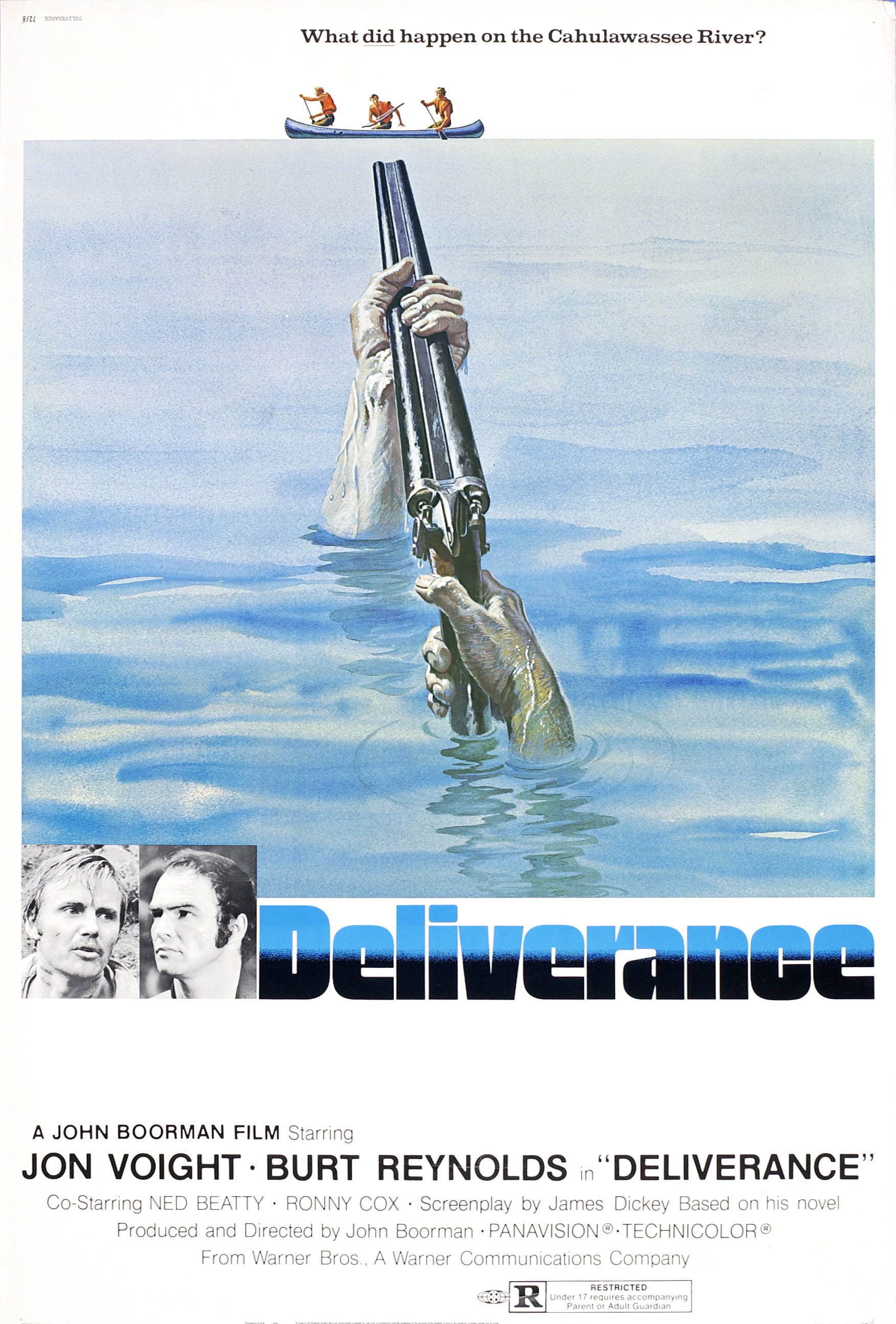
Camping Trips Are Bad For Ya’ (Deliverance, 1972)

deliveranceHeads up.  A bit “spoilerific”.

The first thing that stood out as the film began was that it looks and feels like it was made in the seventies. And it’s not just the presence of young Burt Reynolds. The cinematography screams early seventies. So does the audio. There is a certain muted quality to the audio of those films predating the surround sound era.

None of this is bad, and I am not stating these things as actual criticisms of the film, or even setbacks. Granted, the HD treatment helps it to not look as faded. The colors are a bit fresher than they most likely would have looked on video.

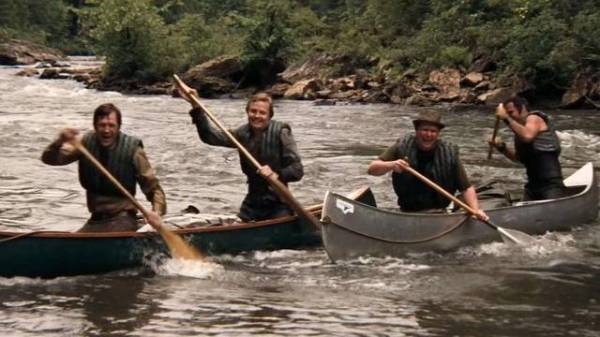
Deliverance also reflects the fears of it’s time. Fear of environmental catastrophes, and how modern man could survive them. Destruction of natural environments by humanity’s hands. Certainly, such fears and concerns remain with us, in some different fashions, but with us none the less. This is mostly embodied in the somewhat rough friendship of Ed (Jon Voight) and Lewis (Burt Reynolds). They appear to be long time friends, who have gone on similar outings in the past. Lewis is a self styled “survivalist” who thrives in the wilderness and is critical of the modern world. Ed, on the other hand, is a happy family man, with a comfortable life and job. It’s unclear in the film how they met or how it came to be that they take these trips, we only know this is not the first one due to Lewis asking Ed why he goes on these trips.

Along with them are two guys clearly from Ed’s world, Bobby (Ned Beatty) and Drew (Ronny Cox).  Both salesmen out for an exciting weekend of canoeing down a river. Drew is apparently a musician of some degree, early on seen always wearing a guitar.

When the friends stop for gas, we get a scene that seems to both have a sense of joy and an atmosphere of danger. No matter how hard they try, no one seems to say anything right to the mountain folk. But Drew connects with a young boy through music. The boy appears to be autistic, or at least dealing with some kind of mental disability. He is not social until Drew starts playing guitar. Without blinking, the kid starts to play his banjo back. As the music kicks in full gear, the young boy comes alive, smiling and looking excited. His father dancing in the background, all is good. But the minute they stop, the boy rigidly turns his head and stays motionless, staring into space as Drew tries to shake his hand.

At first, while on the river, all seems normal. In fact, that sense of foreboding fades. It’s the next day when things begin to take their dark turn. Ed keeps catching glimpses of people in the distance between trees. Eventually, in a truly harrowing sequence, he discovers this was not his imagination. Tying Ed to a tree, two mountain men torment and humiliate Bobby. This culminates in one of the mountain men raping Bobby. You know, there has been much more graphic sequences put on film than this. But Ned Beatty’s performance creates incredible empathy for his character. Your heart breaks for him with every whimper and squeal. Ed is saved from such horrific indignities when Lewis and Drew come back looking for them. Drew dispatches one of the hicks with an arrow, and the other runs away.

The four men then argue over what to do. Of course, they choose to try and cover the death up. Drew is the most troubled by this, feeling the right thing to do is bring the body back and explain everything to the authorities. This is a tension filled moment, and Ronny Cox’s Drew is sympathetic…but then, Bobby’s desire to literally bury his shame is very understandable. He wants to hide what’s happened to him, a wholly human desire.

This sets off a chain of events as they try to get down river to their cars and away from this mountain forever. In their panic, they end up with one boat destroyed and the loss of Drew in the rapids. Lewis is wounded and it is left up to Ed to protect them. Earlier in the film we had foreshadowing in a sequence showing Ed trying to shoot a deer with Lewis’ bow and arrow set and failing. Now, believing they are being hunted by the other hillbilly, Ed must take the bow and arrows and track the mountain man. For Ed this is a clear struggle to overcome his fear and limitations. And what seems straight forward and simple becomes on of the films most tense moments.

When they finally do make it to their cars, they concoct a story to explain how they lost Drew and Lewis was wounded. Things begin to unravel, as the film portrays the police of the area far more competently than one might expect. They know that the story doesn’t add up, and they start to cause mistrust between Ed and Bobby. It’s clear, even as the police let them go, the local sheriff (portrayed rather ominously by Deliverance author James Dickey) knows that something bad went down.

Director John Boorman’s direction is terrific, making the scenery as important as the characters in it. Reynolds, who was not a proven commodity at the time, is terrific as the hunter who desires to leave society, while Voight makes a genuine everyman who is forced to survive in primitive fashion. And the performances by Beatty and Cox (both of who I tend to associate most with later roles-specifically Otis in the Superman films and Dick Jones from Robocop-where Cox was deliciously evil) are standout, heartfelt ones.

The HD DVD contained a four part documentary that was fascinating, especially as it delved into the relationship of author Dickey to the director, cast and crew of the film. The interviews bring back the director and all the primary actors (as well as Dickey’s son) and hearing them discuss the film so much later gives it a more interesting perspective. The one problem with documentaries for newer films on DVD is that the creators are to close to the work. They are far more willing to look at an earlier work with a fairer and more critical eye. That’s what tends to benefit some of the films that are twenty or thirty years old just getting the special edition treatment.

All in all, Deliverance is as strong as it ever was, in spite of the times being more graphic in our movies, this film still keeps you enthralled.

Growing Up In the Movies Is Kinda Dull (Boyhood, 2014)

Boyhood_posterI happened to see the Golden Globes Best Picture Drama winner Boyhood this weekend.  While it was a nominee of course.

The film has a neat gimmick, it was filmed across a twelve year span.  The young boy at the film’s start is the same college age actor we see at the end.  The same goes for his sister and friends.  So, as the characters age, they are not suddenly a new actor every few scenes.  It is a nifty gimmick on it’s face.  The acting is strong in the film.  I went in very much looking forward to the film, as it seems to garner praise and love from everyone who sees it.

Well, except, apparently me.

Richard Linklater’s ode to boys becoming young men is…well, kind of dull and aimless.  Young Mason (Ellar Coltrane) lacks any sense of personality or spark.  He feels aimless at the start of the film and feels entirely aimless at the end of the film.  His parents grow and change, but in an ambiguous fashion.  We see the father (Ethan Hawke) living in a run down apartment with a musician friend, and the next time we see him he is married with a new baby.  His mother (Patricia Arquette) survives an abusive relationship, valiantly fighting to protect her children…then needs her boyfriend to remind her it is her son’s birthday.

But Mason…well, we never, ever get a sense of his hopes and dreams.  In fact, the film offers no indication that he has them.  We only see him take an interest in photography later in the film.  And yeah, it hints that he has a real gift for it.  But the film gives no connection to this being a true passion for him.  Because Mason comes across and completely uninterested in anything.  As a viewer, we are given this unformed character.  And maybe his lack of drive was intentional…but frankly, it just reads as dull for me.

It does not help that the film makes the passage of time unclear.  One of Mason’s step parents just vanishes from the story after a fight.  No indication as to when or why he is gone, he just is.  Linklater clearly meant for things like music to help define the passage of time as the songs use tend to be from the general years the story is happening.

Truthfully, if you took the gimmick away.  If this had been filmed during a three month period a year or so back with different actors playing Mason at the various stages of his life?  I cannot see the film garnering half the praise it does.  It feels like every scene was created on the fly, like Linklater was relying on the actors to overcome the lack of anything resembling a story.  In many cases, it is not even the most interesting points of Mason’s life.

I am a bit amazed how people are connecting with this one when Mason is such an empty character on screen.  He has no drive, no passions, no hopes…he just is there.  What is there to connect to?

It has brief moments…there were times I laughed.  And times I felt something akin to caring.  But it was never brought about by Mason, who is the focus of the film.  It was always because of characters outside of him.  This is not because I thought Ellar Coltrane was a bad actor…I just found Linklater imbued the character with nothing for Coltrane to connect with.  So he shrugs his way through the story.

What kills me is I love the behind the scenes aspect.  The idea that the film took twelve years to make and Mason is played by the same actor all the way through?  Very interesting.  But that does not make the actual result, the actual movie itself, interesting.

Locked In (Locke, 2014)

Locke_PosterSo, if you told me a movie about a guy in a car trying to get a cement foundation poured within the next twenty four hours would be a super compelling watch?  I would have walked away thinking you were nuts.

And yet, somehow, Director Steven Knight manages to make a car ride with only Tom Hardy very tense and powerful.

Usually, with a gimmick where you have one guy in a car for the entire film, there is a plot like he is being forced to commit some terrible act by some shadowy figure.  But here, Ivan Locke (Tom Hardy) is simply a guy trying to solve two problems.  He is trying to be responsible for his actions, and make sure his business is successful.  Locke is a dedicated family man and construction manager who gets a call that forces him to confront a choice he made months before.

What we get as the viewer is Tom Hardy in a car.  A lesser actor might have screwed this up.  But his unraveling life is fully punctuated by Hardy’s quiet performance.  Locke constantly tries to speak calmly to everyone, attempting to fix his errors, even as they tend to escalate.  The performance is terrific.

I was fully drawn in to this story, and the gimmick really works.  We are isolated with Locke in his car, and the only access to the world outside him is through his phone.  We never see any of the people he is speaking with, and it is an effective move on Knight’s part.  This is a terrifically executed film that deserves far more recognition than it has gotten.

A Father’s Love (Maggie, 2015)

maggie1First time film Director Henry Hobson offers up a film very different than one might expect from a guy who came out of the video game industry.  Maggie is not a flashy film.  It is a quiet tale of a family dealing with the fact that their daughter is becoming a zombie.

Set in a world where becoming a zombie is just an expected possibility in life, Maggie is focused on a young woman (Abigail Breslin) who is suffering from the early stages of, uh, “zombie-ism”.    Her father Wade (Arnold Schwarzeneggar) and mother Caroline (Joely Richardson) are struggling to come to terms with what this means.  Do they send their daughter off to Quarantine?  Do they break the law and keep her until she is to far gone?

Wade struggles especially hard with the idea of what the future holds.  He is continuously trying to keep Maggie connected to the living world, whenever she starts to be consumed by aggression and hunger.

You probably see Schwarzeneggar’s name and assume there must be at least one ridiculous fight scene…but Arnold really does well in this role of heartbroken father at a loss for how to help his daughter.  He barely raises his voice.  He is not an action hero barreling through this film.  He is not a super hero.  He is a good hearted and gentle guy.  The connection between father and daughter is evident throughout the film…both of them knowing the path they are going down.

Maggie-590-02As I said, this is a quiet film, and moves at a fairly mellow pace.  This is not a zombie apocalypse about the world falling apart.  It would not be right to call it a horror movie.  This is a father and daughter drama set within a zombie movie.  Change Maggie’s situation to cancer and you have a heartbreaking family drama.

There are moments where the film seems to wander, but the overall film was effective as a slow burn drama.  It will, not be for everyone, but if you have enjoyed a film like, say, Moon?  This may be right up your alley.

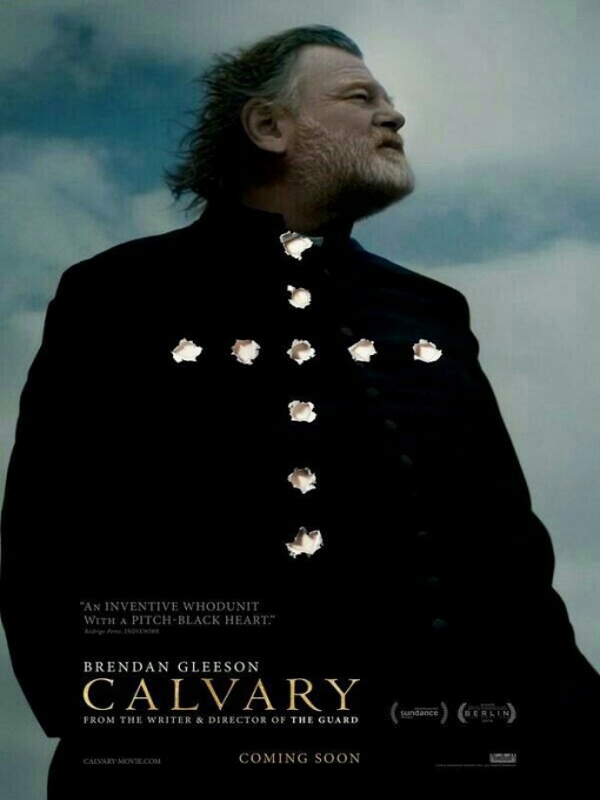
With Warning (Calvary, 2014)

To be honest, I expected Calvary to be a somewhat plodding movie.  I thought it would be “Gee, it was good, but kinda slow.”

Calvary_movieposterInstead, it begins with a bang.  Father James (Brendan Gleeson) is in the confessional, but instead of a confession, he is given an unrepentant threat to his life.  The “confessor” tells of having been molested for several years by a Priest.  Father James asks if he has sought therapy or made an accusation.  But this sick priest is dead, so the confessor feels there is no chance for justice there.  And really, what good would it do to take his life were he still alive?  No, the confessor believes a truly bolder statement would be to kill a good and trusted priest.  He gives Father James one week to get his affairs in order.

As the week proceeds, Father James does little to try and prevent this threat to occur, instead, he tries to go about his life, helping the community around him, trying to help a community that has given up hope heal.  You wonder who might be the person who made the threat…Father James seems to recognize the voice.  And even when they meet on that fateful day, Father James seeks to bring healing.  Knowing what he may be going towards, he still takes the time to connect with the people in his community.  He seeks to help the man who has made it his purpose to end Father James’ life.

There is a great exchange that occurs late in the film…Father James is speaking with his daughter and says, “There is too much talk about sins and not enough about virtues.”  His daughter asks, “What would be your number one?” He responds, “I think forgiveness has been highly underrated.”

There is another bit about how dangerous people are who want to be hated and despised.  I think that is true.  There is a bizarre form of self righteousness that can occur in people who enjoy being hated.  They feel as if being hated justifies their belief.  People hate them because they are right.

Calvary is full of sly, dark humor and emotion.  It is easy to root for Gleeson, for he is a good priest.  This is not a story where we find out that he harbors all sorts of dark secrets.  No, he genuinely seems to care about his community.  He loves his daughter and feels regrets for retreating after her mother died.

It is a very well written film that is worth seeing.  If I had seen it last year?  It (like Locke) would have made my top ten of 2014 list.

I was asked what the title of the film means.  I believe my explanation is correct…but it is a huge spoiler to reveal it.  So read on only if you want to ruin the ending of the film. Continue reading “With Warning (Calvary, 2014)”

Create a free website or blog at WordPress.com.

Up ↑