
 At thirteen, Jordan Sanders is a smart kid who hopes to fit in, but finds life in school to be one of constant humiliation and bullying. Her parents promise her that when she grows up, things will be different, for she is brilliant and those are the people that “become the boss.”
The film jumps to Jordan in her late 30’s. Her life is one where she is in charge. She is bold, featured in magazines and has a highly successful business. She also treats people abusively, often using them. This is especially true of her assistant April. She has no respect for April’s hopes and dreams or ideas for the business. April is however, also incredibly lacking in confidence, whether it is the desire to advance in her career or get a date…April will try and then back off quickly.
The same day that Jordan is informed by her biggest client he is leaving her for a new company unless she can win him over with a pitch, Jordan pushes around a little girl. The girl tells her she wishes Jordan was little. The next morning, Jordan wakes to find herself in her thirteen year old body. April makes a deal to pretend to be Jordan’s Aunt and to keep the the pitch moving forward to try and avoid losing their client.
What follows is April and Jordan trying to navigate their sudden change in world, April as the boss and Jordan having to go to school. Jordan tries hard to keep her “I’m the boss” attitude, but quickly finds herself pushed to the margins. Meanwhile, her employees start to find life under April much more pleasant.
The film is really busy, as they try and cover a lot of ground as Director/writer Tina Gordon and screenwriter Tracy Oliver (of the entertaining and raunchy Girl’s Trip) pack in a lot of plot points with the jokes. And this kind of interferes with the pacing. That is not to say it is not funny. I laughed plenty…and the film actually sidesteps a certain problem that Big did not avoid. This is largely due to the fact with the reversal, Jordan becoming a thirteen year old, these situational problems are very self evident. You cannot have adult men being turned on. Thankfully, the men of the film avoid being sleazy. When young Jordan shoots a look at her teacher, he is instantly grossed out. When Jordan’s boy toy (who aspired to be more) mistakes Jordan as the daughter she never told him about, he sets out to convince her that he has the best of intentions for her mom. Some of the dialog gets clunky, but when he tries to give a fatherly hug she forgets her age and he instantly stops her more comfortable snuggle.
The boyfriend storyline seems forgotten at the end though and as the storylines all tie up, we never really seem to know how she explains she never had a daughter.
But the highlights of the movie Little, in my book, are Issa Rae and Marsai Martin. Issa Rae just has never really let me down. Her comedic delivery is just solid and pretty much always delivers. Martin has long been one of my favorite actors on Black’ish. And her years as the darkly mature Diane work here where she channels Regina Hall’s dominance as young Jordan.
Little is not a genre breaking classic. But for the majority of the film, I had a fine time watching it. Rae and Martin connected well and there are some good laughs in the film.

 Starting 1984, Hollywood gave us about two Tom Hanks films a year through 1990. Some more memorable than others, but Hanks proved himself a pretty reliable comedy actor. Hanks has always come across as a nice guy in Hollywood and thus endeared himself to the audience.
 Six years later, the studio wanted to try and reboot the franchise. The biggest twist of the film this time around? No time travel. The beginning of a planned trilogy set during the war, Christian Bale takes over the role of John Conner.
 It took nearly a decade before there was a follow-up to T2: Judgement Day. This time around, the focus is on an early 20’s John Conner. He has been living off the grid and the original date for Judgement Day came and went without incident. Conner is a journeyman, working construction jobs, believing the crisis averted and his future uncertain.
 After the Terminator, James Cameron proved it was not a fluke with the sequel to Alien, Aliens, and the Abyss. Cameron determined his idea for a sequel to the Terminator was a technical possibility.
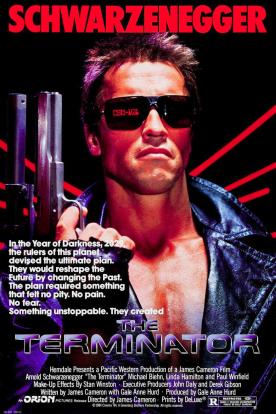 In 1984, James Cameron was a genre vet, but not quite the guy we think of. He had no mega-hits…yet. Cameron came up out of the Corman school and made his names with technical and special effects….especially stretching the low budget effects.
 After Into Darkness, Trek lost Abrams to Wars. Simon Pegg stepped up as a screenwriter with Doug Jung to try and get the Kelvin timeline back on track. The studio also decided to try out an action director, Justin Lin, who had success with the Fast and the Furious franchise.
 After a pretty successful first outing, the whole team came back. So, my hopes were riding high for another exciting Star Trek film.
 It is often not really a great sign when a franchise seems to go dormant. After the struggle at the box office with Nemesis and a large amount of negative fan reaction, Paramount’s Star Trek team started trying to figure out new ideas, most which put the Next Generation Crew out to pasture.
 So, after the disappointing returns the studio brought in the director of Executive Decision, Stuart Baird, and John Logan, the screen writer of the Time Machine.
 Tripping Through Gateways